

Audio By Carbonatix
Governance think tank, the Africa Policy Lens, says it has been vindicated by a recent revelation by the International Monetary Fund (IMF) that the Bank of Ghana pumped in dollars to support the recent stability of the cedi.
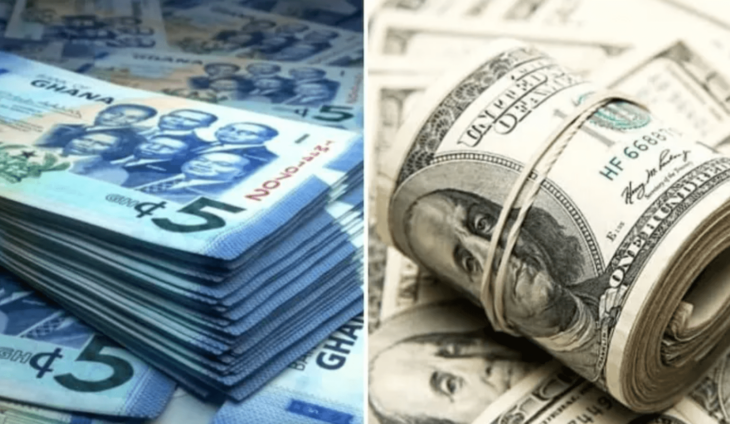
The IMF, in its latest review of Ghana's programme, revealed that the Bank of Ghana released $1.4bn forex support to sustain the cedi against the US dollar.
Following the IMF's confirmation, the Africa Policy Lens has revisited a report it issued in May this year, which attributed the dramatic strength of the cedi to deliberate forex support by the Bank of Ghana.
In a statement, the Africa Policy Lens said its May 2025 analysis that the government was deliberately boosting the forex market with US Dollar support was rejected and criticised.
"However, the IMF has now corroborated what our analysis clearly pointed out in May and this has vindicated us,' the APL said.
In its May 2025 report, the APL, while commending the new government for the cedi’s gains over the US Dollar, pointed out that the gains had been made possible due to accumulated gold by the Bank of Ghana, which made it possible for the central bank to pump in more dollars into the forex market to support the cedi.
"Ghana’s currency, the cedi, has surged to become one of the world’s best-performing currencies in 2025, appreciating by over 20% against the US dollar year-to-date. This remarkable turnaround follows a turbulent 2024 when the cedi lost nearly a quarter of its value, contributing to high inflation and economic instability. As of mid-May 2025, the cedi trades at the retail around GH¢13.5 to the US dollar – a 17% gain since January 1. Inflation has also eased (down to about 21% in April 2025 from much higher levels), reflecting reduced import costs as the currency strengthens. The Africa Policy Lens (APL) commends this progress in macroeconomic stability. However, we note that the foundations of this appreciation and the sustainability of these gains merit close scrutiny and prudent policy action," the Africa Policy Lens May report said.
Role of Gold Reserves and Forex Interventions
In the same report, the Africa Policy Lens observed that a key factor in the cedi’s stabilisation was Ghana’s strategic use of gold reserves and direct market interventions.
The APL stated that: "the Bank of Ghana (BoG) aggressively accumulated gold through its Domestic Gold Purchase Programme (DGPP) (popularly “Gold-for-reserve” and now the Gold Board initiative) during 2023-2024. Official data show gold reserves climbed from 8.78 tonnes in May 2023 to 30.53 tonnes by December 2024 – an increase of ~21.8 tonnes in 20 months, averaging about 1.1 tonnes added per month (see Figure 1). This bolstered Ghana’s foreign exchange buffer significantly. By contrast, from January to April 2025, gold reserves edged up only from 30.53 to 31.37 tonnes – a rise of just 0.84 tonnes in four months (about 0.21 tonnes per month)."
"The sharp slowdown in gold accumulation suggests that authorities may have tapped into these gold reserves or at least paused new purchases, possibly to inject U.S. dollars into the market and meet forex demand. In effect, Ghana appears to be leveraging its gold stockpile to support the cedi, a tactic that boosts dollar liquidity and calms depreciation pressure in the short term."
The Africa Policy Lens May report went on to make a direct claim about the millions of US Dollars the Bank of Ghana had injected into the forex market to support the cedi.
"Indeed, the central bank’s direct forex market interventions have been massive. In April 2025 alone, BoG injected $490 million into the foreign exchange market to ease dollar shortages and strengthen the cedi," it said.
''Reports further indicate sizable interventions in other months – for example, about $264 million was injected in March 2025 as part of the stabilisation strategy. Cumulatively, nearly $1 billion is estimated to have been supplied to the forex market by the government and central bank between January and May 2025."
While acknowledging the positive impact of the strength of the cedi, the APL warned that the gains could be sustained by continuous forex support, but through sound economic management, and urged the government to learn from similar strong cedi situation between 2017 and 2019, before the cedi lost value again.
"The lesson for today is clear: sustainable exchange rate stability comes from sound economic management rather than one-off measures. The current administration can draw on this historical parallel by continuing structural adjustments initiated under the IMF programme (e.g. fiscal consolidation, prudent debt management, and rebuilding of foreign reserves) to ensure the cedi’s strength is lasting. Just as the stability of the cedi contributed to a decline in debt ratios around 2017, maintaining that stability through robust policies now will reinforce Ghana’s economic resilience going forward. APL urges policymakers to view the 2017–2019 period not as an anomaly, but as a benchmark to surpass – through deeper reforms that address the root causes of cedi volatility."
Below is the May 2025 report by the APL
Latest Stories
-
Sports Ministry denies involvement in World Cup visa scandal, calls for probe
27 minutes -
Ghana earns top US ranking in fight against human trafficking
33 minutes -
Education Minister commends teacher unions for suspending nationwide strike
40 minutes -
‘Farmers Services Centres to be game changer for Ghana’s agriculture’ – Mahama
46 minutes -
WIWIK launches new leadership development pathway for Ghanaian university students
51 minutes -
Public basic schools resume today after strike suspension
58 minutes -
Environment Minister calls for transparency in Ghana’s GMO adoption
1 hour -
Ghana risks 10% to 100% tariffs on exports to US under Trump’s threats as it moves to join BRICS
1 hour -
GoldBod pumps US$255m into banks as festive dollar demand rises
2 hours -
Ato Forson leads Ghana’s push for investment at IMF–World Bank meetings
2 hours -
US Justice Department investigates TV networks over Trump pool coverage
2 hours -
PM says it is ‘clear’ Russia interfered with Brexit vote
2 hours -
Stanbic Bank launches ‘Be Powered’ campaign to drive Ghana’s green future
2 hours -
US imposes sanctions on ICC hours after former judge wins Nobel Peace Prize
3 hours -
South Africa withdraws asylum directive after anti-migrant violence
3 hours