

Audio By Carbonatix
Apple is releasing a free software update that will inject its first dose of artificial intelligence into its iPhone 16 lineup as the trendsetting company tries to catch up with technology’s latest craze.
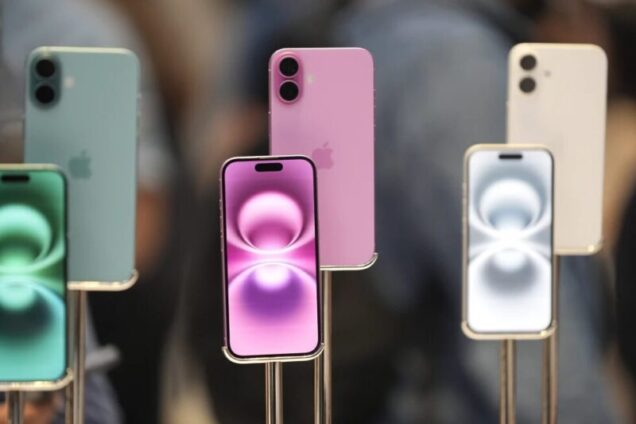
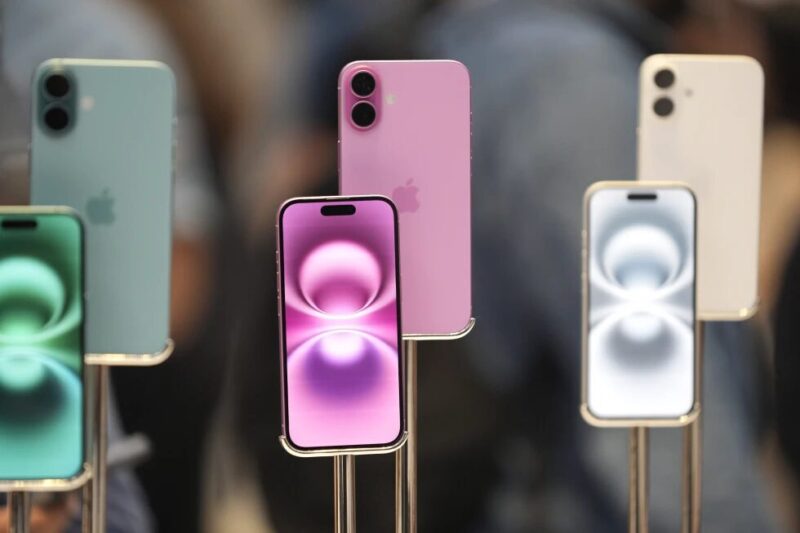
The upgrade to the iOS 18 operating system on Monday arrives more than a month after four iPhone 16 models equipped with the special computer chip needed to power the AI features went on sale at prices ranging from $800 to $1,200.
Last year’s premium models — the iPhone 15 Pro and iPhone 15 Pro Max — also possess a processor that will enable the AI technology after the software update is installed.
Recent versions of Apple’s iPad and Mac computer also can be updated with the software.
Countries outside the U.S. won’t be getting the AI software for their iPhones until next year at a date still to be determined.
Apple spent the past five weeks testing the AI software among an audience of iPhone owners who signed up to help the company fine-tune the technology.
The AI infusion is supposed to transform Apple’s often bumbling virtual assistant Siri into a more conversational, versatile and colorful companion whose presence will be denoted by a glowing light that circles the iPhone’s screen as requests are being handled.
While Apple is promising Siri will be able to perform more tasks and be less prone to becoming confused, it won’t be able to interact with other apps installed on the iPhone until another software update comes out at a still-unspecified date.
Other AI features included in this software update will handle a variety of writing and proofreading tasks, summarise the content of emails and other documents.
The AI also will provide a variety of editing tools to alter the appearance of photos and make it easier to find old pictures.
Other AI tricks still to come in future software updates will include the ability to create customized emojis on the fly or conjure other fanciful imagery upon request.
Apple also plans to eventually enable its AI suite to get a helping hand from OpenAI’s ChatGPT when users want it.
Most of the AI features Apple introduced Monday are already available on Android-powered smartphones that Samsung and Google released earlier this year.
In an effort to distinguish its approach from the early leaders in AI, the iPhone’s suite of new technology is being marketed as “Apple Intelligence.”
Apple is also promising its AI features will do a far better job protecting the privacy of iPhone owners by either running the technology on the device or corralled in a fortress-like data centre when some requests have to be processed remotely.
Because most iPhones currently in use around the world don’t have the computer chip needed for Apple’s AI, the technology is expected to drive huge demand for the new models during the holiday season and into next year, too.
That’s the main reason why Apple’s stock price has soared 18% since Cupertino, California, previewed its AI strategy at a conference in early June. The run-up has increased Apple’s market value by about $500 billion, catapulting it closer to becoming the first U.S. company to be worth $4 trillion.
Apple will give investors their first glimpse at how the iPhone 16 is faring Thursday when the company posts quarterly financial information for the July-September quarter — a period that includes the first few days the new models were on sale.
Demand for the high-end iPhone 15 models ticked upward as prices for them fell and the excitement surrounding Apple’s entrance into the AI market ramped up, according to an assessment of the smartphone market during the most recent quarter by the research firm International Data Corp.
Apple’s iPhone shipments rose 3.5 per cent from the same time last year to 56 million worldwide during the July-September period, second only to Samsung, according to IDC.
The question now is whether Apple’s gradual release of more AI will cause owners of older iPhones to splurge on the new models during the holidays, “future-proofing their purchases for the long term,” said IDC analyst Nabila Popal.
Also on Monday, Apple said that with the software update some AirPods wireless headphones can be used as hearing aids.
An estimated 30 million people — 1 in 8 Americans over the age of 12 — have hearing loss in both ears. Millions would benefit from hearing aids but most have never tried them, according to the National Institute on Deafness and Other Communication Disorders.
Latest Stories
-
Diaspora Nasara Caucus congratulates Mohammed Ali Suraj, new NPP executives
31 minutes -
Dr Antwi-Boasiako’s cybersecurity book showcased at UN crime prevention congress
33 minutes -
We will empower the grassroots and protect every vote – NPP’s 1st Vice Chair Kojo Bamba
43 minutes -
I do not see myself as better than anyone – NPP’s 1st Vice Chair Kojo Bamba
1 hour -
Police blur the line between invitations and arrests – Reindorf Twumasi Ankrah
2 hours -
Turning invitations into arrests is making citizens reluctant to assist police – Twumasi Ankrah
2 hours -
The Traffitech-GH SMS spot-fine system: The good, the sad, and the funny – Bright Simons writes
3 hours -
Hawa Koomson pledges experienced and mature leadership of NPP women’s wing
4 hours -
Young woman found dead at Kasoa Peace Town
4 hours -
Playback: The Law examined lawful arrest in Ghana
5 hours -
Mahama urges African governments to treat healthcare as an investment, not budget cost
5 hours -
Bawumia congratulates John Boadu and new NPP executives, pledges support ahead of 2028
5 hours -
Aksa Energy delegation pays courtesy call on GRA Commissioner-General
5 hours -
‘No talent should be left out’ – Bawumia pledges inclusive NPP campaign for 2028
5 hours -
Prof. Mike Oquaye recounts how he blocked the Special Prosecutor’s attempt to arrest Bawku Central MP
6 hours