

Audio By Carbonatix
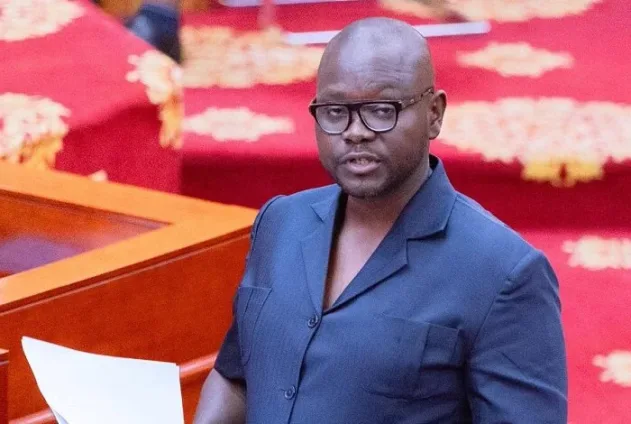
Former Minister for Works and Housing and Member of Parliament (MP) for Bantama, Francis Asenso- Boakye, has called on the government to provide a comprehensive update on the status of major flood mitigation projects inherited from the previous administration, warning that recurring floods require national cooperation rather than political point-scoring.
Delivering a statement on the floor of Parliament, Mr Asenso-Boakye described flooding as one of Ghana's most persistent development challenges and stressed that safeguarding lives and property should transcend partisan considerations.
He said the devastating floods that recently swept through parts of Greater Accra, claiming lives and destroying homes, underscored the urgent need to sustain investments in drainage infrastructure and urban flood management.
Flooding demands national response
According to the former sector minister, Ghana's flood problem has been driven by a combination of inadequate drainage infrastructure, weak enforcement of planning regulations, rapid urbanisation, indiscriminate waste disposal and the growing impact of climate change.
He argued that while successive governments had invested heavily in flood control, sustained implementation and maintenance remained essential to reducing the country's vulnerability.
Mr Asenso-Boakye recalled that between 2018 and 2024, the Akufo-Addo administration committed approximately US$540 million under the National Flood Control Programme to finance drainage construction, rehabilitation works and dredging activities across the country.
He added that the previous government also secured US$200 million from the World Bank for the Greater Accra Resilient and Integrated Development (GARID) Project, followed by an additional US$150 million to expand flood resilience initiatives in the capital.
Projects underway
The Bantama MP said several strategic projects were already at advanced stages before the change of government.
Among them, he listed the Odaw/Odogonno Drain, Achimota-Abofu Drain, South Kaneshie Drain and the Busia Highway drainage improvement works, all aimed at increasing Accra's stormwater carrying capacity.
He further noted that the Accra Flood Early Warning System had been operationalised to improve disaster preparedness, while engineering designs for the proposed Atomic East and Atomic West detention ponds had reached advanced stages.
However, he expressed concern over reports suggesting that several of those interventions had either slowed significantly or been suspended.
He therefore urged the government to publicly explain the status of the projects and indicate the measures being taken to ensure their completion.
Call for stronger enforcement
Mr Asenso-Boakye maintained that infrastructure alone would not eliminate flooding unless planning and environmental regulations were rigorously enforced.
He observed that Ghana already possessed adequate legal frameworks to regulate physical development but noted that poor implementation had encouraged indiscriminate construction within waterways and flood-prone areas.
The former minister also identified poor sanitation as a major contributor to flooding, explaining that indiscriminate disposal of solid waste continues to choke drains and significantly reduce their carrying capacity during heavy rains.
Although he stopped short of directly attributing the recent floods to the restructuring of waste collection contracts, he said concerns remained over the transition and its possible impact on sanitation management.
The MP warned that changing climatic conditions were making extreme rainfall events increasingly frequent, requiring Ghana to invest in resilient drainage systems capable of accommodating higher volumes of stormwater.
He urged the government to adopt proactive rather than reactive measures, especially as weather forecasts indicate the likelihood of more heavy rainfall in the coming weeks.
National preparedness exercise
To strengthen disaster readiness, Mr Asenso-Boakye proposed the declaration of a one-week national flood emergency preparedness exercise.
He said such an exercise should bring together Metropolitan, Municipal and District Assemblies (MMDAs), the National Disaster Management Organisation (NADMO), the Hydrological Services Authority, security agencies and other stakeholders to undertake intensive desilting of drains, clear blocked waterways, remove illegal structures obstructing water flow, pre-position emergency response teams and intensify nationwide public education on flood preparedness.
According to him, such coordinated preventive action would significantly reduce the impact of future floods while helping protect lives, property and critical national infrastructure.
Latest Stories
-
Ballon d’Or Power Rankings: Lamine Yamal leads race for Golden Ball ahead of Rodri and Kane
2 hours -
‘Nothing worked for us’ – Gideon Mensah takes responsibility for Gambia defeat
2 hours -
2026 Women’s Super Cup: FC Savannah beat Epiphany Warriors to win trophy for first time
4 hours -
Fifa accuses Uefa of ‘misinformation campaign’
4 hours -
Kane and Gordon give England victory over Czech Republic in Nations League
4 hours -
AFCON 2027Q: ‘The last time Ghana won was eight games ago’ – Carlos Queiroz
4 hours -
AFCON 2027Q: Gambia defeat doesn’t make me a loser – Carlos Queiroz
4 hours -
Yamal inspres Spain to homecoming victory over Croatia
4 hours -
2027 AFCONQ: Late goals seal 2-0 for Côte d’Ivoire against Somalia
4 hours -
I’d stick my Man City medals in bin – Keane
4 hours -
AFCON 2027Q: My resignation won’t solve Ghana football issues – Queiroz
4 hours -
Morocco call off Ghana friendly after Black Stars’ AFCON setback
4 hours -
It is time for Tuchel to offer Alexander-Arnold some trust
5 hours -
‘We have to say sorry’ – Queiroz apologises after Ghana’s humiliating defeat to Gambia
5 hours -
New Yorker identified as Yaw Boahene, 57, killed after bag was caught in subway train doors
5 hours