

Audio By Carbonatix
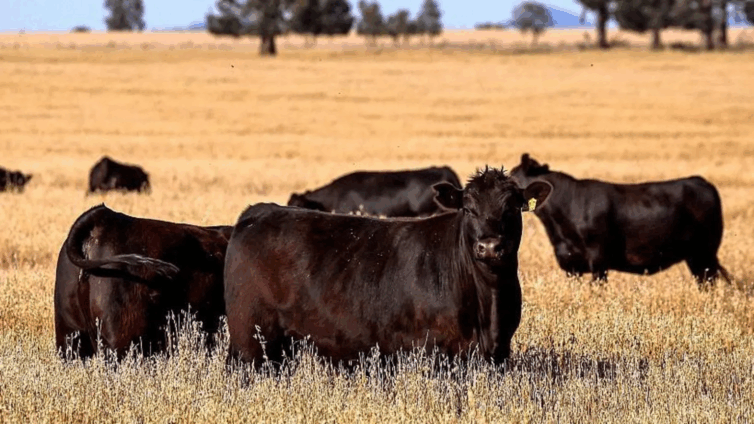
Australia will lift restrictions on the import of beef from the US, a trade barrier which had angered the Trump administration.
American beef has effectively been banned from the country, which has some of the strictest biosecurity laws in the world, since 2003 after an outbreak of bovine spongiform encephalopathy, commonly known as mad cow disease.
The White House cited the restrictions when explaining tariffs imposed on Australia in April, as part of US President Donald Trump's so-called Liberation Day scheme.
The Australian government has denied the timing of the decision was related to the trade tiff, saying a decade-long department review found the US had improved beef safety measures.
Canberra technically lifted the ban on US beef in 2019, but cattle from Mexico and Canada remained on the blacklist, and the integration of their supply chains meant this essentially barred beef from the States too.
However, the US has recently introduced better cattle tracing protocols, allowing authorities to track where they were raised and respond more effectively in the event of a disease outbreak.
Australia's Agriculture Minister Julie Collins said the department had undertaken a "rigorous science and risk-based assessment" and was now "satisfied" that the US is managing any biosecurity threats.
"This decision has been purely based on science," she said in a statement.
"The Albanese Labour government will never compromise on biosecurity."
But the opposition has suggested the government may have done just that.
"It looks as though [the ban has] been traded away to appease Donald Trump, and that's what we don't want," Nationals leader David Littleproud told the Australian Broadcasting Corporation (ABC).
"I want to see the science."
Cattle Australia chief executive Will Evans, however, told the ABC he was "comfortable" with the decision and that the industry had to "put faith" in the department.
He added that US was an important trading partner with whom Australia needed to maintain a good relationship.
The US is Australia's biggest beef export market, worth A$14bn (£6.8bn, $9.2bn) last year.
Trump singled out the industry when imposing what he called "reciprocal" tariffs of at least 10% on all Australian exports.
However, a report by Meat and Livestock Australia released in June found the beef tariff had not hurt trade, which had risen by about a third so far this year.
Latest Stories
-
Teacher unions strike: Gov’t presents fresh proposals as talks end inconclusively
16 minutes -
51,000 teachers’ promotion arrears to be validated for October payment – Education Minister
46 minutes -
Kwabena Boamah appointed Board Chair for Impact Investing Ghana
54 minutes -
Striking teacher unions to meet Fair Wages and Salaries Commission on October 6
1 hour -
EOCO working with AG to arraign Nana Baffour Awuah before weekend court
1 hour -
Duraplast reassures customers after fire, announces October 5 reopening
1 hour -
Call off strike, gov’t will not renege on promotion arrears pledge – Haruna Iddrisu appeals to teacher unions
1 hour -
Committee set up to validate teachers eligible for 20% deprived-area allowance – Education Minister
1 hour -
Five-member committee to search for new Black Stars coach after Sports Ministry-GFA meeting
2 hours -
Pinktober: Breast cancer survival exceeds 90% when detected early – Breast Society of Ghana
2 hours -
TCDA to adopt Upper West’s MATCO mango farm as northern prototype, issues warning against felling shea trees
2 hours -
‘Fear delegates’ tag: Afoko touts genuineness among delegates ahead of NPP delegates conference
2 hours -
John Boadu: The leader our party needs at this time – Amb. Edward Akwasi Boateng
2 hours -
Baffour Awuah: EOCO arrested, detained MP after hours of waiting, questioning – Afenyo-Markin
3 hours -
EOCO court warrant authorised search of Baffour Awuah’s law firm, not residence – Afenyo-Markin
3 hours