

Audio By Carbonatix
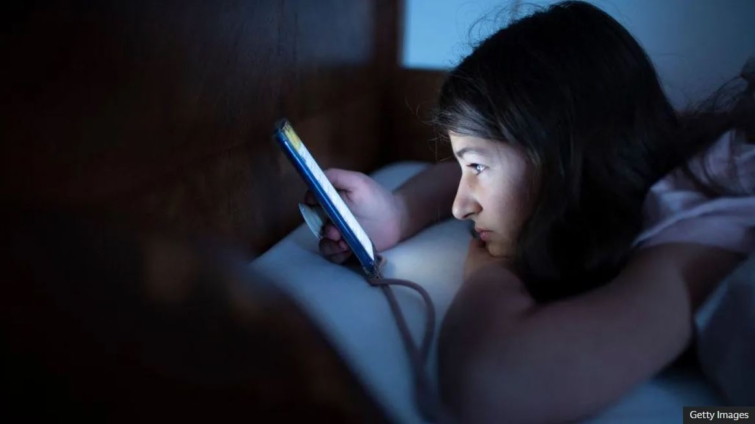
Australia will ban children under 16 from using social media, after its Senate approved the world's strictest laws.
The ban - which will not take effect for at least 12 months - could see tech companies fined up to A$50m ($32.5m; £25.7m) if they don't comply.
Prime Minister Anthony Albanese says the legislation is needed to protect young people from the "harms" of social media, something many parent groups have echoed.
But critics say questions over how the ban will work - and its impact on privacy and social connection - have been left unanswered.
This is not the first attempt globally to limit children's social media use, but it involves the highest age limit set by any country, and does not include exemptions for existing users or those with parental consent.
"This is a global problem and we want young Australians essentially to have a childhood," Albanese said when introducing the bill to the lower house last week. "We want parents to have peace of mind."
Having passed the Senate by 34 votes to 19 late on Thursday, the bill will return to the House of Representatives - where the government has a majority meaning it is sure to pass - for it to approve amendments, before becoming law.
The legislation does not specify which platforms will be banned. Those decisions will be made later by Australia’s communications minister, who will seek advice from the eSafety Commissioner - an internet regulator that will enforce the rules.
Gaming and messaging platforms are exempt, as are sites that can be accessed without an account, meaning YouTube, for instance, is likely to be spared.
The government says will it rely on some form of age-verification technology to implement the restrictions, and options will be tested in the coming months. The onus will be on the social media platforms to add these processes themselves.
However digital researchers have warned there are no guarantees the unspecified technology - which could rely on biometrics or identity information - will work. Critics have also sought assurances that privacy will be protected.
They have also warned that restrictions could easily be circumvented through tools like a VPN - which can disguise a user’s location and make them appear to be logging on from another country.
Children who find ways to flout the rules will not face penalties, however.
Polling on the reforms, though limited, suggests it is supported by a majority of Australian parents and caregivers.
"For too long parents have had this impossible choice between giving in and getting their child an addictive device or seeing their child isolated and feeling left out," Amy Friedlander, who was among those lobbying for the ban, recently told the BBC.
"We’ve been trapped in a norm that no one wants to be a part of."
But many experts say the ban is "too blunt an instrument" to effectively address the risks associated with social media use, and have warned it could end up pushing children into less regulated corners of the internet.
During a short consultation period before the bill passed, Google and Snap criticised the legislation for not providing more detail, and Meta said the bill would be "ineffective" and not meet its stated aim of making kids safer.
In its submission, TikTok said the government’s definition of a social media platform was so "broad and unclear" that "almost every online service could fall within [it]".
X questioned the "lawfulness" of the bill - saying it may not be compatible with international regulations and human rights treaties that Australia has signed.
Some youth advocates also accused the government of not fully understanding the role social media plays in their lives, and locking them out of the debate.
"We understand we are vulnerable to the risks and negative impacts of social media… but we need to be involved in developing solutions," wrote the eSafety Youth Council, which advises the regulator.
Albanese has acknowledged the debate is complex but steadfastly defended the bill.
"We all know technology moves fast and some people will try to find ways around these new laws but that is not a reason to ignore the responsibility that we have," he has said.
Last year, France introduced legislation to block social media access for children under 15 without parental consent, though research indicates almost half of users were able to avoid the ban using a VPN.
A law in the US state of Utah - which was similar to Australia’s - was overturned by a federal judge who found it unconstitutional.
Australia’s laws are being watched with great interest by global leaders.
Norway has recently pledged to follow in the country’s footsteps, and last week the UK’s technology secretary said a similar ban was “on the table” - though he later added “not... at the moment”.
Latest Stories
-
When the Gospel Becomes a Weapon: The church, blackmail and the abuse of faith
20 minutes -
JoyNews’ Jacqueline Ansomah Yeboah selected for UK Media Excellence for Emerging Technology Fellowship
37 minutes -
Mental Health Alliance urges government to operationalise Mental Health Fund
52 minutes -
Ghana–Holy See agreement heads to Parliament after Cabinet approval
56 minutes -
Luv FM Corporate Games 2026: Kumasi Central Prisons, Amanfiman Bank win big amid fun
1 hour -
WAFU B U17: Ghana top Group A after win over Togo
2 hours -
Ho Central Mosque reopens amid unresolved leadership dispute that led to closure
3 hours -
Minority caucus questions GH¢16.4m in Ablakwa’s SA evacuation spending, demands independent audit
3 hours -
Gender Ministry meets Nana Akua Addo’s husband over domestic violence after hospital discharge
4 hours -
UG Vice-Chancellor urges swift operationalisation of National Research Fund
4 hours -
Pope Leo to have surgery after lump found in lung
4 hours -
Joseph Cudjoe writes: Ghana must break free from the dangerous mindset that natural resources are the foundation for wealth
5 hours -
Children among 109 dead after boat capsizes off Djibouti, UN says
5 hours -
OmniBSIC Bank’s 11th health walk promotes fitness and business growth
5 hours -
2026 World Maritime Day: Danish Embassy organises “The Gulf of Guinea Speaks”
5 hours