

Audio By Carbonatix
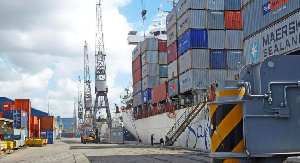
Bulk Distribution Companies are raising alarm over increased demurrage charges by vessels at the Country’s entry point due to interference with the Laycan schedule.
This can lead to an increase in the cost of petroleum products at the pump.
The situation is threatening the survival of the entities and further affecting the ability of consumers to enjoy more reductions on the price of petroleum products as a result of the appreciation of the local currency.
According to the Chamber of Bulk Oil Distributors (CBOD), certain faceless individuals take advantage of the situation to charge exorbitant fees that are not authorised by the government, which further aggravates the situation.
Sources at the CBOD have indicated that if the situation is not halted or controlled, petroleum prices may take a while before experiencing a significant drop as expected by many Ghanaians.
The Laycan schedule, developed through industry consultations and published by the National Petroleum Authority (NPA), is essential for aligning import timelines with international oil trading partners. However, since the beginning of 2025, the schedule has been revised more than four times in the first quarter alone and six times again in the second quarter, often without due consultation with industry stakeholders.
Chief Executive of the CBOD, Dr. Kwaku Ofori, in a conversation, disclosed that political interference is hampering the progress of the schedule.
“These repeated and unilateral changes have created severe operational and financial burdens for Bulk Import, Distribution, and Export Companies (BIDECs).
Each revision typically affects around 10 cargoes, resulting in an estimated thirty 30 days of disruption and additional costs such as unplanned demurrage and hedge-related losses.
Within the first two quarters of the year, BIDECs have incurred over US$40 million in demurrage alone due to these avoidable schedule changes.
The Chamber finds it particularly concerning that some BIDECs without assigned Laycans, or those citing emergency needs, have been allowed to bypass the established schedule, undermining transparency and fairness in the allocation process. For the first time, the Q2 Laycan has been extended into quarter three, up to September 2025, further compounding uncertainty in the sector.
“We have submitted proposals to the NPA to restore predictability and fairness in Laycan administration. Unfortunately, these recommendations have not been implemented, and the disruptions have continued,” he disclosed.
These challenges faced by the bulk importers, compounded with other technical difficulties, are making the sector unattractive.
Latest Stories
-
Conflicts among care providers linked to maternal, neonatal deaths – Expert
2 minutes -
GIS marks 10th TIME conference, champions improved teaching practices
10 minutes -
BRICS Or Balance? What Ghana’s bid really means
35 minutes -
GPRTU wants full TRAFFITECH-GH implementation to start in 2027
54 minutes -
Mahama announces plans to import electric wheelchairs for PWDs
58 minutes -
KGL U17 Colts 2026: Western beat Prempeh Elite Academy to set up final final with Greater Accra Region
1 hour -
Late Solanke strike salvages 10-man Spurs draw at Man United
1 hour -
Gender Ministry to monitor welfare of Nana Akua Addo’s children amid domestic violence case
2 hours -
Benedict Okyere Yeboah: Ghana’s football problem goes beyond sacking a coach
2 hours -
GPL 2026/27: Darkwah Wiafe’s winner sees All Blacks beat Kotoko
2 hours -
ITF World Tour : Patel Wins Boys’ Singles Final at J100 Accra
2 hours -
Ghana must pursue BRICS partnership if it brings economic benefits – Kpebu
2 hours -
Success and Wright Claims J100 Accra Girls’ Doubles Championship
2 hours -
ITF J100: America’s Wright wins J100 Accra Girls’ Singles Title
2 hours -
Expedition hopes to find aviator Amelia Earhart’s plane on remote island
2 hours