

Audio By Carbonatix
From Ukraine’s battlefields to NATO’s latest initiatives, recent developments show that maintaining military advantage depends on more than acquiring advanced technology. It requires the ability to move promising ideas from research to the front line quickly, efficiently, and at scale.
Military advantage is no longer defined by numbers alone. Increasingly, it depends on how quickly armed forces can identify emerging technologies and translate them into battlefield capability.
In an era of strategic competition, innovation has become as fundamental to national defence as training, logistics and operational planning.
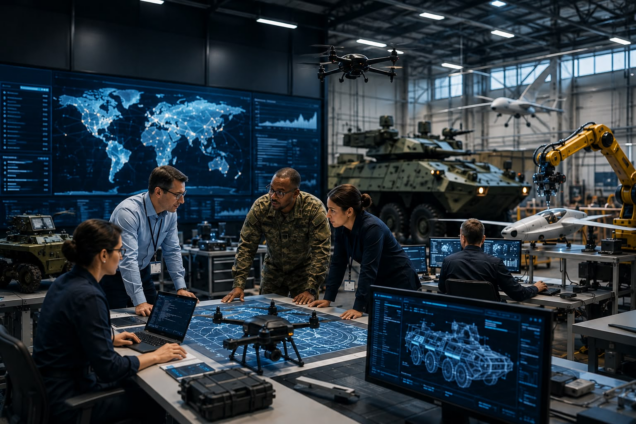
The war in Ukraine has underscored this shift. Commercial drones, satellite communications and artificial intelligence-enabled software have been integrated into military operations far more quickly than traditional procurement cycles would have allowed.
These capabilities have enhanced reconnaissance, battlefield awareness and precision targeting, while exposing the limitations of acquisition systems that often take years to deliver new equipment.
The conflict has shown that the ability to adopt and employ new technology quickly can shape military outcomes as decisively as conventional firepower.
Beyond compliance, today’s defence environment demands more than merely meeting procurement procedures or technical certification. Armed forces must identify promising technologies early, assess them rigorously and field them before operational requirements change.
In response, many governments are expanding collaboration with technology companies, universities and research institutions, creating faster pathways from research and development to military application.
NATO has made this approach a strategic priority through the Defence Innovation Accelerator for the North Atlantic (DIANA) and the NATO Innovation Fund.
Together, these initiatives support research into artificial intelligence, quantum technologies, autonomous systems, biotechnology and resilient communications, and connect innovators with defence organisations across the Alliance. Their objective is to accelerate the adoption of emerging technologies and to strengthen Allied readiness for future challenges.
The industry is evolving alongside these efforts. Digital engineering, advanced manufacturing and advanced simulation are shortening development timelines and improving the design, testing and production of defence systems.
At the same time, lessons from the COVID-19 pandemic and recent conflicts have reinforced the importance of resilient supply chains for critical military equipment. Industrial resilience is now recognised as a strategic component of national security.
Technology alone, however, cannot guarantee military effectiveness. Skilled personnel, experienced leadership and realistic training remain essential to the successful integration of new capabilities. Continued investment in people ensures that technological advances can be applied confidently, responsibly and effectively in demanding operational conditions.
Defence innovation is ultimately about maintaining military readiness in an unpredictable world. Nations that shorten the path from research to deployment, strengthen cooperation across government, industry and academia, and invest in a highly skilled workforce will be better placed to deter aggression, support allies and respond to emerging threats.
In modern defence, the decisive advantage will belong not simply to those who develop the most advanced technologies, but to those who can transform them into battlefield capability more quickly than their competitors.
Latest Stories
-
Burnham had formal meeting with Man City chair while mayor
5 minutes -
Is Ghana producing too many lawyers? What is the best lawyer-to-citizen ratio?
8 minutes -
NDC sinking Ghana’s democracy with Emelia Agbenyo’s appointment – Miracles Aboagye
17 minutes -
Seedorf back in football as Corinthians head coach
30 minutes -
Hincapié and Zubimendi injured in post-match training session
39 minutes -
Fridges in French supermarkets hit by cyberattack
50 minutes -
Qantas flight grounded after bedbug outbreak
59 minutes -
Reality Zone with Vicky Wireko: International Day of the Girl, shaping today’s girl for tomorrow’s future – ZONTA Clubs lead the way
1 hour -
Global health must be led by countries, not designed for them – Mintah Akandoh
2 hours -
Mahama honoured at 2026 World Health Summit in Berlin for global health leadership
2 hours -
Breast cancer is not a death sentence – Besease Kontire Obaapanin, Magmina Foundation lead awareness campaign
2 hours -
EcoBank invests in digital education of 4 Garisson School to mark 40 years in Africa
3 hours -
AGI urges investment in skills and raw materials to strengthen local manufacturing
3 hours -
GPL 2026/27: ‘We have to rectify our mistakes’ – Boadu reacts to Aduana FC defeat
3 hours -
No disability access, no building permit – KMA declares
3 hours