

Audio By Carbonatix
The Biden administration has doled out more than $2 billion in direct payments for Black and other minority farmers discriminated against by the U.S. Department of Agriculture, the president announced Wednesday.
More than 23,000 farmers were approved for payments ranging from $10,000 to $500,000, according to the USDA. Another 20,000 who planned to start a farm but did not receive a USDA loan received between $3,500 and $6,000.
Most payments went to farmers in Mississippi and Alabama.
USDA Secretary Tom Vilsack told reporters that the aid “is not compensation for anyone’s loss or the pain endured, but it is an acknowledgment by the department.”
The USDA has a long history of refusing to process loans from Black farmers, approving smaller loans compared to white farmers, and in some cases foreclosing quicker than usual when Black farmers who obtained loans ran into problems.
National Black Farmers Association Founder and President John Boyd Jr. said the aid is helpful. But, he said, it’s not enough.
“It’s like putting a bandage on somebody that needs open-heart surgery,” Boyd said. “We want our land, and I want to be very, very clear about that.”
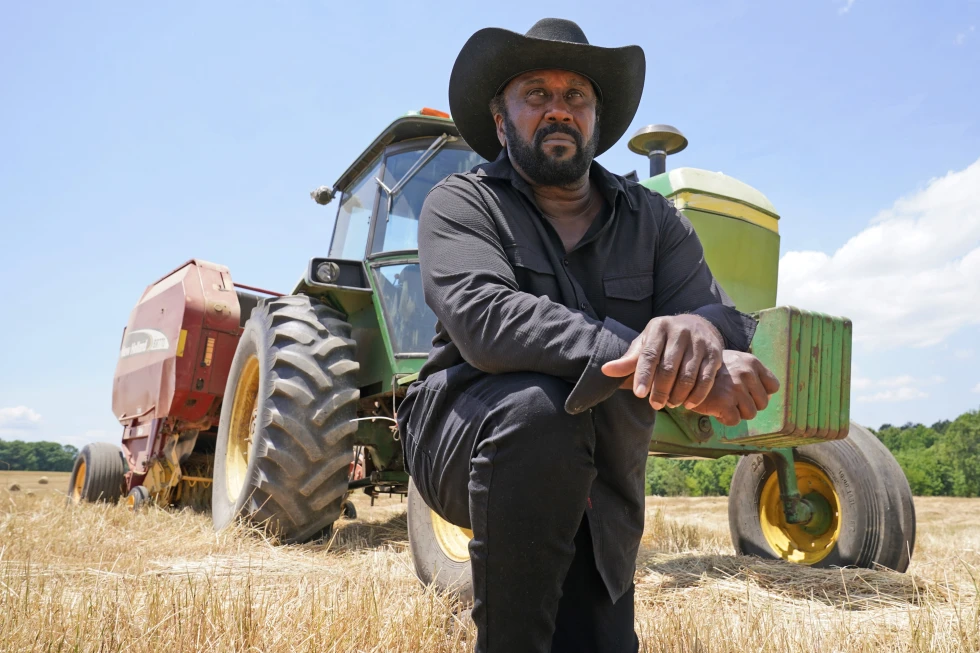
Boyd is still fighting a federal lawsuit for 120% debt relief for Black farmers that was approved by Congress in 2021. Five billion dollars for the program was included in the $1.9 trillion COVID-19 stimulus package.
But the money never came. White farmers in several states filed lawsuits arguing their exclusion was a violation of their constitutional rights, which prompted judges to halt the program shortly after its passage.
Faced with the likelihood of a lengthy court battle that would delay payments to farmers, Congress amended the law and offered financial help to a broader group of farmers. A new law allocated $3.1 billion to help farmers struggling with USDA-backed loans and $2.2 billion to pay farmers who the agency discriminated against.
Wardell Carter, who is Black, said no one in his farming family got so much as access to a loan application since Carter’s father bought 85 acres (34.4 hectares) of Mississippi land in 1939. He said USDA loan officers would slam the door in his face. If Black farmers persisted, Carter said officers would have police come to their homes.
Without a loan, Carter’s family could not afford a tractor and instead used a horse and mule for years. And without proper equipment, the family could farm at most 40 acres (16.2 hectares) of their property — cutting profits.
When they finally received a bank loan to buy a tractor, Carter said the interest rate was 100%.
Boyd said he’s watched as his loan applications were torn up and thrown in the trash, been called racial epithets, and was told to leave in the middle of loan meetings so the officer could speak to white farmers.
“We face blatant, in-your-face, real discrimination,” Boyd said. “And I did personally. The county person who was making farm loans spat tobacco juice on me during a loan session.”
At age 65, Carter said he’s too old to farm his land. But he said if he receives money through the USDA program, he will use it to get his property in shape so his nephew can begin farming on it again. Carter said he and his family want to pitch in to buy his nephew a tractor, too.
Latest Stories
-
Friends of Bridget Bonnie Marks her 35th birthday with donation to Kasseh Model Health Centre
10 minutes -
Landfilling waste management creates no value, it’s an economic waste
37 minutes -
Photos: Speaker Bagbin Commissions MPs constituency office under parliamentary decentralisation programme
53 minutes -
Black Stars technical advisor Winfried Schäfer sacked as GFA shakes up backroom staff
58 minutes -
Wenchi water project almost complete, critical to gov’t agenda – GWL MD
1 hour -
Anti-LGBTQ+ bill not part of government’s legislative agenda – Inusah Fuseini
1 hour -
Anti-LGBTQ Bill: Forget the rumour mongers, I’m a man of action, and will pass the bill – Speaker
2 hours -
Women and children among those killed in Sudanese army shelling of wedding celebration
2 hours -
President Mahama is not sincere with Ghanaians on LGBTQ bill matter – Hassan Tampuli
2 hours -
Gov’t to establish Prison Industrial Hub to equip inmates with income-generating skills – Prison Service boss
3 hours -
Alhassan Tampuli donates cement, roofing sheets to support storm victims in Gushegu
3 hours -
Alhassan Tampuli appeals for urgent support for storm victims in Gushegu
3 hours -
The hypocrisy must stop; pass Anti-LGBTQ+ Bill now – Alhassan Tampuli to Mahama
3 hours -
Imprisonment should be rehabilitative, not punitive – Ghana Prisons boss at UNGA
3 hours -
Ga Adangbe traditional priests petition Mahama over McDan aviation licence revocation
3 hours