

Audio By Carbonatix
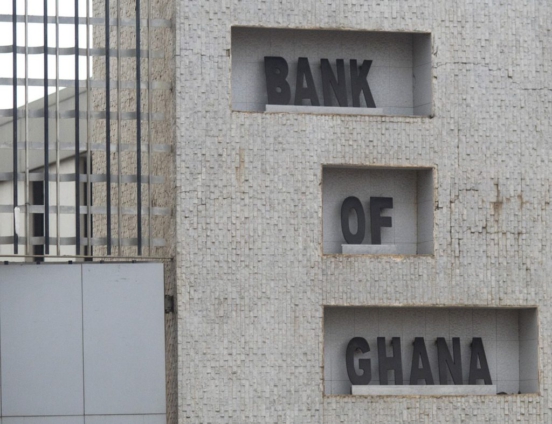
A governance group Data and Advocacy Consult Ghana has applauded the Bank of Ghana for saving Ghana from dire economic crises.
According to the group, the Bank of Ghana’s decisions in the past year which led to the record GH₵60 billion loss saved the country from collapse.
In a press release, Data and Advocacy Consult noted that they were initially alarmed by the BoG’s report on the loss, however, the central bank’s Governor’s press briefing provided the needed answers on why such a huge loss was recorded.
“In fact, but for their intervention, Ghana would have probably become the Sri Lankan case in Africa. What is particularly satisfying, is the fact that they adhered strictly to laid down procedures and applicable laws in offering the relevant interventions. The leadership of the Bank should therefore be commended instead of being condemned,” parts of the statement read.
The Civil Society therefore urged Ghanaians to support the BoG as they work towards recovery and called for more engagement with the BoG by stakeholders.
“We recognise the right of all Ghanaians to freely express themselves through picketing and the like. However, the key question that remains to be answered is, to what end? What happens after the picketing?”
This comes after BoG's Governor, Dr. Ernest Addison, defended the management record of the central bank, following the bank’s reported loss of GHȼ60 billion in 2022.
Addressing a press conference Monday to explain the circumstances leading to the unusual loss, Dr. Addison showed how the central bank, prior to 2022, had been registering profits, and how that positive streak was affected by global economic factors, which hit Ghana and several economies around the world.
The Governor added that the precarious situation required a clear public policy initiative by the government to protect lives and livelihood “at all costs”, and “protecting lives and livelihood at all costs required exceptional financing”.
He stated that fortunately for Ghana, the intervention of global financial institutions, through the IMF’s Rapid Credit Facility and the World Bank, ensured that a portion of this financing was met.
He further explained that with limited external funding available to the government, the central bank had to intervene in the emergency situation.
Read more: BoG was able to step in to support economy due to years of prudent management – Governor
Meanwhile, on BoG’s new building, the Data and Advocacy Consult Ghana noted that they were satisfied with the reason behind the call.
“It must be noted that the need for a new Bank of Ghana office dates to the 1990s, a fact that was not fully captured in the report and not adequately figured in the conversations. Furthermore, the decision to undertake the new project also was taken in good times (when the Bank made profits) and that, all procurement laws were respected.”
Read the full statement below:
Latest Stories
-
PKO trio eye victories at Odwira Festival
1 hour -
346 Ghana Navy recruits pass out after 26 weeks of intensive training
1 hour -
Newsfile to discuss EOCO-MP arrest, drug trafficking, speech arrests and $235m water debt
2 hours -
JoyNews gets results as listeners raise GH¢40,000 to help 17-year-old student with cerebral palsy attend SHS
2 hours -
Vice President calls for stronger local pharmaceutical production to reduce medicine imports
2 hours -
The brewing tension at KNUST; Beware the Ides of October….
3 hours -
Health Ministry moves to integrate traditional medicine into mainstream healthcare
3 hours -
550 pupils in Kintampo South get educational lifeline as ‘Seeds of Hope’ reaches farming communities
3 hours -
Opoku Mensah urges Christian Council, House of Chiefs to speak up on democratic freedoms
4 hours -
Teacher unions’ strike: Minority demands immediate payment of teacher arrears, 20% deprived area allowance
4 hours -
The Accra-Kumasi Expressway: Building it right
4 hours -
Beyond gold exports: Building value and economic resilience from Ghana’s gold
4 hours -
2027 AFCONQ: Ghana under pressure as Gambia beat Somalia 2-1
4 hours -
Eastern NPP Women’s Organiser calls on AG, Police to secure bail for Salomey Baffoe
4 hours -
Poverty, illiteracy driving acceptance of vote-buying among women – Damongo Queen Mother
5 hours