

Audio By Carbonatix
The Bolgatanga Technical Institute (BOTECH) has been shut down indefinitely following a violent student riot.
The development has reignited national concerns about a recurring wave of unrest in educational institutions.
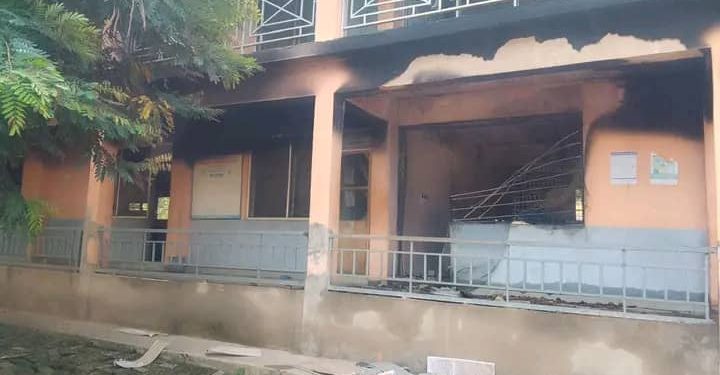
The disturbances, which began late on Thursday, August 14, saw students set fire to parts of the campus, causing extensive property damage and bringing academic activities to a standstill.
- slot pulsa
- situs slot 5000
- slot deposit 5000
- royalhoki77
- https://poolsafetygroup.com.au/what-we-do/
- https://patorama.com.au/helicopter-photography/
- https://reactmaintenancegroup.com.au/electrical-maintenance/
- https://www.100plumbing.com.au/work-with-us/
- slot maxwin
- https://finishingblade.ca/Banner/
- https://tubulousaustralia.com.au/gallery/
The violence at BOTECH resulted in the destruction of the school’s library and the senior housemaster’s office, the most recent in a series of similar incidents that have plagued technical and secondary schools across the country.
The action was taken by authorities to safeguard students, staff, and school property while investigations are carried out."
While the specific cause of this latest riot remains under police investigation, past student unrests have often been linked to issues such as strict examination invigilation, conflicts with school authorities, and poor living conditions.
The financial toll of these incidents is substantial, with government and school management facing significant costs to repair or rebuild damaged infrastructure.
Although no injuries were reported in the Bolgatanga incident, the threat of violence remains a serious concern for school communities.
This incident, much like a similar protest at the Bawku Technical Institute, highlights the need for a comprehensive, long-term solution to address the root causes of student grievances. "
We need to move beyond reacting to these events and focus on proactive measures," one educational analyst noted, adding that dialogue between students and school management is key to preventing future outbreaks of violence. The full extent of the damage is still being assessed, but the academic calendar for the school's students has been severely disrupted, affecting their preparations for upcoming examinations.
This video provides additional context on a similar student protest at the same institution in 2022, highlighting how such events can lead to the temporary closure of schools.
Latest Stories
-
80–90% of gold purchased and exported is now refined in Ghana– Sammy Gyamfi
8 minutes -
Dichemso M/A teachers go house-to-house to get absent pupils back to class after strike suspension
11 minutes -
Meet Dr Hazel and Nhyira: Mother and daughter called to the Ghana Bar
14 minutes -
Black Star Fashion Week: Can Ghana turn the runway into a tourism attraction?
15 minutes -
Ghana sends 61 health workers to Grenada under Labour Export Programme
27 minutes -
Central banks should avoid reacting too strongly to headline inflation – IMF
34 minutes -
Kumasi: One injured, shops destroyed in Atasemanso fire in Kumasi
47 minutes -
Global economy proving resilient, growth projected at 3.1% in 2026 – IMF
51 minutes -
NDC targets all 6 parliamentary seats in Ahafo Region for 2028
54 minutes -
Ghana targets thousands of overseas nursing jobs under Labour Export Programme
56 minutes -
Pius Hadzide explains why Sports Ministry always attracts scandals
57 minutes -
APL says GoldBod terminated US$1bn Goldstream deal over failure to meet obligations
1 hour -
Daily Insight for CEOs: Making better decisions under pressure
1 hour -
Weta rice farmers seek urgent support after floods destroy crops
1 hour -
Mahama commits GH¢200m in 2027 Budget to complete Police Hospital expansion
1 hour