

Audio By Carbonatix
The African Group of Negotiators on Climate Change (AGN) says developing countries’ efforts on adaptation must be recognised in the outcome of the Global Stocktake, as the 58th session of the United Nations Subsidiary Bodies (SB58) conference ends.
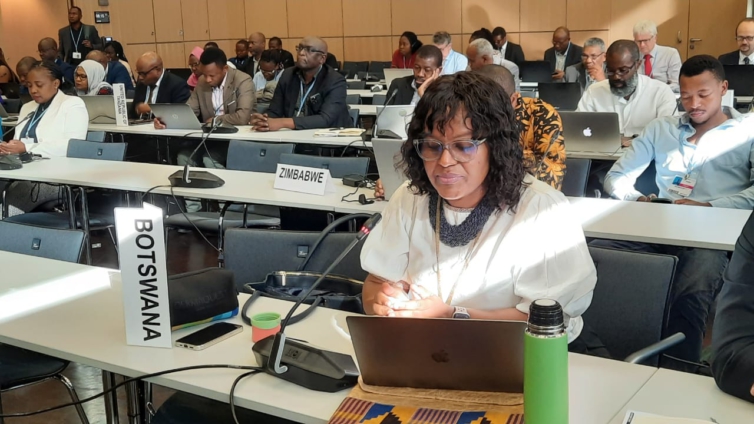
Speaking during the closing session of the technical dialogue of the GST in Bonn, Germany, AGN Chair Ephraim Mwepya Shitima, said developing countries have demonstrated unwavering commitment by mobilising domestic resources for adaptation in the face of inadequate international support.
“We reiterate the need for an additional message in the GST on the recognition of adaptation efforts of developing countries, which is a strong demonstration of commitment by vulnerable countries in the face of inadequate international support,” said Shitima.
“We also look forward to guidance on how we will deliver on the clear mandate in respect of assessing the Global Goal on Adaptation (GGA).”

As the world is already experiencing changes in average temperature, shifts in the seasons, an increasing frequency of extreme weather events, and slow onset events, Africa has not been spared from climate disasters requiring adaptation resources at scale.
According to the United Nations Framework Convention on Climate Change (UNFCCC), adaptation refers to adjustments in ecological, social or economic systems in response to actual or expected climatic incentives and their effects. It refers to changes in processes, practices and structures to moderate potential damages or to benefit from opportunities associated with climate change.
Many nations and communities are already taking steps to build resilient societies and economies. However, greater action and ambition is needed to cost-effectively manage the risks, both now and in the future.
Parties to the UNFCCC and its Paris Agreement recognise that adaptation is a global challenge, which requires country-driven, gender-responsive, participatory and fully transparent approaches, considering vulnerable groups, communities and ecosystems; and guided by best available science.
The UNFCCC has set up constituted bodies and work streams relevant to progressing adaptation responses and enhancing societal and environmental resilience. Most recently, the work programme on the Global Goal on Adaptation, launched in 2021 at COP 26, maps out the way for the world to enhance adaptive capacity, strengthen resilience, and reduce vulnerabilities associated with climate change.
During the technical dialogue on the GST, the AGN made it abundantly clear, the continent’s aspirations on adaptation.
Kulthoum Omari, AGN Lead Coordinator for the GGA, said: “We are already feeling the impacts from climate change, even below 1.5-degree global warming. Currently, we are at 1.15 degrees of global warming and according to the World Meteorological Organisation (WMO), Africa has warmed faster than the global average since pre-industrial times. This emphasizes the urgency of accelerating the implementation of adaptation in Africa during this decade…,” said Omari.
The IPCC WGII report, through the Africa Chapter provides information on the impacts of climate change to date. For example, Agricultural productivity growth in Africa is reported to have reduced by 34% since 1961 due to climate change, more than any other region.
IPCC further predicts that most African countries will enter unprecedented high temperature climates earlier in this century than generally wealthier, higher latitude countries, emphasising the urgency of accelerating implementation of adaptation in Africa during this decade.
It is for this reason that the African Group insists on a comprehensive approach and action-oriented content of the Factual Synthesis Report (FSR), presenting clear findings on the required efforts; current levels of efforts and gaps; and implementation of the Nationally Determined Contributions (NDC) cycle and raising of ambition in Parties' undertakings and international cooperation based on equity and Common But Differentiated Responsibilities and Respective Capabilities (CBDR-RC) principle.
“We cannot over-emphasise the importance of balance between the various thematic areas and addressing them in a comprehensive manner. We reiterate the call for a standalone reflection on loss and damage and response measures in the Factual Synthesis Report. We trust that our concerns on adaptation and the means of implementation sections will also be addressed in the next iteration of our work,” concluded AGN Chair.
Latest Stories
-
GPRTU in Savannah Region to protest alleged eviction in Damongo
22 minutes -
Re: Reinsurance does not replace process — A response to the SIGA–SIC defence
36 minutes -
Gender Ministry supports Harriet Amuzu in ongoing abuse case
49 minutes -
AG joins plaintiff to scrap OSP ?: We should be mindful of the mischief in this – Bobby Banson
56 minutes -
Samson Lardy Anyenini questions willingness of Attorneys-General to prosecute political colleagues
58 minutes -
It is only fair the OSP is heard in Supreme Court case – Bobby Banson
1 hour -
Asiedu Nketia resumes Ashanti tour, second leg kicks off on Sunday
1 hour -
NLA denies salary cut claims, threatens legal action over reports
1 hour -
BoG Governor honoured for stabilising cedi, improve inflation
1 hour -
Kyebi Easter Homecoming 2026: A resounding success!
2 hours -
Trade Minister applauds GUTA as a pillar of economic growth; Prez Mahama honoured
2 hours -
President’s brother’s takeover of Damang Mines is ‘untidy’ – Alhassan Tampuli
2 hours -
It’s not true that gov’t decided not to renew the lease for Gold Fields – Bobby Banson
2 hours -
Ghana to boost tomato production with 60-hectare irrigated farms and processing initiatives
3 hours -
E&P’s takeover process of Damang Mines was very clean – Inusah Fuseini
3 hours