

Audio By Carbonatix
Ghana has taken a bold step toward becoming a leading global business services hub with the official launch of the Business Outsourcing Services Association Ghana (BOSAG) 5-Year Strategic Plan. The landmark event, held at the Accra Digital Centre, marks a turning point for the country’s outsourcing industry and sets an ambitious target: creating 100,000 sustainable international-facing jobs for Ghanaian youth by 2030.
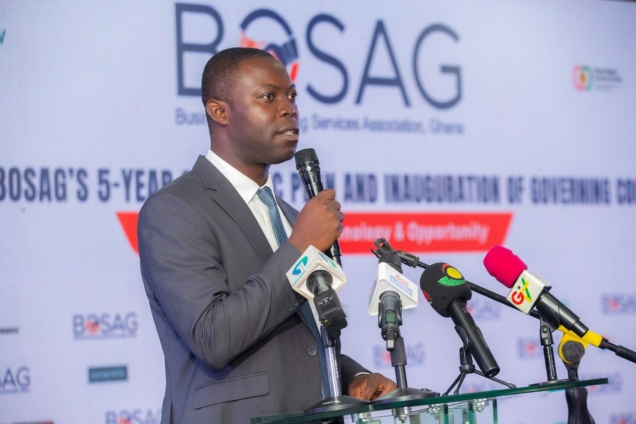
What began three years ago as a simple conversation among a handful of passionate BPO and ITO leaders has now evolved into a nationally coordinated movement. Speaking at the launch, David Gowu, CEO of BOSAG and a founding board member, reflected on this journey:
“Three years ago, we asked ourselves how Ghana could compete globally in outsourcing and digital services. Today, that vision has become a reality. It is humbling to see this plan come to life—a roadmap that will transform Ghana’s digital economy and create opportunities for thousands of young people.”
The strategic plan
The BOSAG 5-Year Strategic Plan is designed to position Ghana as a premier destination for global business services, leveraging the country’s competitive workforce, growing digital infrastructure, and strategic location. At its core, the plan focuses on five strategic pillars that will drive this transformation: raising international visibility and client engagement, driving skills development and talent readiness, promoting and supporting local sector and operator capability building, facilitating policy advocacy and public-private alignment, and enabling sector research and knowledge sharing.
These pillars represent a comprehensive approach to building a robust outsourcing ecosystem—one that connects Ghana to global markets, empowers local operators, and ensures that talent development aligns with international standards.
Government endorsement and policy alignment
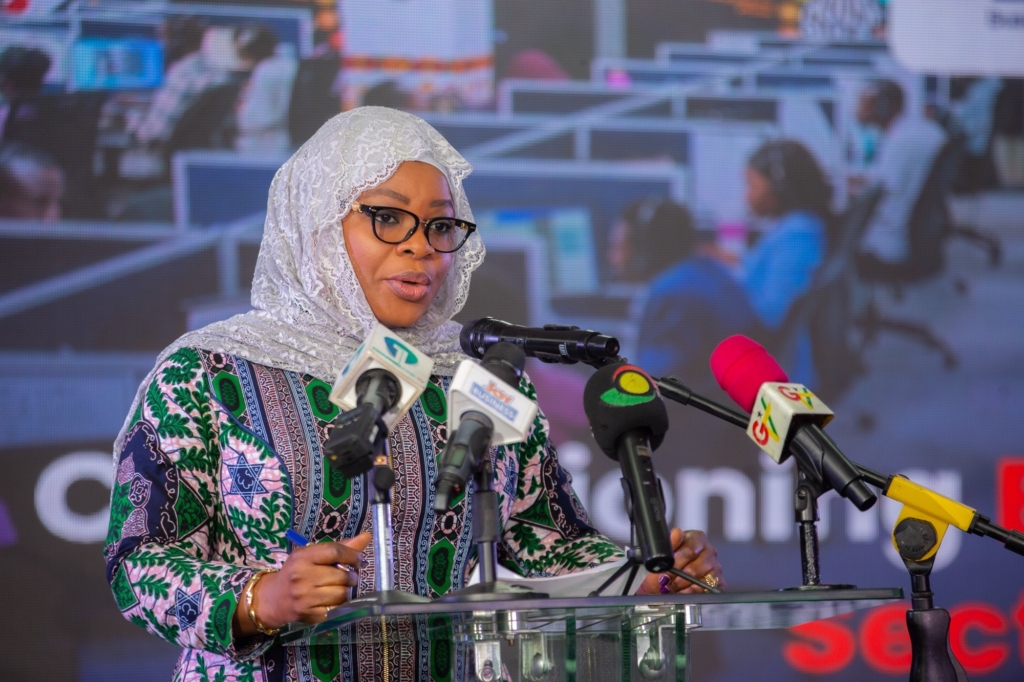
Delivering a statement on behalf of the Chief of Staff, Shamima Muslim underscored the significance of this initiative: BOSAG’s strategic plan builds on Ghana’s digital transformation legacy. It presents a bold and coordinated roadmap to unlock 100,000 sustainable international-facing jobs for Ghanaian youth by 2030. This is not just a number—it is a promise to our young people, a commitment to inclusive growth, and a strategy to harness the full potential of our digital infrastructure, our competitive workforce, and our strategic location.
Representing the Minister of Communication, Digital Technology & Innovations, Bishop Dr. Samuel Antwi-Gyekyi highlighted the Ministry’s broader commitment to building a resilient, investor-ready digital economy. He announced strategic partnerships with global technology firms such as Huawei, MTN, Amazon Web Services, and Oracle to deliver specialized training modules and accelerate digital skills development. Additionally, the Ministry is finalizing new legislation including the Ghana Startup Act, Cybersecurity Regulations, and frameworks for AI, cloud services, and digital trade to create a modern, secure, and enabling environment for innovation and investment.
Global expertise and industry collaboration
The launch event brought together government representatives, development partners, global outsourcing experts, and industry leaders who share a common goal: positioning Ghana as a competitive player in the global business services market. Kojo Hayford, BOSAG Board Chair, opened the event with an inspiring address, highlighting the need for bold action and collaboration.
Adding global perspective, David Rumble from the UK and Rolana Rashwan from Egypt, two renowned international GBS experts, flew in to support BOSAG and share knowledge of international best practices, underscoring Ghana’s readiness to compete globally.
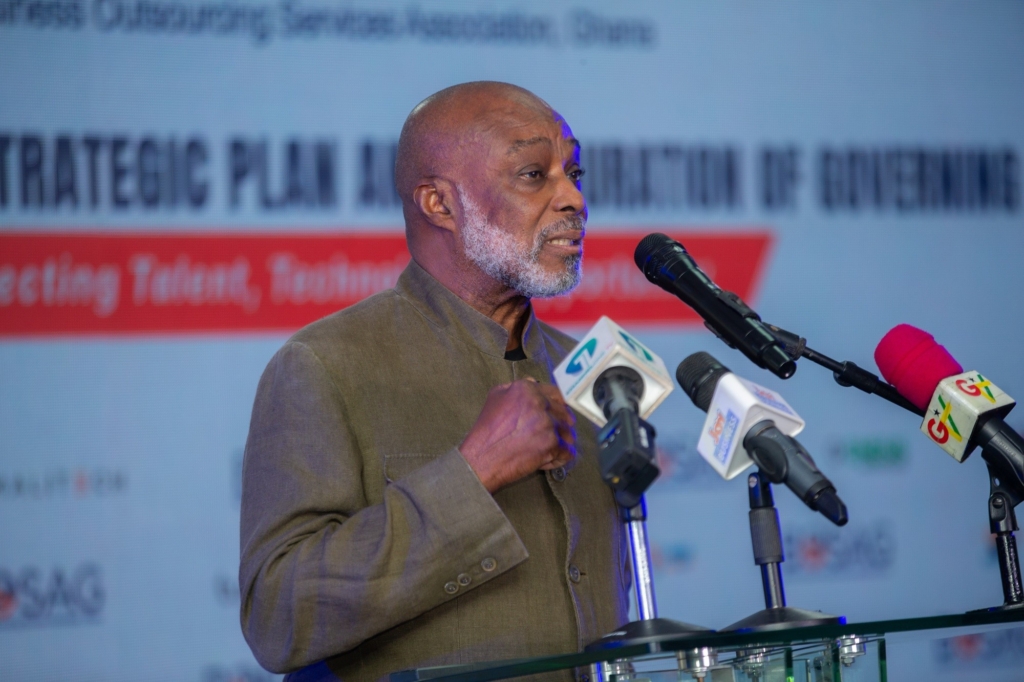
They were joined by Ryan Keilloh, Country Director of Concentrix, and El Hadi Ouadghiri Bencherif, Operations Director and Country Head of Teleperformance, representing two of the world’s largest BPO companies with established operations in Ghana. These leaders engaged in strategic discussions on what Ghana must do to achieve the ambitious target of 100,000 jobs. The conversations highlighted the importance of collaboration between global players and local stakeholders to build a thriving outsourcing ecosystem.
Development partners and infrastructure support
The success of this milestone would not have been possible without the unwavering support of development partners. GIZ Ghana, through its Invest for Jobs Programme, played a pivotal role in shaping the strategic plan and supporting BOSAG throughout its setup. Ghana Digital Centres Limited (GDCL), led by CEO Dzifa Gunu, hosted the launch and emphasized the need for nationwide digital infrastructure and training to sustain growth.
Side attractions: Showcasing talent and innovation
To demonstrate the skills of Ghana’s growing talent pool, MEST Africa’s team, which redeveloped BOSAG’s official website, delivered a live demo during the event. They walked participants through the development process and showcased the new features.
Additionally, the team set up interactive stands during the networking session to engage participants and display some of the innovative applications they have developed. These young developers are graduates of the GROW program, delivered by Generation Ghana under the Mastercard Foundation-sponsored BOOST initiative, highlighting the direct link between skills development and real-world projects.
In line with Ghana’s ambition to attract international GBS jobs, the event also featured an AI innovation capability demo by the 4th-IR team. This demonstration reminded participants of the importance of embracing emerging technologies such as Artificial Intelligence and positioning Ghana as a GBS destination that prioritizes innovation and sustainability. The showcase emphasized that future competitiveness will depend on integrating advanced technologies into outsourcing services.
Governing council sworn in
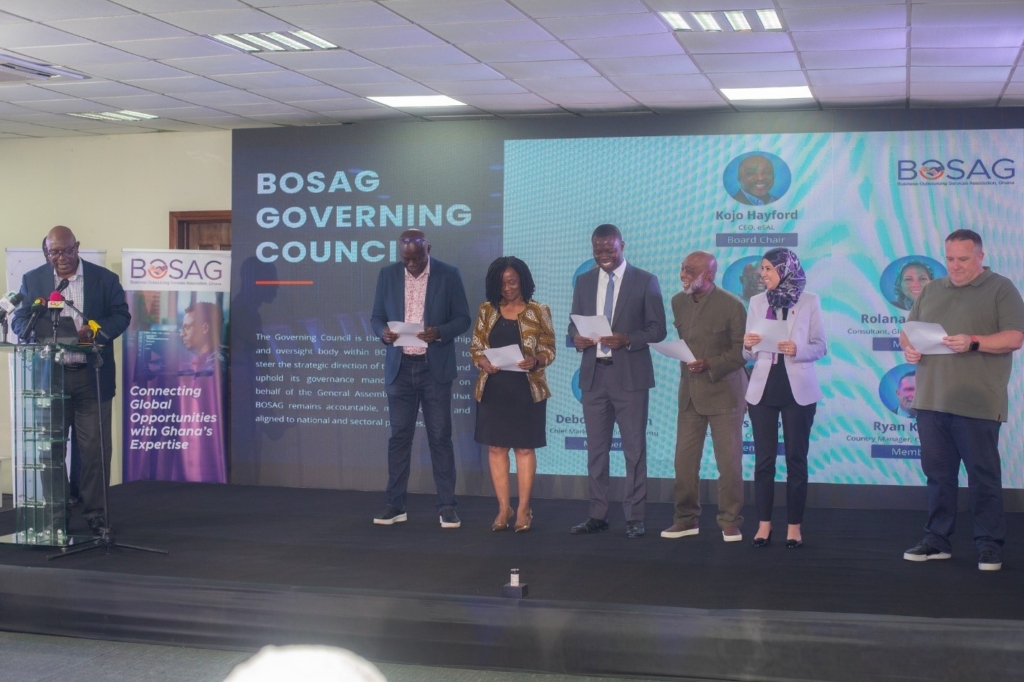
A major highlight of the event was the swearing-in of the BOSAG Governing Council, the principal leadership and oversight body within the association. The Governing Council is mandated to steer the strategic direction of BOSAG and uphold its governance mandate, ensuring accountability and alignment to national priorities.
Members of the Governing Council include: Kojo Hayford, Board Chair, CEO of eSAL; David Gowu, CEO of BOSAG; Matthew Darkwa, Operations Director, AmaliTech; Rolana Rashwan, Consultant, Global Business Services; Deborah Asmah, Chief Marketing Officer, Npontu; Mavis Ampah, CEO, Cactus Creek Foundation; and Ryan Keilloh, Country Manager, Concentrix Ghana.
Members of the Governing Council include: Kojo Hayford, Board Chair, CEO of eSAL; David Gowu, CEO of BOSAG; Matthew Darkwa, Operations Director, AmaliTech; Rolana Rashwan, Consultant, Global Business Services; Deborah Asmah, Chief Marketing Officer, Npontu; Mavis Ampah, CEO, Cactus Creek Foundation; and Ryan Keilloh, Country Manager, Concentrix Ghana.
Advisory board inaugurated
The BOSAG Advisory Board was also inaugurated at the event. Serving as a non-executive, expert-driven body, the Advisory Board provides strategic guidance, external insights, and credibility to BOSAG’s operations and long-term direction. While it does not hold decision-making authority, it plays a critical role in shaping high-level thinking, strengthening stakeholder alignment, and informing BOSAG’s engagement with government, development partners, academia, and the private sector.
Organizations appointed to the Advisory Board include: Ghana Investment Promotion Centre (GIPC), 24-Hour Economy Secretariat, Ghana Free Zones Authority, Ghana Digital Centres Limited, Kwame Nkrumah University of Science and Technology (KNUST), Ghana Export Promotion Authority (GEPA), Institute of ICT Professionals Ghana (IIPGH), Generation Ghana, Federation of GBS Associations, Ghana Hubs Network, Soronko Academy, Tony Blair Institute for Global Change, Association of Business Service Leaders (ABSL), and Afrika-Verein der Deutschen Wirtschaft.
Looking ahead
As Ghana embarks on this transformative journey, BOSAG calls on all stakeholders—government agencies, private sector players, development partners, and global investors—to join forces in building a thriving outsourcing ecosystem. With the right investments, policy support, and talent development, Ghana can achieve its 100,000-job target and emerge as a leading outsourcing destination in Africa.
Latest Stories
-
NPLs declined to 15.7% in August 2026
11 minutes -
Existing Cedi notes to remain legal tender alongside Heritage Series – BoG
17 minutes -
Consumer, business sentiments positive – BoG
27 minutes -
There’ll be no GH¢500 Cedi note as part of Heritage Series issuance – BoG
44 minutes -
Heritage Series Cedi notes to modernise cedi while preserving national identity – BoG
58 minutes -
Ghana’s business environment at ‘Inflection Point’ as private Sector takes greater lead — Vish Ashiagbor
1 hour -
At least 2 new airlines could join domestic aviation market by 2027 – GCAA Director General
1 hour -
What if Ghana’s next tourism boom begins with Ghanaians?
2 hours -
Energy Commission to monitor EV charging stations
2 hours -
Invest with confidence, Ghana’s golden era is beginning – Finance Minister
2 hours -
Do Ghana to launch The Great Ghana Day Out on World Tourism Day
2 hours -
Clean up our politics before politics cleans us up
2 hours -
2025 was a turning point, says Abradu-Otoo as NAFCO posts record GH¢91.7m profit
3 hours -
Today’s front pages: Friday, September 25, 2026
3 hours -
‘FA President has four clubs; what do you think he would do?’ – Nana Baffour Awuah fires back
3 hours