

Audio By Carbonatix
Canada has announced retaliatory tariffs against the US, in a move that marks the beginning of a trade war between the neighbouring countries.
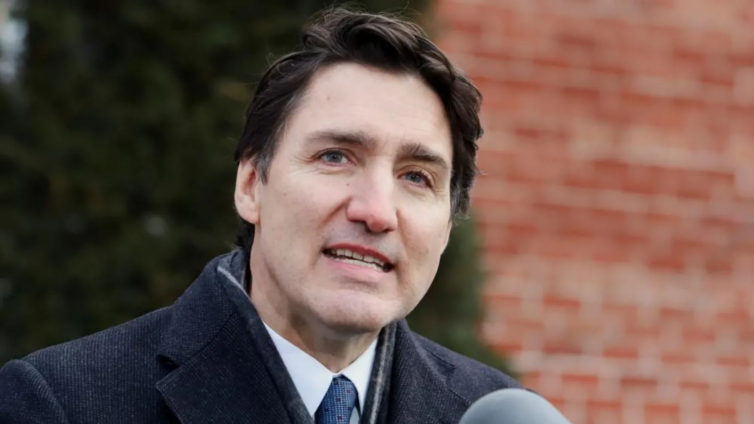
Prime Minister Justin Trudeau set out "far-reaching" tariffs of 25%, affecting 155bn Canadian dollars' worth ($106.6bn; £86bn) of American goods ranging from beer and wine to household appliances and sporting goods.
The move matches US President Donald Trump's 25% levy on Canadian and Mexican imports to the US - and an additional 10% on China - over his concerns about illegal immigration and drug trafficking.
Trudeau said he would "not back down in standing up for Canadians", but warned of real consequences for people on both sides of the border.
"We don't want to be here, we didn't ask for this," he said at a news conference late on Saturday.
The Canadian prime minister added that tariffs on 30bn-worth US goods would come into force on Tuesday and another 125bn in 21 days to give Canadian firms time to adjust.
Trudeau's response targets items including American beer, wine, bourbon, fruits and fruit juices, vegetables, perfumes, clothing and shoes, as well as household appliances, sporting goods and furniture.
Lumber and plastics will also face levies and non-tariff measures are also being considered related to critical minerals and procurement.
Economists have warned the introduction of import taxes by the US, and the response from Canada, as well as Mexico and China, could lead to prices rising on a wide range of products for consumers.
A tariff is a domestic tax levied on goods as they enter a country, proportional to the value of the import.
The prospect of higher tariffs being introduced on imports to the US has been concerning many world leaders because it will make it more expensive for companies to sell goods in the world's largest economy.
Christopher Sands, director of the Wilson Center's Canada Institute, told the BBC that tit-for-tat tariffs between the US and Canada were "mutually assured destruction" and they would impact people's lives very quickly.
He said there would be no adjustment time as US Treasury Secretary Scott Bessent had recently proposed: "Just a massive hit that's going to make a lot of people's lives a lot tougher, very quickly."
But the taxes are a central part of Trump's economic vision. He sees them as a way of growing the US economy, protecting jobs and raising tax revenue - and in this case, pushing for policy action.
Canada, Mexico and the US have deeply integrated economies, with an estimated $2bn (£1.6bn) worth of manufactured goods crossing the borders daily.
Canada is America's largest foreign supplier of crude oil. According to the most recent official trade figures, 61% of oil imported into the US between January and November last year came from Canada.
While 25% has been slapped on Canadian goods imported to the US, its energy faces a lower 10% tariff.
The White House said on Saturday the implementation of tariffs was "necessary to hold China, Mexico, and Canada accountable for their promises to halt the flood of poisonous drugs into the United States".
But Trudeau pushed back on the suggestion the shared border posed a security concern, saying less than 1% of fentanyl going into the US comes from Canada.
He added less than 1% of illegal migrants entered the US through the border and that tariffs were "not the best way we can actually work together to save lives"
Trump has indicated he is ready to escalate the duties further if the countries retaliate to his tariffs, as Canada has done.
Prior to the tariffs announcement, Canada has pledged more than $1bn to boost security at its shared border with the US.
Trudeau said on Saturday had not spoken to Trump since he had taken office.
Mark Carney, the former head of Canada's and England's central banks, told BBC Newsnight on Friday that the tariffs would hit economic growth and drive up inflation.
"They're going to damage the US's reputation around the world," said Carney, who is also in the running to replace Trudeau as leader of Canada's Liberal Party.
Latest Stories
-
WAFU B U17: Ghana top Group A after win over Togo
28 minutes -
Ho Central Mosque reopens amid unresolved leadership dispute that led to closure
2 hours -
Minority caucus questions GH¢16.4m in Ablakwa’s SA evacuation spending, demands independent audit
2 hours -
Gender Ministry meets Nana Akua Addo’s husband over domestic violence after hospital discharge
3 hours -
UG Vice-Chancellor urges swift operationalisation of National Research Fund
3 hours -
Pope Leo to have surgery after lump found in lung
3 hours -
Joseph Cudjoe writes: Ghana must break free from the dangerous mindset that natural resources are the foundation for wealth
4 hours -
Children among 109 dead after boat capsizes off Djibouti, UN says
4 hours -
OmniBSIC Bank’s 11th health walk promotes fitness and business growth
4 hours -
2026 World Maritime Day: Danish Embassy organises “The Gulf of Guinea Speaks”
4 hours -
New Economy will tackle unemployment and restore hope – Ato Forson
4 hours -
IMMILAC president recounts personal losses as security women lead breast cancer awareness campaign in Wa
4 hours -
University of Ghana postpones October 12 reopening as GAUA strike persists
5 hours -
Bahass Foundation launches vocational skills training to support mental health recovery in Wa
5 hours -
NPP orders parliamentary aspirants and their supporters to suspend campaign activities
6 hours