

Audio By Carbonatix
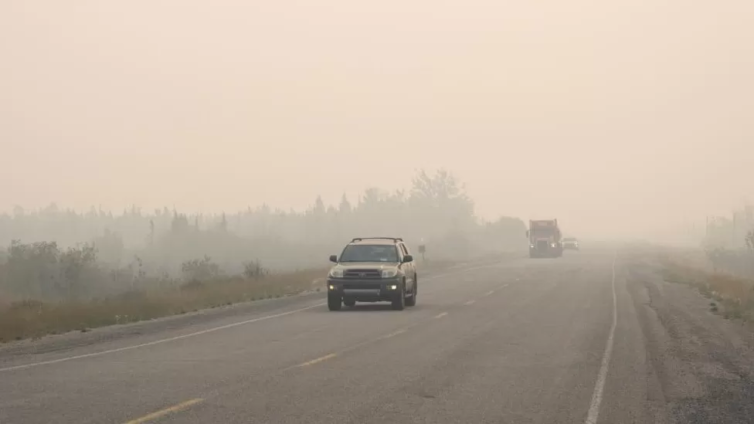
Wildfire is bearing down on the capital city of Canada's Northwest Territories, with thousands of people under evacuation orders.
The conflagration - which has already razed one remote community - could reach the city of Yellowknife by the weekend, say officials.
Another fire is threatening the community of Hay River.
One evacuee told the CBC her car began melting as they drove through embers while fleeing the town on Sunday.
The Northwest Territories declared a state of emergency late on Tuesday as it battles more than 200 wildfires.
Hay River Mayor Kandis Jameson estimated that about 500 people were still in the community of some 3,500 people as of Tuesday despite an evacuation notice issued for the town over the weekend.
The fire moved 30km in a few hours because of strong winds earlier this week, closing the only two highways out of the town.
The road out of Hay River is "treacherous", the mayor said, and food and petrol supplies are getting low in the town.
Phone and internet services have also been down in the remote region.
Canada's military has been co-ordinating airlift operations out of several communities in Northwest Territories' South Slave Region that have been threatened by wildfires in recent days.
It is the largest airlift evacuation effort in the territory's history.
Most evacuees have been brought south to the neighbouring province of Alberta, with no indication as to when they will be able to return home.
Yellowknife, a city of 20,000 south of the Arctic Circle, declared a state of emergency on Monday.
Officials hope Yellowknife could be spared the wildfires if it rains as forecast in the next few days. The blaze was about 17km (10 miles) north-west of the city as of Wednesday afternoon.
Fort Smith, K'atl'odeeche First Nation, Hay River, Enterprise and Jean Marie River are all under evacuation orders.
Enterprise, home to 120 people, is "90% gone" after a wildfire swept through this week, the community's mayor told the CBC on Tuesday.
Canada is having its worst wildfire season on record, with nearly 1,100 active fires burning across the country as of Wednesday.
Experts have pointed to a warmer and drier spring than normal as the reason.
Scientists say climate change increases the risk of the hot, dry weather that is likely to fuel wildfires.
Latest Stories
-
When the Gospel Becomes a Weapon: The church, blackmail and the abuse of faith
14 minutes -
JoyNews’ Jacqueline Ansomah Yeboah selected for UK Media Excellence for Emerging Technology Fellowship
31 minutes -
Mental Health Alliance urges government to operationalise Mental Health Fund
46 minutes -
Ghana–Holy See agreement heads to Parliament after Cabinet approval
50 minutes -
Luv FM Corporate Games 2026: Kumasi Central Prisons, Amanfiman Bank win big amid fun
1 hour -
WAFU B U17: Ghana top Group A after win over Togo
2 hours -
Ho Central Mosque reopens amid unresolved leadership dispute that led to closure
3 hours -
Minority caucus questions GH¢16.4m in Ablakwa’s SA evacuation spending, demands independent audit
3 hours -
Gender Ministry meets Nana Akua Addo’s husband over domestic violence after hospital discharge
4 hours -
UG Vice-Chancellor urges swift operationalisation of National Research Fund
4 hours -
Pope Leo to have surgery after lump found in lung
4 hours -
Joseph Cudjoe writes: Ghana must break free from the dangerous mindset that natural resources are the foundation for wealth
5 hours -
Children among 109 dead after boat capsizes off Djibouti, UN says
5 hours -
OmniBSIC Bank’s 11th health walk promotes fitness and business growth
5 hours -
2026 World Maritime Day: Danish Embassy organises “The Gulf of Guinea Speaks”
5 hours