

Audio By Carbonatix
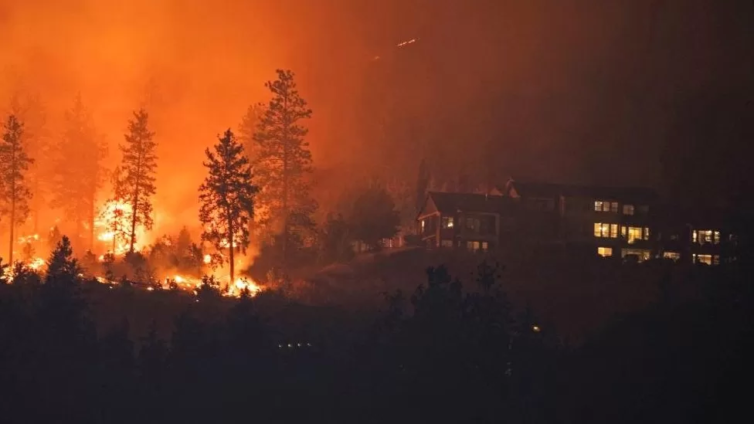
About 30,000 households have been ordered to evacuate in Canada's British Columbia province, where nearly 400 wildfires are raging.
Two huge fires in the Shuswap region merged overnight, destroying blocks of houses and other buildings.
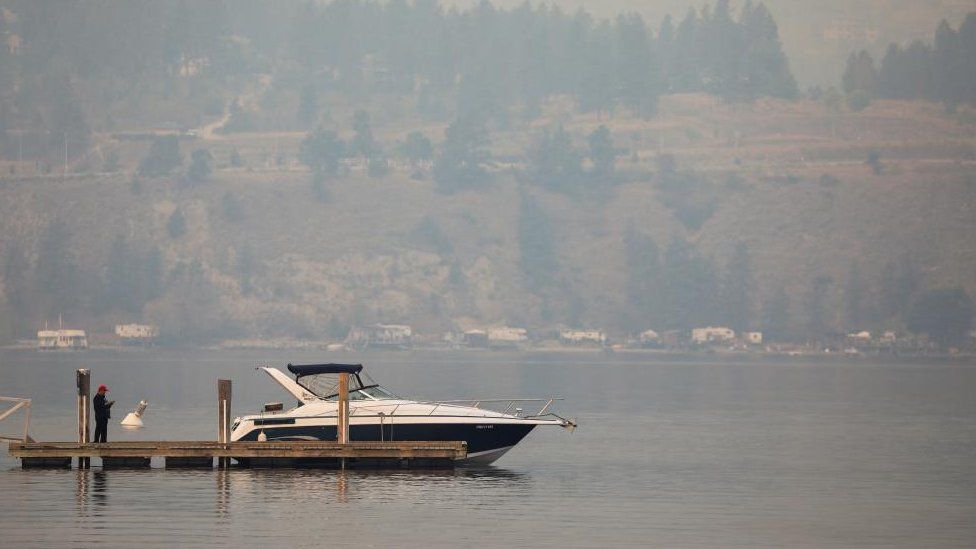
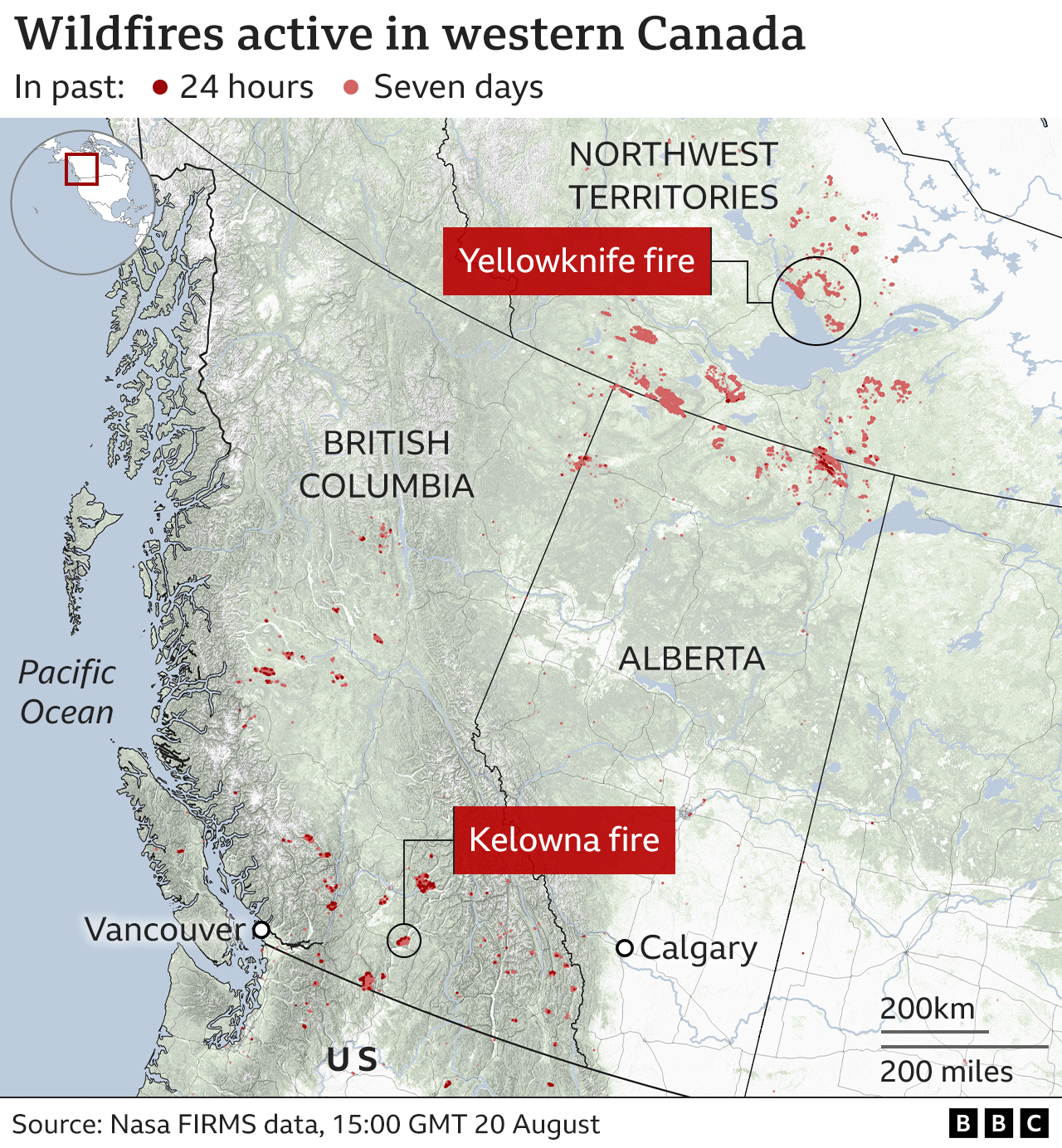
To the south, travel to the waterside city of Kelowna has been restricted, and smoke from nearby fires hangs over Lake Okanagan.
Fires have charred homes in West Kelowna, a nearby city of 36,000.
The travel restriction around Kelowna is designed to ensure enough accommodation for evacuees and emergency workers. It also applies to the towns of Kamloops, Oliver, Penticton and Vernon and Osoyoos.
Hundreds of miles north, a huge fire continues to edge towards the city of Yellowknife.
An official deadline to evacuate the city - the capital of Canada's Northwest Territories - lapsed on Friday. A local official said later that day that nearly all residents had left, either by car or plane.
About 19,000 of the city's 20,000 inhabitants had evacuated. Authorities said 39 patients were moved out of a hospital to alternative facilities on Friday evening, making them the last people to be evacuated from the city.
Environment and communities minister Shane Thompson said some people had chosen "to shelter in place", but urged locals to leave.
In British Columbia, evacuation orders grew from covering 15,000 homes on Friday to at least 30,000 by Saturday evening. Another 36,000 homes are under evacuation alert.
The province's emergency management minister said officials "cannot stress strongly enough how critical it is to follow evacuation orders".
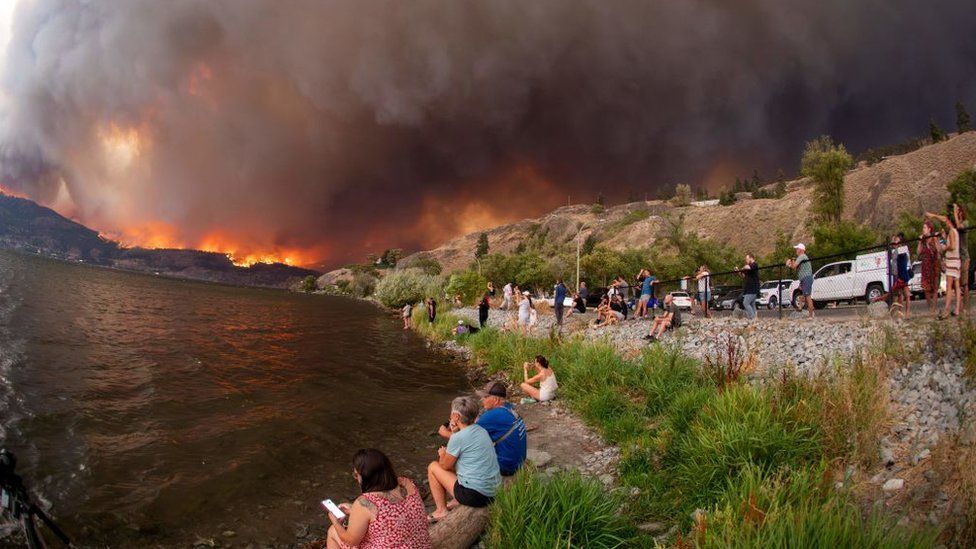
Bowinn Ma added: "They are a matter of life and death not only for the people in those properties, but also for the first responders who will often go back to try to implore people to leave."
Premier of the province, David Eby, put the total number of people ordered to leave at 35,000, with 30,000 told to be prepared to evacuate.
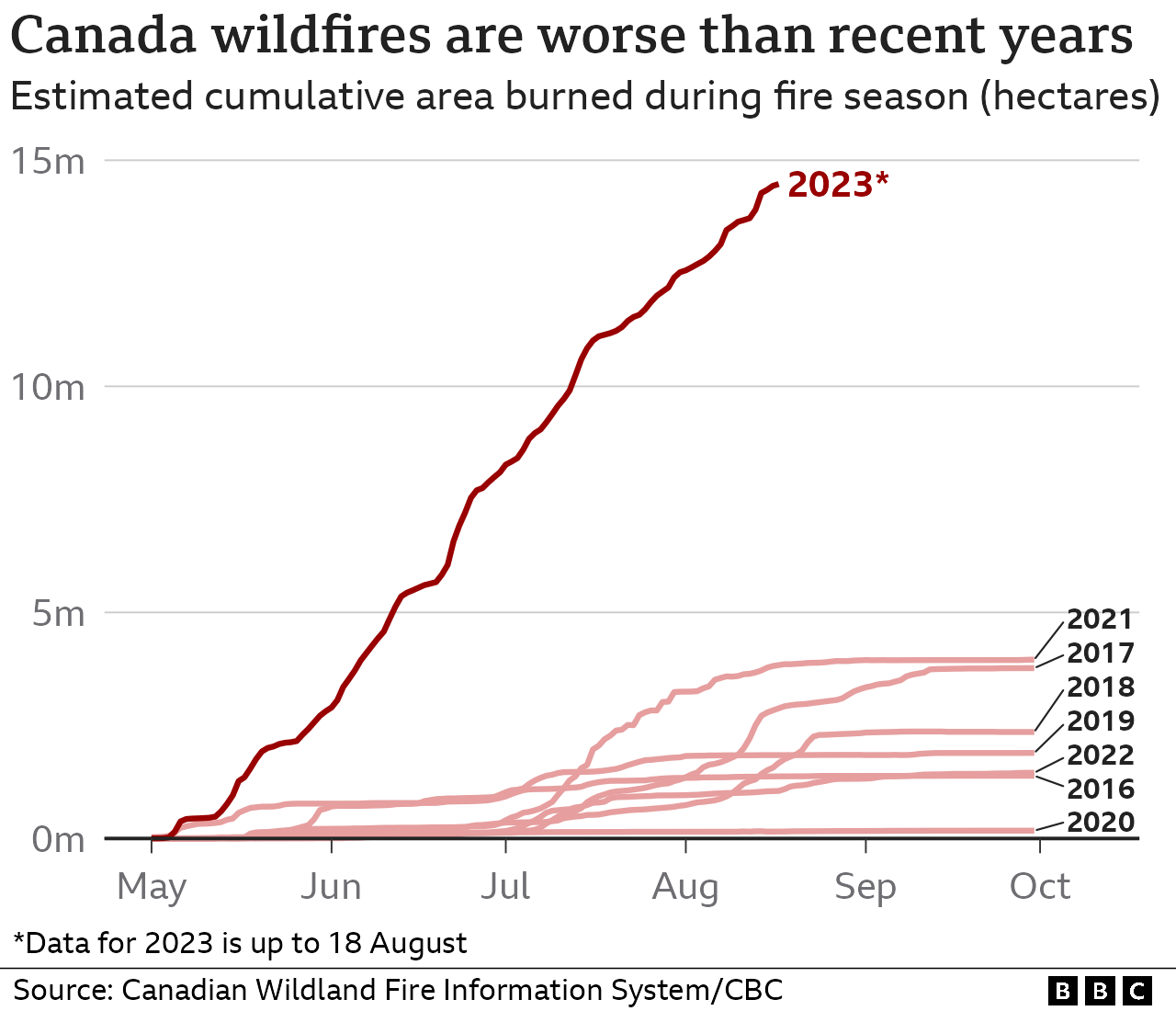
Canada is having its worst wildfire season on record, with at least 1,000 fires burning across the country, according to the Canadian Interagency Forest Fire Centre (CIFFC).
Experts say climate change increases the risk of the hot, dry weather that is likely to fuel wildfires.
Extreme and long-lasting heat draws more and more moisture out of the ground - which can provide fuel for fires that can spread at an incredible speed, particularly if winds are strong.
Although no deaths have been reported in the latest fires, at least four firefighters have lost their lives during this record-breaking season.
Latest Stories
-
When the Gospel Becomes a Weapon: The church, blackmail and the abuse of faith
14 minutes -
JoyNews’ Jacqueline Ansomah Yeboah selected for UK Media Excellence for Emerging Technology Fellowship
31 minutes -
Mental Health Alliance urges government to operationalise Mental Health Fund
46 minutes -
Ghana–Holy See agreement heads to Parliament after Cabinet approval
50 minutes -
Luv FM Corporate Games 2026: Kumasi Central Prisons, Amanfiman Bank win big amid fun
1 hour -
WAFU B U17: Ghana top Group A after win over Togo
2 hours -
Ho Central Mosque reopens amid unresolved leadership dispute that led to closure
3 hours -
Minority caucus questions GH¢16.4m in Ablakwa’s SA evacuation spending, demands independent audit
3 hours -
Gender Ministry meets Nana Akua Addo’s husband over domestic violence after hospital discharge
4 hours -
UG Vice-Chancellor urges swift operationalisation of National Research Fund
4 hours -
Pope Leo to have surgery after lump found in lung
4 hours -
Joseph Cudjoe writes: Ghana must break free from the dangerous mindset that natural resources are the foundation for wealth
5 hours -
Children among 109 dead after boat capsizes off Djibouti, UN says
5 hours -
OmniBSIC Bank’s 11th health walk promotes fitness and business growth
5 hours -
2026 World Maritime Day: Danish Embassy organises “The Gulf of Guinea Speaks”
5 hours