

Audio By Carbonatix
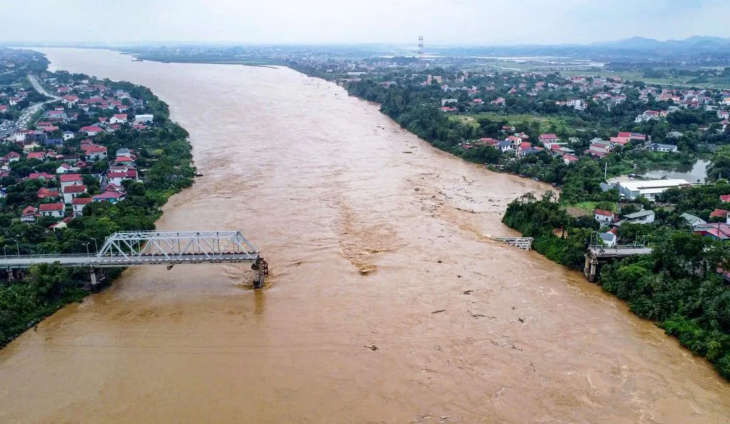
A busy bridge in northern Vietnam has collapsed in the wake of super typhoon Yagi, plunging 10 cars and two scooters into the Red River, Deputy Prime Minister Ho Duc Phoc said on Monday.
At least three people have so far been rescued and 13 are missing after the Phong Chau bridge in Phu Tho province collapsed, Mr Ho added. It is unclear if there have been any deaths.
Part of the 375-metre (1230 feet) structure is still standing, and the military has been instructed to build a pontoon bridge as soon as possible.
Yagi, Asia's most powerful storm this year, has killed more than 60 people since it made landfall in Vietnam on Saturday, bringing strong winds of up to 203 km/h (126 mph).
In the days since, the storm has wreaked havoc in northern Vietnam.
At least 44 victims were killed by landslides and flash floods, the country's Ministry of Agriculture and Rural Development said on Monday - a 68-year-old woman, a one-year-old boy and a newborn baby among them.
More than 240 people have been injured, while some 1.5 million are still without power.
The typhoon also tore roofs from buildings and uprooted trees.
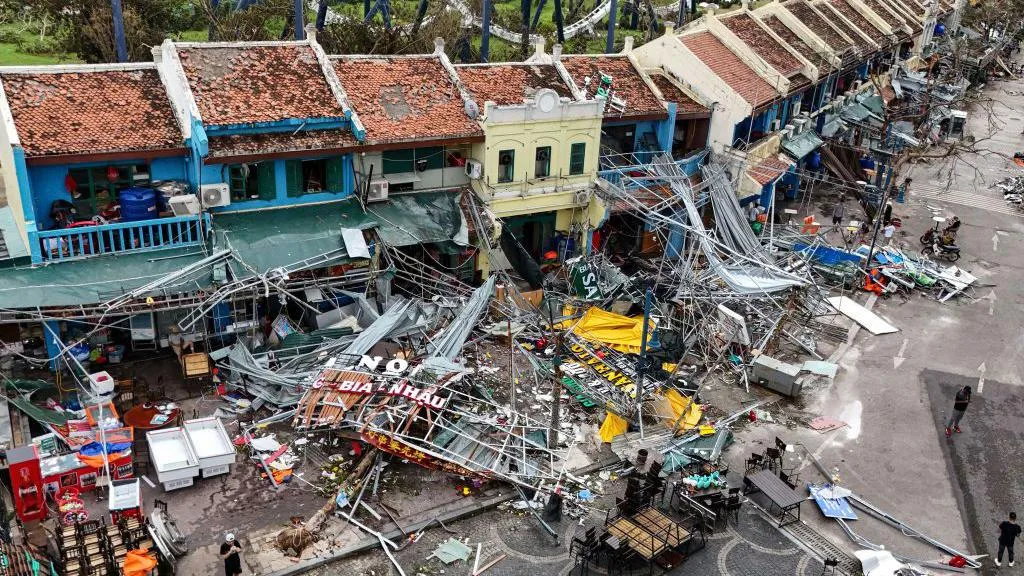
Although it has weakened into a tropical depression, authorities have warned of more flooding and landslides as the storm moves westwards.
In the Yen Bai province, flood waters reached a metre (three feet) high on Monday, with 2,400 families moved to higher ground as the water levels rose, AFP news agency reported.
Yagi also sunk and swept adrift dozens of fishing boats. On Sunday, search and rescue personnel found 27 people drifting at sea after a dozen fishermen were reported missing.
Nearly 50,000 people have been evacuated from coastal towns in Vietnam, with authorities issuing a warning to remain indoors.
Schools were temporarily closed in 12 northern provinces, including Hanoi.
Before hitting Vietnam, Yagi left 24 people dead across southern China and the Philippines.
Scientists say typhoons and hurricanes are becoming stronger, more frequent and staying over land for longer due to climate change. Warmer ocean waters mean storms pick up more energy, which leads to higher wind speeds.
A warmer atmosphere also holds more moisture, which can lead to more intense rainfall.
Latest Stories
-
Korle Bu appeals for more doctors, nurses as A&E Centre struggles under pressure
9 minutes -
AFCON 2027Q: ‘I’m optimistic Black Stars can turn things around’ – Agyemang-Badu
10 minutes -
Digital innovation could widen Africa’s inequalities if people are left out – Sam Jonah
12 minutes -
Galamsey is an economic, health and moral problem – Sam Jonah
15 minutes -
Africa must create AI technology instead of paying to use it – Sam Jonah
17 minutes -
2026 U-17 WWC: Black Maidens to face Norway, Brazil and Canada in Group C
22 minutes -
Agbodza, Sam George move to curb fibre optic cable cuts during road works
29 minutes -
2026 U-17 WWC: Black Maidens unveils 21-player squad for competition in Morocco
30 minutes -
South Africa evacuation and the minority’s half-truth
38 minutes -
‘You never know tomorrow’ – Anthony Baffoe on contesting for GFA Presidency
41 minutes -
Obuasi SHS head accused of sexually abusing students is NDC Juaben secretary seeking chairmanship
59 minutes -
Cedi depreciates by 7.11% against dollar in August 2026 – BoG report
1 hour -
Put women and youth at the centre of mineral resource governance — ActionAid
1 hour -
Theovision provides free healthcare to 2,500 rural residents and Ejura prison inmates
2 hours -
UG warns public against fake resumption and hall fees notice
2 hours