

Audio By Carbonatix
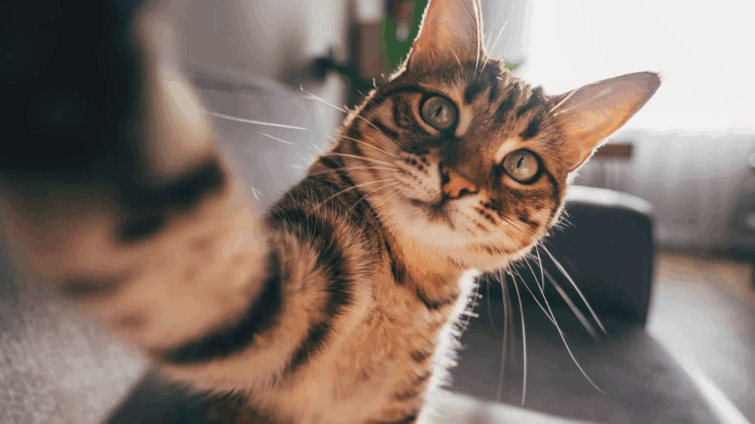
In true feline style, cats took their time in deciding when and where to forge bonds with humans.
According to new scientific evidence, the shift from wild hunter to pampered pet happened much more recently than previously thought - and in a different place.
A study of bones found at archaeological sites suggests that cats began their close relationship with humans only a few thousand years ago, and not in the Levant, but in northern Africa.
"They are ubiquitous, we make TV programmes about them, and they dominate the internet," said Prof Greger Larson of the University of Oxford.
"That relationship we have with cats now only got started about 3.5 or 4,000 years ago, rather than 10,000 years ago."

All modern cats are descended from the same species - the African wildcat.
How, where and when they lost their wildness and developed close bonds with humans has long puzzled scientists.
To solve the mystery, researchers analysed DNA from cat bones found at archaeological sites across Europe, North Africa and Anatolia. They dated the bones, analysed the DNA and compared this with the gene pool of modern cats.
The new evidence shows cat domestication didn't start at the dawn of agriculture in the Levant. Instead, it happened a few millennia later, somewhere in northern Africa.
"Instead of happening in that area where people are first settling down with agriculture, it looks like it is much more of an Egyptian phenomenon," said Prof Larson.
This fits with our knowledge of the land of the pharaohs as a society that revered cats, immortalising them in art and preserving them as mummies.
Once cats became associated with people, they were moved around the world, prized as ship cats and pest controllers. Cats only reached Europe around 2,000 years ago, much later than previously thought.
They travelled around Europe and into the UK with the Romans and then started moving east along the Silk Road into China.
Today, they are found in all parts of the world, except Antarctica.
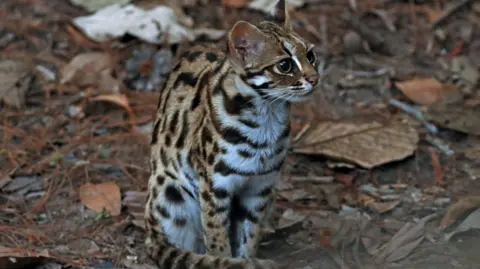
In a new twist, the scientists discovered that a wild cat had been living among people in China for a long time, long before domestic cats arrived on the scene.
These rival kitties were leopard cats, small wild cats with leopard-like spots, that lived in human settlements in China for around 3,500 years.
The early human-leopard cat relationship was essentially "commensal", where two species live alongside each other harmlessly, said Prof Shu-Jin Luo of Peking University in Beijing.
"Leopard cats benefited from living near people, while humans were largely unaffected or even welcomed them as natural rodent controllers," she said.
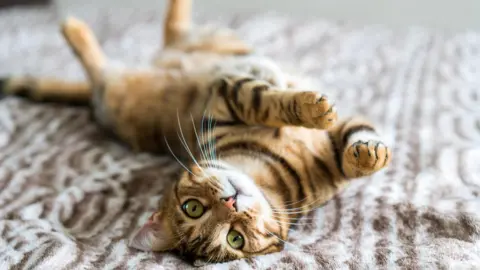
Leopard cats did not become domesticated and continue to live wild across Asia.
Curiously, leopard cats have recently been crossed with domestic cats to produce Bengal cats, which were recognised as a new breed in the 1980s.
The research is published in the journal, Science and in Cell Genomics.
Latest Stories
-
‘Carlos Queiroz not the sort of coach Black Stars need’ – Nii Lante Vanderpuye
14 minutes -
AFCON 2027Q: ‘Our Black Stars team is gone’ – Former Sports Minister
33 minutes -
Prof. Prempeh calls for public review of draft constitutional reform bills
46 minutes -
AFCON 2027Q: ‘I have never seen a poor performance from Black Stars like against Gambia’ – Nii Lante Vanderpuye
50 minutes -
Nigeria set to launch National Digital Address System 9 years after Ghana showed the way
1 hour -
Policy rate decision takes time to reflect in lower lending rates – BoG
1 hour -
Western Regional Minister applauds Karpowership’s role in Ghana’s power sector
2 hours -
Livestream: Road safety crises: Where are we getting it wrong?
2 hours -
Enterprise Life celebrates 25 years of protecting families and building trust
2 hours -
ICC London rules in favor of Ghana against Tullow over $400m tax charge
2 hours -
We are disappointed in ICC’s ruling over our corporate income tax assessment in Ghana – Tullow Oil
2 hours -
Cost of building inflation for August 2026 increases to 4.6% – GSS
2 hours -
Today’s front pages: Wednesday, September 30, 2026
3 hours -
Bawumia highlights agricultural, compulsory insurance reforms in IBAG engagement
3 hours -
Ghana will secure Tullow tax revenues while protecting Jubilee, TEN investments – Ato Forson
3 hours