

Audio By Carbonatix
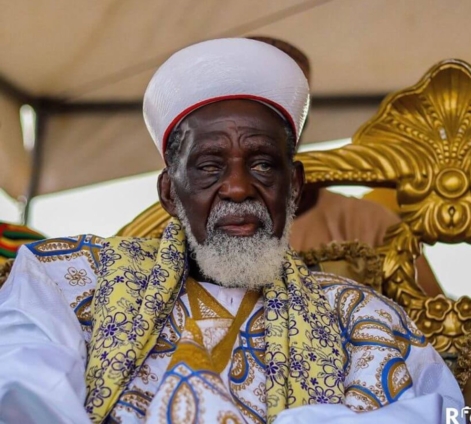
The Office of the National Chief Imam has backed the introduction of Arabic as an optional subject in public schools.
It said the policy would give students valuable linguistic skills for global engagement and urged addressing concerns about the teaching of Arabic through constructive dialogue.
A press statement signed by Dr Abubakari Mohammed Marzuq Azindoo, Personal Assistant to the National Chief Imam, said Arabic was a global language used in diplomacy, science and commerce, rather than a religious identity or practice.
The statement followed a recent announcement by Mr Haruna Iddrisu, Minister of Education, to introduce Arabic and Chinese as optional subjects in public schools.
Some stakeholders have raised concerns about the policy, citing the perceived neglect of Ghanaian languages in favour of foreign languages.
However, the Office said: “an increasingly interconnected global economy, equipping the youth with diverse linguistic skills is a strategic investment in their future,” the statement said.
It noted that Arabic was one of the six official languages of the United Nations and a major language of communication across economically vibrant regions of the world.
The Office commended the Ministry of Education for introducing a standardised curriculum through the National Council for Curriculum and Assessment (NaCCA), saying it would provide quality assurance for students who opted to study the language.
It said the curriculum would also enable students to participate effectively in international diplomacy, trade and research.
The Office welcomed the Ministry’s clarification that Arabic remained strictly optional and was neither compulsory nor intended to undermine the secular character of Ghana’s public education system.
It said Ghana’s constitutional order guaranteed religious freedom while prohibiting the establishment of a state religion, and urged that public discussion of the policy be guided by facts.
The statement compared Arabic to foreign languages such as French, German, and Spanish, saying that it had enriched academic development without altering students’ cultural or religious identities.
It urged educationists, policymakers and the public to approach the policy objectively and verify information from credible sources to guard against misinformation and disinformation.
The Office reaffirmed its commitment to working with the Ministry of Education, the Ghana Education Service and other relevant institutions to promote an inclusive, peaceful and globally competitive education system.
Latest Stories
-
Court hands Adjetey Sowah, two others lifetime bans after Amputee Football legal dispute
7 minutes -
NDC appoints Julius Kwame Anthony as a Deputy Communications Director
8 minutes -
Ghana repatriates 120 Nigerians rescued from suspected cybercrime centres
12 minutes -
NPP rejects Emelia Agbenyo’s appointment as Deputy EC Chair, demands withdrawal
17 minutes -
EOCO grants Suame MP John Darko enquiry bail in GH¢27m SIC investigation
20 minutes -
NPP cannot question EC appointment after appointing own people to Commission – Kwakye Ofosu
26 minutes -
BoG deepens public trust with regional stakeholder forum in Techiman
35 minutes -
‘We have turned the tide’ – Ato Forson says Ghana is ready to take off
40 minutes -
Police arrest man captured in viral video assaulting wife in Agona Nkwanta
42 minutes -
KATH Mother and Baby Unit construction stalled for 14 months over unpaid contractor arrears
56 minutes -
Government wanted to ‘tilt the balance’ with new EC appointments – Kwakye Ofosu
1 hour -
Angry Tema Community 25 residents threaten to sleep at GWL over water shortage
1 hour -
BoG takes financial literacy drive to Techiman, vows to protect depositors
1 hour -
‘Stop the distractions’ – Akosua Manu demands answers over GH¢49.7m South Africa evacuation cost
1 hour -
Formula 1 to return to Africa with Rwanda Grand Prix in early 2030s
1 hour