

Audio By Carbonatix
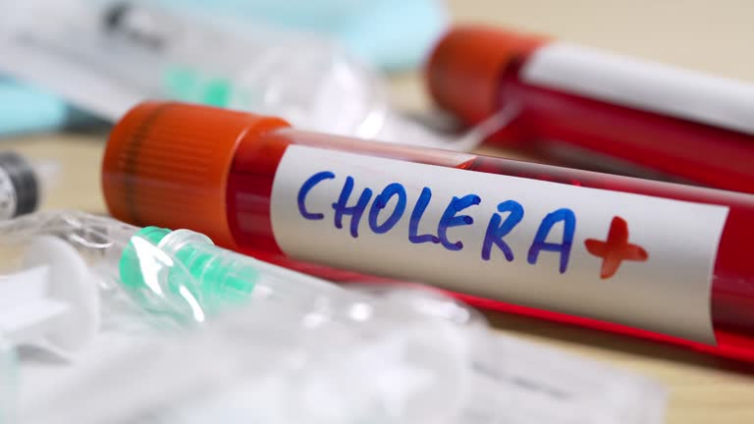
New global statistics have revealed cholera cases rose by 5% and deaths by 50% in 2024 compared to 2023, with more than 6,000 people losing their lives to a disease that is both preventable and treatable.
The World Health Organization (WHO) says the case fatality ratio for Africa increased from 1.4% in 2023 to 1.9% in 2024. This, the report notes, exposes critical gaps in life-saving care and shows the weakness of many health systems, as well as poor access to basic health services.
One in four deaths occurred in communities, outside health facilities, pointing to serious gaps in treatment and the urgent need to strengthen community health services.
The WHO report stressed that while the numbers are alarming, they are underestimates of the true burden of cholera. Conflict, climate change, population displacement, and long-term failures in water, sanitation, and hygiene continue to fuel the spread of the disease. Cholera is caused by the bacterium Vibrio cholerae, which spreads quickly through water contaminated with human waste.
In 2024, 60 countries reported cholera cases, up from 45 in 2023. Africa, the Middle East, and Asia carried the highest burden, accounting for 98% of all reported cases.
The scale of outbreaks also expanded. Twelve countries each reported more than 10,000 cases, including seven that experienced large outbreaks for the first time. Cholera also resurfaced in Comoros after more than 15 years, showing the persistent risk of global spread.
The WHO recommends that governments, donors, and communities focus on giving people access to safe water, sanitation, and hygiene facilities. Communities must also receive accurate information on prevention and rapid access to treatment and vaccines during outbreaks. Stronger disease surveillance and diagnostics are also critical, the report said.
But vaccine supply remains a challenge. In early 2024, a new oral cholera vaccine, Euvichol-S®, was approved and added to the global stockpile. This helped keep stockpile levels above 5 million doses for the first six months of 2025.
However, high demand forced health authorities to continue using a temporary single-dose regimen instead of the recommended two doses. In 2024 alone, 61 million doses were requested, while 40 million were approved for emergency campaigns in 16 countries. Supply still fell short of demand.
Preliminary data show the crisis has continued into 2025, with 31 countries already reporting outbreaks this year.
The WHO warns that the global risk from cholera remains “very high” and says it is working with countries to improve surveillance, treatment, and prevention, as well as supplying essential medicines, coordinating partner deployments, and supporting risk communication and community engagement.
Latest Stories
-
Lekzy DeComic to feature four generations of comedians on upcoming show
57 minutes -
Nigeria wins arbitration as Sunrise’s $400 million hydropower claim dismissed
1 hour -
Xhaka under investigation over Covid-19 certificate
1 hour -
FAW chief questions Infantino’s Fifa reform claims
1 hour -
La Liga chief dismisses Real’s ref conspiracy claims
1 hour -
GMA rejects claims its vessel monitoring system is ineffective
2 hours -
I was close to joining Liverpool in 2016 – Mbappe
2 hours -
Ministry of Sports and Recreation holds national validation workshop on National Sports Policy Draft
2 hours -
‘Do you want me to be happy with this poor performance?’ – Bono East Minister fumes over Kintampo market project with less than 1% work done
2 hours -
London screening honours Nkrumah and 103 years of Ghana cinema
2 hours -
Founder’s Day: Is Nkrumah’s glory fading? – Nkrumah’s iconic fountain at Circle runs dry
2 hours -
GHS calls for stronger systems to ensure safe care for NCD patients
2 hours -
Kufuor calls for Africa’s resources and youthful population to be transformed into opportunities
2 hours -
Mahama administration not clamping down on free speech – Shamima Muslim
2 hours -
Ghana TVET Service, UNESCO, KPMG, Microsoft to train 100,000 facilitators in AI
2 hours