

Audio By Carbonatix
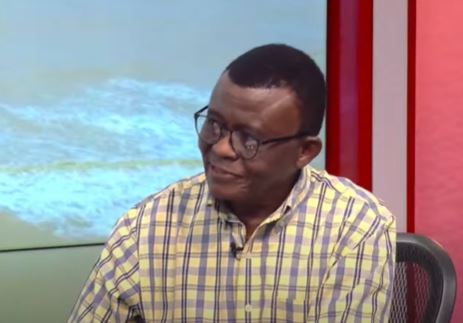
Governance expert Professor Baffour Agyemang Duah has criticised the Chief Justice’s decision to undertake official visits to institutions under the Executive, saying that such public engagements could raise questions about the Judiciary’s neutrality and undermine confidence in the separation of powers.
He said that while the Chief Justice, as a private citizen, had every right to hold political views and express an opinion on the performance of a government, his position as head of the Judiciary demanded a higher level of restraint.
Speaking on JoyFM’s Top Story on Thursday, September 3, during a discussion on the New Patriotic Party’s (NPP) demand for the resignation of Chief Justice Baffoe-Bonnie, Prof Duah said he was shocked when he watched a video of the Chief Justice speaking at a state institution.
“And let me be very, very frank on this matter. I was shocked when I saw the video of him speaking at a state institution by himself. He said he had gone to SSNIT. Then he also went to MIIF and commended them,” he said.
For Prof Duah, the visit itself was unusual and raised questions about the boundaries between Ghana’s three arms of government.
The governance expert said he could not recall any previous instance in Ghana where a sitting Chief Justice had undertaken official visits to institutions under the Executive in the manner he described.
“The first shock was I've never read or seen anywhere, not only in this Fourth Republic, but in the previous republics of our country, that a Chief Justice takes visitation to state institutions,” he said.
“This is the first time. It could be a novelty. I don't know, but this is the first time,” he added.
Prof Duah said that there was nothing wrong with the Chief Justice visiting judicial institutions as part of his official duties.
He said a visit to magistrate courts or other parts of the Judiciary would naturally fall within the responsibilities of the Chief Justice.
“The last thing you expect from a Chief Justice is to undertake visitations to Executive institutions,” he said.
“If the Chief Justice has gone to visit magistrate courts or any aspect of the Judiciary anywhere in the country, it would be in his line.”
His concern, he explained, was that the Chief Justice had not only visited institutions outside the Judiciary but had also made public statements during those engagements.
“But to go out of there, not only to visit, but to make statements as he did, for me, I'm completely shocked. It shouldn't have happened,” Prof Duah said.
Prof Duah said his argument was rooted in the constitutional principle of separation of powers and the need for the three arms of government to maintain appropriate institutional boundaries.
He explained that separation of powers did not mean that the Executive, Legislature and Judiciary must operate in isolation from one another.
"This whole theory of democracy with the theory of the separation of powers that we have that it doesn't mean that each of the institutions the three institutions are completely independent. No."
“They work together in the interest of the nation. But there's a certain line that one will not cross,” he added.
He said senior officials, particularly those occupying sensitive constitutional positions, must be mindful of how their actions and public comments could be perceived.
He said his concern remained why a Chief Justice would choose to make official visits to Executive institutions in the first place.
“The state institutions that he visited, as I said, they were state institutions belonging to the Executive. But in the first place, I'm just puzzled why a Chief Justice would decide to go on an official visit to such institutions, it may be because it's a novelty, I don't know,” he said.
"I don't know of any democracy where a chief justice decides to take an official visitation to institutions under the executive. That shocked me," he added.
Latest Stories
-
NAGRAT demands signed timelines before calling off strike
10 minutes -
National Investment Quiz: West Africa SHS, St. Louis SHS advance to semi-finals
32 minutes -
Shatta Wale appeals to Mahama for balanced framework to tackle social media abuse without stifling free speech
35 minutes -
Education Ministry urges data-driven talks to resolve teacher impasse
37 minutes -
‘What we wanted was money to buy medications’ – Dr Nawaane on US health support
37 minutes -
Osman Ayariga leads NDC team to vet constituency aspirants in Central Region
42 minutes -
‘We shouldn’t allow their drugs in just because they’re giving us $100m’ – Dr Nawaane
47 minutes -
US health deal medical records are a ‘no-go area’ – Parliament health committee
53 minutes -
Teachers’ strike: Gov’t has shown no seriousness on Collective Agreement – GNAT
53 minutes -
GES to submit more data to CAGD to process outstanding teacher promotion arrears – Education ministry
1 hour -
I wish to experience childbirth; I’m jealous of women – Okyeame Kwame
1 hour -
Manhyia South constituents demand apology from EOCO over attempt to ‘unlawfully’ arrest MP
1 hour -
Twelve women have been killed in one part of South Africa since July. Here’s what we know so far
1 hour -
OMJ Foundation commits to supporting transport, safety and livelihoods of commercial riders in Akuapem South
1 hour -
The Reciprocity crisis: Why Ghana welcomes British Professionals while the UK relegates ours
1 hour