

Audio By Carbonatix
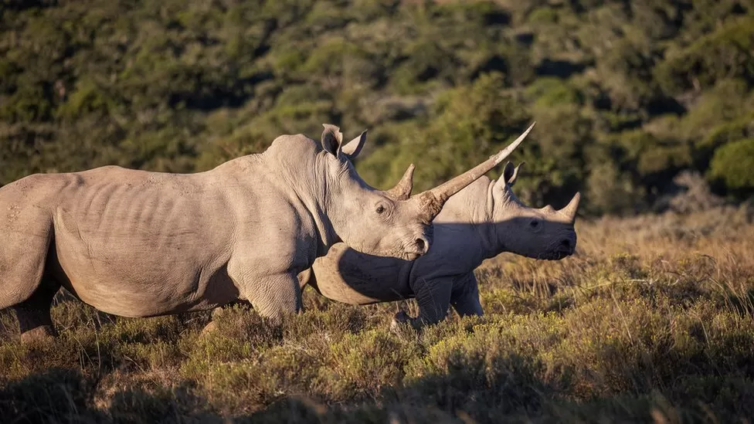
Conservation group African Parks plans to release 2,000 southern white rhinos into the wild after buying the world's largest private captive rhino breeding operation in South Africa.
The giant animals, the second-largest land mammal, are considered to be under extreme pressure due to poaching.
There are thought to be 18,000 southern white rhino left. They are classified as a near-threatened subspecies.
African Parks hopes to "rewild" the animals over the next 10 years.
The group secured emergency funding to buy the financially struggling 7,800-hectare (19,000-acre) rhino farm, known as Platinum Rhino, in South Africa's North West province, after owner John Hume put it up for sale in April.
African Parks' project marks one of the largest continent-wide rewilding programmes undertaken for any species.
CEO Peter Fearnhead said they initially had no intention of owning of a captive rhino breeding operation however they "fully recognise the moral imperative of finding a solution for these animals, so that they can once again play their integral role in fully functioning ecosystems".
The organisation says it plans to release the rhinos into secure, well-managed areas to protect them from poaching and it will work with funding partners, governments and other conservation groups to ensure this happens.
Mr Hume has received recognition as a conservationist however, he has also faced criticism for advocating the trade in rhino horn. He has argued that the trade was necessary to safeguard his rhinos from poaching and raise funds to sustain the farm.
The southern white rhino population plummeted to an all-time low of 30 to 40 animals in the 1930's however through effective conservation measures, the numbers surged to more than 20,000 in 2012.
There are only two surviving members of the other subspecies, the northern white rhino - both female and both in Kenya. It is thought that rhino-horn poaching brought about their near extinction.
Most of the southern white rhinos are found in South Africa, Namibia, Zimbabwe, and Kenya.
The International Union for Conservation of Nature says a species is "near-threatened" when it is thought it could be vulnerable in the near future.
Latest Stories
-
Church of Pentecost supports over 2,000 BECE candidates in Obuasi with career guidance seminar
1 hour -
Brandon Asante and Coventry all but promoted to Premier League despite Sheffield Wednesday draw
1 hour -
GPL 2025/26: Late Kwartemaa strike downs Hearts in Tema
2 hours -
Ghana Faces Sierra Leone Moment as Prosecutorial Powers come under strain
2 hours -
Don’t consume fish or seafood from Tema Shipyard until further notice – FDA warns
2 hours -
Why volunteering might be Africa’s most underrated career accelerator
2 hours -
ActionAid Ghana raises concern over gender gaps in Feed Ghana Programme
2 hours -
Windstorm wreaks havoc in Gushegu, displacing nearly 2,000 residents and damaging schools
2 hours -
Friends of Bridget Bonnie Marks her 35th birthday with donation to Kasseh Model Health Centre
3 hours -
From Ekumfi Kokodo to the Pulpit Stage: Essi Donkor’s gospel journey takes shape
3 hours -
Landfilling waste management creates no value, it’s an economic waste
3 hours -
Photos: Speaker Bagbin Commissions MPs constituency office under parliamentary decentralisation programme
3 hours -
Black Stars technical advisor Winfried Schäfer sacked as GFA shakes up backroom staff
4 hours -
Wenchi water project almost complete, critical to gov’t agenda – GWL MD
4 hours -
Anti-LGBTQ+ bill not part of government’s legislative agenda – Inusah Fuseini
4 hours