

Audio By Carbonatix
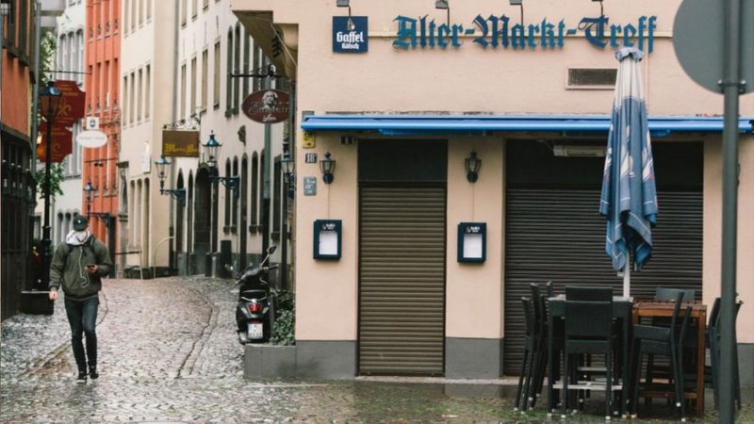
Germany has entered the first day of a month-long "lockdown light", shutting restaurants, bars, gyms and entertainment venues, but keeping schools, shops and workplaces open.
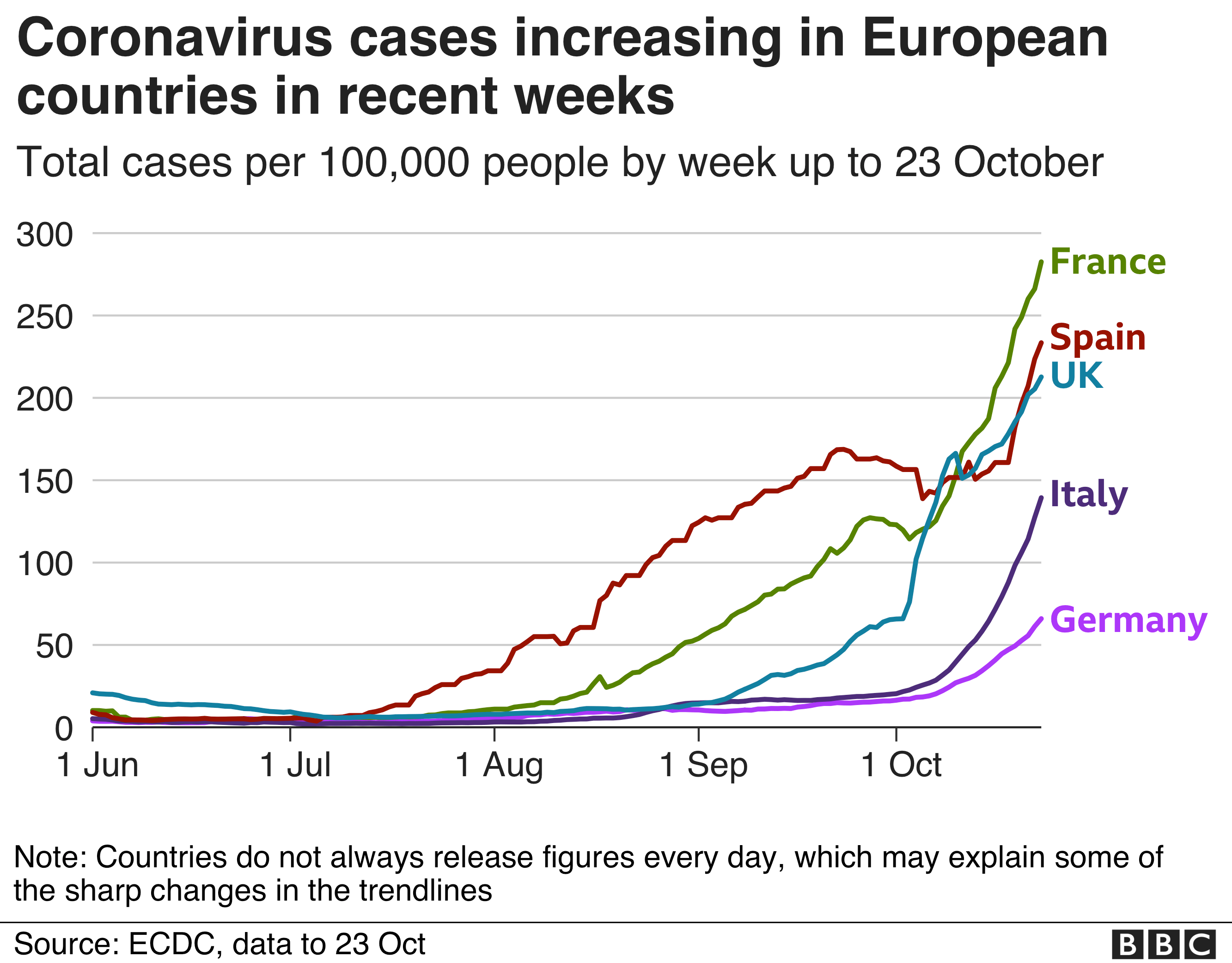
The lockdown is not as restrictive as the March-April one, and food outlets can still provide takeaways. The coronavirus infection rate is still rising in Germany, though not as dramatically as in France and Belgium, which are now in tighter lockdowns.
Italy is also planning tighter rules. Italian Prime Minister Giuseppe Conte proposed curbs on travel to high-risk areas and an earlier night-time curfew. Museums and exhibitions would shut and shopping centres would close at weekends, under the plans now to be discussed in parliament.
Cinemas, swimming pools, theatres and gyms are already closed, and food outlets have to stop table service by 18:00. Mr. Conte warned that intensive care units could be overwhelmed by December. But Italy wants to avoid another full lockdown because of the economic cost.
As in Italy's March crisis, the worst-hit region is Lombardy, which includes Milan. Next comes Campania, the region around Naples.
Corona Christmas'
Under Germany's new rules, public meetings are restricted to 10 people maximum from two households. Private parties are banned. Chancellor Angela Merkel urged Germans to stick to the new rules now, and make November a "breakwater", so that Christmas may be enjoyed despite "this sort of natural disaster".
"It will be a Christmas under corona conditions, but it should not be a lonely Christmas," she said, explaining that family visits should be feasible, but without any "lavish New Year's parties".
"The light at the end of the tunnel is still quite a long way off," she warned.
Under Germany's federal system there is some regional variation, so Hamburg, Lower Saxony and Berlin, for example, are exempting children under 12 from the two-households rule.
On Saturday, Austria and Portugal became the latest countries to announce new restrictions.
The latest official data from Germany's respected Robert Koch Institute (RKI) shows 12,097 new infections in the past 24 hours, bringing the total since the start of the pandemic to 545,027 in Germany.
The totals for France, Spain and the UK - all with smaller populations than Germany - are all above a million. On Saturday however, Germany recorded its highest daily total so far, with 19,059 cases.
Germany's central government is helping small businesses with 50 or fewer staff, and the self-employed, who are hit especially hard by the lockdown: they can get a grant covering 75% of their normal turnover. The state is providing up to €10bn (£9bn) to cover this lockdown hardship, including some funding from the EU.
What about the rest of Europe?
Under France's more restrictive lockdown, people are only allowed to leave home to do the following: essential shopping; attend to medical needs; go to work if they really cannot work from home; go to school; or exercise outdoors for an hour maximum. For those activities, they have to carry a downloadable permit.
Shops in France are now only allowed to sell essential goods. Portugal is holding a day of national mourning for its Covid-19 victims: 2,544 have died there since the pandemic began in March. As elsewhere in Europe, the infection rate is rising, so a partial lockdown will take effect on Wednesday, covering 70% of the population, including Lisbon and Porto.
The government says it will declare a health emergency, granting it sweeping powers to restrict travel and recruit extra workers for key services.
In Spain, staff at funeral homes went on strike on Sunday to demand more workers as coronavirus deaths continue to rise. It was All Saints' Day, when families usually visit the graves of loved ones.
In Montenegro, thousands of people attended the funeral of the country's leading religious figure, Archbishop Amfilohije Radovic, who died with coronavirus on Friday, aged 82.
Despite pleas from doctors to ban the funeral, his open coffin was paraded in front of crowds at the Serbian Orthodox cathedral in the capital, Podgorica. Some mourners even touched or kissed his head or hands.
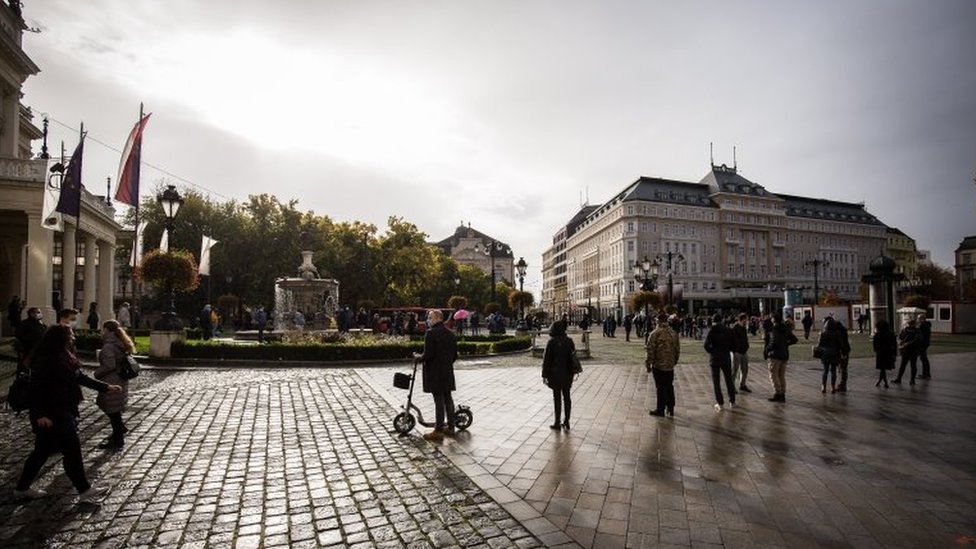
Slovakia has tested some three million people for coronavirus - well over half the population - in the Slovak army's biggest ever peacetime operation, the authorities say. Around 1% of the results were positive.
The aim is to test everyone in the country over 10 years old, in an operation spread over two weekends. Infections have soared in Slovakia, and officials argue the only alternative would be a total lockdown.
Latest Stories
-
At least 22 dead after two boats collide on Congo river, official says
1 hour -
Heavy rains lead to Senegal floods, government reports several deaths
1 hour -
FTBLRLIFE targets Ghana in expansion of global grassroots football network
3 hours -
Former ‘American Idol’ contestant sentenced to life without parole for wife’s murder
4 hours -
Education Ministry commends Ghanaian teachers on World Teachers’ Day 2026
4 hours -
NPP can reconcile with aggrieved members who want to return – Nana Akomea
4 hours -
Tamale Child Deaths: Vehicle owner arrested as IGP deploys homicide team
5 hours -
From ShattaFest to MoMo Fest: Entertainment takes centre stage in youth engagement
5 hours -
Nigerian military aircraft crashes, killing 32
5 hours -
MTN encourages Ghanaians to use MoMo for saving, investing and financial planning
5 hours -
Absa Bank Ghana names Stephen Ato Frimpong as Board Chair
5 hours -
Pickford ‘almost caused crash’ with careless driving
5 hours -
Author and former politician Jeffrey Archer dies aged 86
5 hours -
No education reform can succeed without teachers – Education Ministry
5 hours -
Gauff condemns racist abuse after China Open win
6 hours