

Audio By Carbonatix
A new antibody treatment is to be trialled on Covid-19 patients in UK hospitals.
Monoclonal antibodies, which are potent, laboratory-made antibodies, will be given to about 2,000 people to see if they are effective against coronavirus.
It forms part of the UK Recovery Trial, which found that a cheap steroid called dexamethasone could save lives.
The first patients will be given the new drugs in the coming weeks.
Prof Martin Landray from the University of Oxford, who is co-leading the Recovery Trial, said: “This is the first type of treatment that's targeted for this specific virus.
“There are lots of good reasons for thinking it might well be effective - stopping the virus from reproducing, stopping the virus from causing damage, improving survival for patients.
“We need to know, and the way to know is to do the trials that will tell us whether that hope turns into reality.”
What are monoclonal antibodies?
Antibodies could be described as the "warriors" of the immune system.
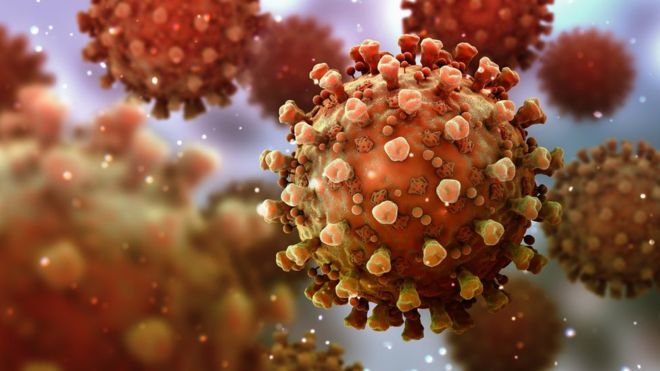
When coronavirus infects your body, antibodies attach to the spikes of the virus, blocking it from entering your cells.
But we produce many different types of antibodies - the most potent are called neutralising antibodies.
So scientists "sieve" through them to find the one that’s best at sticking to the spike.
The chosen antibody is multiplied in the lab, and produced in huge quantities.
This is then given to patients, immediately boosting their immune response.
Which monoclonal antibodies are being used in the trial?
The trial will test a mixture of two monoclonal antibodies made by the US biotech company Regeneron.
Both attach to the spike of the virus at slightly different places. So if the virus mutates, and the structure changes, at least one should still work.
Regeneron has already produced monoclonal antibodies that can treat Ebola.
Leah Lipsich, vice president of the company, said: "We're hoping that we can springboard from that very effective result against Ebola to something that's just as effective with Covid-19."
How will the trial work?
The UK Recovery Trial was set up at the start of the pandemic to identify treatments that could help people admitted to hospital with Covid-19.
It has already showed the steroid dexamethasone cuts the risk of death by a third for patients on ventilators, and by a fifth for those on oxygen.
Patients will start being given monoclonal antibodies in the next few weeks, and the results will be compared with other patients who have not been given the antibodies.
Prof Landray expects that about 2,000 people in each group will be needed to answer key questions.
He said: “We need to understand not only if these treatments work. We also need to understand in whom do they work, and in whom do they work best.
“Do they work in people who are older or younger? Do they work in people with more severe or milder disease? Do they work in people only when they're on ventilators or, possibly more likely, before they ever need ventilators?”
The results will also be compared with people receiving convalescent plasma, another treatment currently undergoing trials by the Recovery team. This is where plasma, the yellowish, liquid part of blood, is taken from people who’ve recovered from coronavirus and given to patients.
The Recovery Trial is also looking at azithromycin, a commonly used antibiotic, and tocilizumab, an anti-inflammatory treatment.
Which other diseases are monoclonal antibodies used for?
Monoclonal antibodies have been used clinically since the 1980s, and are used to treat many diseases including some forms of cancer.
But because they are a relatively new technology, they can be expensive.
The price for the Covid treatment has not yet been set.
But Prof Landray says if it works, fair access to all patients, internationally, is an issue that needs to be considered.
Do we still need treatments if we have a vaccine?
Some vaccines are entering the final phase of trials, but none are near being ready to roll out.
And with Covid cases rising, people are still being hospitalised and some are dying.
Apart from dexamethasone and another cheap steroid, hydrocortisone, there are no other clinically proven treatments for Covid-19, so finding new ways to help patients is vital.
But even once we do have a vaccine, treatments will continue to play a role.
Leah Lipsich, from Regeneron, said: “There will be populations - the immunocompromised, the elderly - who may not mount a sufficient immune response to a vaccine and will require treatment.
“And we feel very strongly that these highly potent neutralising antibodies really will help boost the immune response, and will always be needed even even when a vaccine is available.”
Latest Stories
-
Ato Forson has performed wonders with common fund releases – Northern Regional Minister
4 minutes -
Zelensky accuses US of inaction as Russian strikes kill over 70 in two days
8 minutes -
Bipartisan majority of Americans blame Trump policies for rising costs, Reuters/Ipsos poll finds
9 minutes -
New Trump rules will make it harder for farmers to access US funds for energy projects
10 minutes -
John Jinapor warns energy sector board chairs, CEOs against toxic working relationships
11 minutes -
Recover, protect and properly account for every cedi of public money – Finance Minister
14 minutes -
GTA denies collecting money for US, Canada visas ahead of 2026 World Cup
19 minutes -
GTA CEO Maame Efua Houadjeto denies involvement in World Cup visa scandal
39 minutes -
Rockland Farms CEO Calls for Greater Support for Women in Agriculture
54 minutes -
AFCON 2027Q: Interim Black Stars technical team to take charge of November games
1 hour -
Gov’t suspends implementation of L.I. restricting preaching and hawking in moving vehicles
1 hour -
Three Saudi nationals killed in Houthi attacks on Riyadh airport
2 hours -
Jinapor demands accountability from energy sector agencies ahead of 2027
2 hours -
Cars torched and shops looted as anti-migrant violence erupts in South Africa
2 hours -
We’ll strengthen unity and party structures to win 2028 election – John Boadu assures Kufuor
2 hours