

Audio By Carbonatix
The Australian state of Victoria has declared a state of disaster and imposed new lockdown measures after a surge in coronavirus infections.
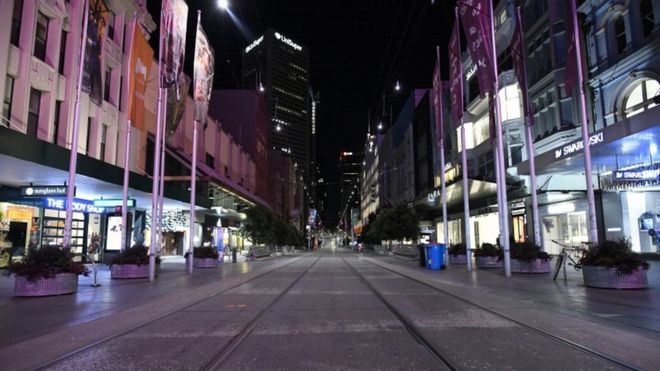
Under the new rules, which came into effect at 18:00 (08:00 GMT), residents of the state capital Melbourne are subject to a night-time curfew.
There will be further restrictions on residents' ability to leave home.
Australia has been more successful than many other countries in tackling Covid-19, but cases are rising in Victoria.
The state - Australia's second most populous state - now accounts for many of the country's new infections in recent weeks, prompting the return of lockdown restrictions in early July.
But on Sunday Premier Daniel Andrews said the measures were working but too slowly. "We must go harder. It's the only way we'll get to the other side of this," he told reporters.
The new rules will remain in place until at least 13 September, Mr Andrews added.
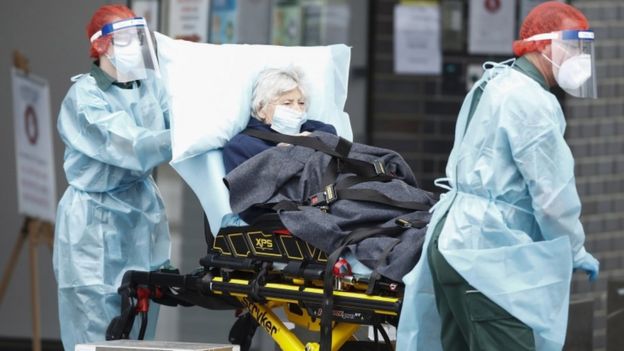
On Sunday, Victoria reported 671 new coronavirus cases and seven deaths. Those increases brought the totals to 11,557 infections and 123 deaths.
What are the new restrictions?
The night-time curfew is being implemented across Melbourne from 20:00 to 05:00.
The only valid reasons for leaving home during these hours will be work, medical care or care-giving.
Melbourne residents will only be allowed to shop and exercise within 5km (three miles) of their home. Exercise outside of the home will only be allowed for one hour at a time.
Only one person per household is allowed to shop for essentials at a time.
All students across the state are returning to home-based learning and childcare centres are closed.
Restrictions will also be tightened across regional Victoria from Thursday, with restaurants, cafes, bars and gyms closing from 23:59 on Wednesday.
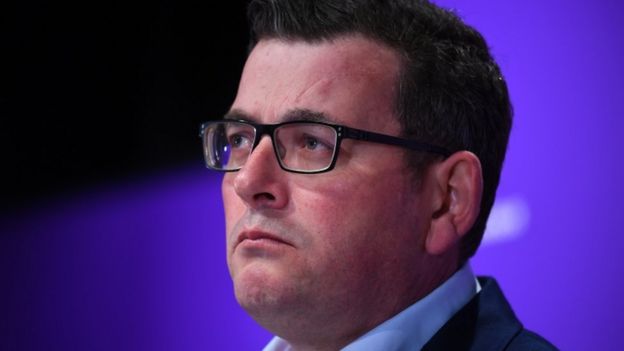
To ensure these rules are observed, police will be given additional powers, Mr Andrews said.
"We have got to limit the amount of movement, therefore limiting the amount of transmission of this virus. We have to clamp down on this," Mr Andrews said.
Why did Victoria become the epicentre of Australia's outbreak?
The country has recorded about 17,000 infections and 200 deaths so far - with the majority of these in Victoria.
Initially officials felt optimistic about containing Covid-19, with lockdowns and mandatory quarantines for people entering the country.
For months, most cases were coming from travellers returning from overseas, but the spike in Melbourne has proved to be a major setback.
Local transmissions have become a key source of infections, putting authorities on the back foot.
In early July about 300,000 people were ordered back into lockdown amid a military-assisted operation to "ring-fence" 10 areas at the centre of the outbreak.
Then, about five million residents of Melbourne were told to stay at home for six weeks.
Initially, Mr Andrews pinpointed the origin of many infections to security guards who reportedly broke lockdown rules while overseeing hotel quarantines.
Health experts say the relaxation of rules, complacency on social distancing and sheer bad luck have all contributed to Victoria's rise in cases.
Now Mr Andrews says the current rate of community transmission - including "mystery cases" that cannot be traced back to work or home - is far too high.
"And they tell us, based on the current number, cases might begin to drop off, not in days or weeks, but months," Mr Andrews said. "That's not something I'm willing to accept."
Latest Stories
-
Rapper Rick Ross arrested on domestic violence charges
25 seconds -
Minority demands security review of Ghana-Colombia visa waiver and port deals
10 minutes -
Pursue drug kingpins, not persecute political opponents – Afenyo-Markin tells EOCO
22 minutes -
‘I am disappointed’ – Yaw Ampofo Ankrah breaks silence after NSA suspension
29 minutes -
UK in talks with EU partners to release strategic fuel reserves if needed, BBC understands
31 minutes -
Douglas Boateng receives IMM Institute Supply Chain Lifetime Achievement Award
43 minutes -
Pentecost University to host international sustainability conference
1 hour -
Ampofo Ankrah did not collect World Cup visa money – Lawyer
1 hour -
Baffour Awuah to spend night in EOCO custody – Atta Akyea
1 hour -
Torgbiga Wenya III opposes proposed elevation of 36 Anlo chiefs to Paramount status
2 hours -
The strengthening El Niño and what it could mean for Ghana
2 hours -
Baffour Awuah formally charged with money laundering, loss of public funds – Lawyer
2 hours -
Drone flight over EOCO building could attract 30-year jail term – Security consultant
2 hours -
Flying drone over EOCO premises is strictly prohibited – Security consultant
2 hours -
SIC file was surrendered to client, EOCO has no reason to search Manhyia South MP’s firm – Atta Akyea
2 hours