

Audio By Carbonatix
The Council for Scientific and Industrial Research – Savanna Agricultural Research Institute (CSIR-SARI) has been named as one of the winners of the prestigious Seeding The Future Global Food System Challenge for 2025.
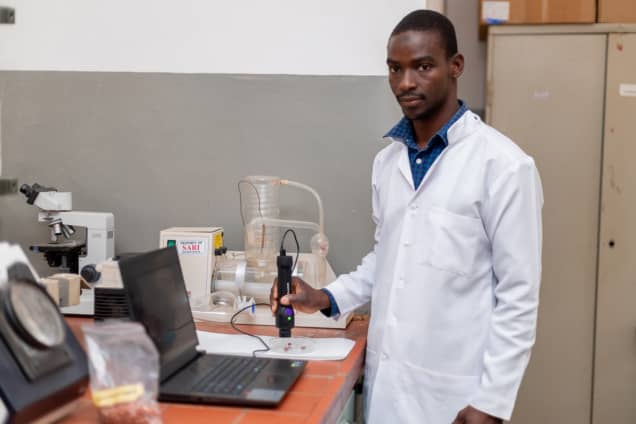
CSIR-SARI received a $100,000 Growth Grant for its work using near-infrared (NIR) technology to tackle aflatoxin contamination in groundnuts.
The winning project, titled NIR Tool for Rapid Screening of Aflatoxin-Resistant Groundnuts to Combat Aflatoxin Contamination, aims to reduce harmful toxins in peanuts by combining high-tech screening tools with the natural antifungal properties of peanut seed coats.
The two-pronged solution is especially important for smallholder farmers in Sub-Saharan Africa, including those in northern Ghana, where aflatoxin poses a serious threat to food safety and public health.
Nearly 1,200 applications were submitted globally for this year’s competition by scientists, engineers, and entrepreneurs working to improve food systems. The challenge features three levels of awards: Seed Grant ($25,000), Growth Grant ($100,000), and Grand Prize ($250,000).
In addition to CSIR-SARI, two other organisations, Toothpick Company Limited from Kenya and Yayasan Kopernik from Indonesia, also won $100,000 growth grants.
The $250,000 grand prizes were awarded to Oorja Development Solutions Limited in India and the Savory Institute in the United States. Eight other teams received $25,000 seed grants earlier this year.
The award puts CSIR-SARI at the forefront of agricultural innovation in Africa, boosting efforts to protect food quality, improve farmer livelihoods, and enhance food security in the region.
Toothpick Company Limited’s project on breakthrough bioherbicide technology combats the destructive striga weed using a fungal-based herbicide.
Applied as a seed coating, this innovation boosts crop yields and economic security for smallholder farmers across Kenya, Uganda, Ethiopia, and Ghana.
Yayasan Kopernik's PANGAN programme revitalises indigenous farming in West Timor by promoting diverse, nutritious local foods and launching a scalable Local Food Hub. The programme enhances food security and builds climate-resilient communities.
Oorja Development Solutions Limited's Scaling Climate-Smart Farming Solutions project provides smallholder farmers with a Pay-Per-Use package powered by decentralised solar pumps, alongside services such as soil testing, sustainable agriculture training, seed provision, and a dedicated mobile app.
Savory Institute's KENYA MARA Program supports Maasai herders in grazing livestock across nature conservancies. The initiative promotes land regeneration and helps preserve the Maasai’s traditional animal-based diet.
According to the organisers, winners, finalists, and semi-finalists of the 2025 Seeding The Future Global Food System Challenge have gained access to the Seeding The Future Global Food System Impact Innovators Database and Network.
This platform connects food system innovators with global stakeholders, including investors, intergovernmental agencies, and philanthropic organisations..
The network helps amplify the work of selected innovators by increasing their visibility, promoting partnerships, and offering global opportunities to scale their solutions.
The founder of the Seeding The Future Foundation, Dr. Bernhard van Lengerich, has commended the winners of the 2025 Global Food System Challenge for their efforts to develop practical and innovative solutions to improve food systems worldwide.
According to Dr. van Lengerich, the Challenge continues to support new ideas and technologies that make food systems better across the globe.
The focus is to help ensure everyone has fair access to safe, healthy, trusted, affordable, and enjoyable food while also protecting the planet’s health.
“This year’s winning solutions are great examples of what the Challenge stands for. We are honoured to recognise the winners for their transformative and impactful work and are incredibly grateful for the tireless efforts and good work of all Challenge participants,” said Dr. Lengerich.
Latest Stories
-
Fr Andrew Campbell honoured among 100 Africa Most Influential Persons in Rwanda
9 minutes -
Ghana to mark World Cleanup Day with National Sanitation Day on October 3
15 minutes -
Ignite Social Enterprise to partner Ghanaian watch manufacturer to boost global sales
42 minutes -
Ignite Social Enterprise does not condone fraud – Bola Ray
45 minutes -
Mr Eazi returns with new single ‘Comfort’ featuring Moliy
1 hour -
‘I don’t hire coaches, and I don’t fire coaches’ – Kofi Adams
2 hours -
NPP sets up 31 voting centres to speed up national executive elections
2 hours -
Demolition begins at La Pleasure Beach amid heavy security presence
2 hours -
Senyocue: Highlife will dominate global music in the next 20 years
3 hours -
Innovare Limited congratulates Ahantaman Community Bank PLC on ISO/IEC 27001:2022 certification urges others to follow suit
3 hours -
Today’s front pages: Friday, October 2, 2026
3 hours -
GPL 2026/27: Opoku Agyemang strike sends Kotoko third after Karela win
3 hours -
Government ‘cannot dissolve’ GFA – Sports Minister Kofi Adams
4 hours -
“Every genre we create doesn’t have to be ‘Afro’ something” – M.anifest
4 hours -
GMTF marks first anniversary with lifesaving equipment for 9 more hospitals
5 hours