

Audio By Carbonatix
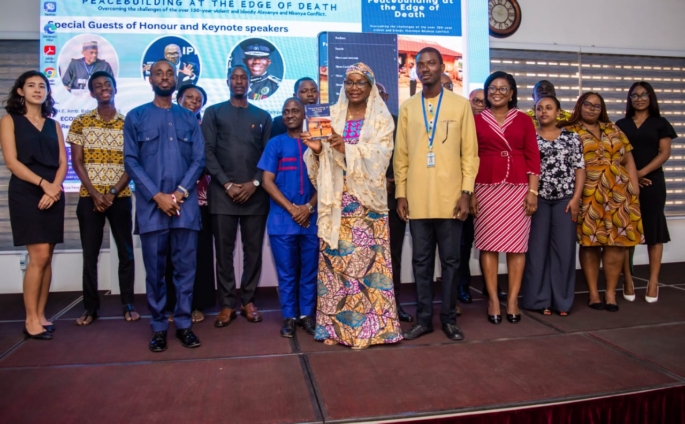
In a bid to tackle the roots of violent conflict and strengthen social cohesion in northern Ghana, three prominent civil society organisations have formed a strategic alliance to train 1,200 indigenous youth and women across four conflict-prone regions.
The initiative, set to begin this April, aims to foster sustainable peace, community resilience, and national stability.
The partnership involves Youth for Peace and Security - Africa (YPS-Africa), the Citizens Network for Peace and Security in Africa (CNPSA), and the Centre for Rural and Urban Women in Peace, Security and Development.
Their shared goal is to empower marginalised groups—particularly young people and women—with practical skills to address conflict, promote reconciliation, and take on leadership roles as peacebuilders within their communities.
The training sessions will be held in Tamale, Wa, Walewale, and Bolgatanga—four areas that have long grappled with historical and recent communal tensions.
Participants will be equipped with knowledge and tools in conflict prevention, trauma healing, mediation, civic leadership, and early warning response systems. The initiative is widely seen as a timely and necessary community-based intervention, given the rise in violent clashes and protracted tribal conflicts in northern Ghana.
Persistent Threats to Peace
Northern Ghana has, in recent years, become a flashpoint for ethnic tensions and land-related disputes. The enduring Bawku conflict, coupled with unrest in the Kusasi-Mamprusi areas and intermittent violence in Chereponi, Saboba, and Walewale, has destabilised lives and communities. In many cases, the violence has led to fatalities, mass displacement, and the tragic deaths of security personnel deployed to restore calm.
While government and traditional authorities have made commendable efforts to address these issues through curfews, peace dialogues, military presence, and community engagement, the persistence of the conflicts underscores the urgent need for more inclusive and grassroots-led peacebuilding strategies.
A Community-Led Response
According to the convening CSOs, this initiative puts indigenous actors at the centre of peacebuilding efforts.
“Peacebuilding must be indigenous and inclusive. Youth and women are not just victims—they are essential pillars for lasting peace,” said Abraham Korbla Klutsey, a lead convener and peace advocate with YPS-Africa and CNPSA.
“We aim to raise a new generation of peace champions who can disrupt cycles of violence and build bridges where divisions exist,” he added.
The initiative also aligns with national efforts to uphold peace and development in the north. It recognises the ongoing contributions of key institutions, including the Ministry of the Interior, National Security, the Ghana Police Service, the National Peace Council, and traditional leaders who continue to work tirelessly to maintain fragile peace.
Political Will and National Commitment
The statement particularly highlighted the personal commitment of former President John Dramani Mahama, who hails from northern Ghana and remains an outspoken advocate for peace and national unity.
“His continued advocacy is a beacon of hope and a call for all stakeholders to rise above political and ethnic divisions to protect Ghana’s unity,” the statement read.
The CSOs are calling for broader collaboration with government agencies, traditional authorities, development partners, and the private sector, and—importantly—the media.
“We urge the media to play a constructive role in amplifying peace narratives and countering the misinformation that often fuels violence and division,” said Hajia Hamdatu Ibrahim Hussein of the Centre for Rural and Urban Women in Peace, Security and Development.
Looking Ahead
This grassroots initiative is not only a peace-building intervention but a capacity-building effort that gives agency to those often sidelined in high-level policy conversations. By empowering 1,200 youth and women, who are both vulnerable to conflict and yet instrumental in resolving it, the programme hopes to plant seeds of resilience, empathy, and reconciliation in areas most in need of healing.
If successfully executed and sustained, this collaborative model could serve as a blueprint for other conflict-affected areas in Ghana and across the region, transforming victims into peace builders and communities into strongholds of harmony.
Latest Stories
-
David Selassie Anthony declares bid for NDC Deputy National Organiser
1 hour -
Amin Adam proposes 13 measures to strengthen Ghana’s debt transparency and market confidence
2 hours -
Mahama announces $2bn annual investment to accelerate industrialisation
2 hours -
Amin Adam urges monthly disclosure of Sinking Fund as Ghana prepares for DDEP repayments
2 hours -
Stronger banks will fuel business growth and jobs – ADB MD
2 hours -
Galamsey: ‘Rivers that fed our grandparents now run the colour of chocolate milk’ – Sam Jonah
2 hours -
We have been scammed by NDC, government is only doing PR – Abanga Fuseini
2 hours -
Republic Bank–JoyNews Habitat Fair opens in Ho today
2 hours -
BoG pledges stability to attract investment, urges stronger Africa–Asia partnerships
2 hours -
Amin Adam warns treasury bill dependence could expose Ghana to refinancing risks
2 hours -
Ghana better placed to withstand commodity price shocks – IMF
2 hours -
GAPTE intensifies efforts to increase bus availability for Aayalolo contra-flow
2 hours -
Amin Adam warns cedi depreciation could reverse Ghana’s debt relief gains
2 hours -
Fiscal discipline crucial for pension fund investments – Finance Minister
2 hours -
BoG Governor rallies IMF to back Africa’s digital sovereignty
2 hours