

Audio By Carbonatix
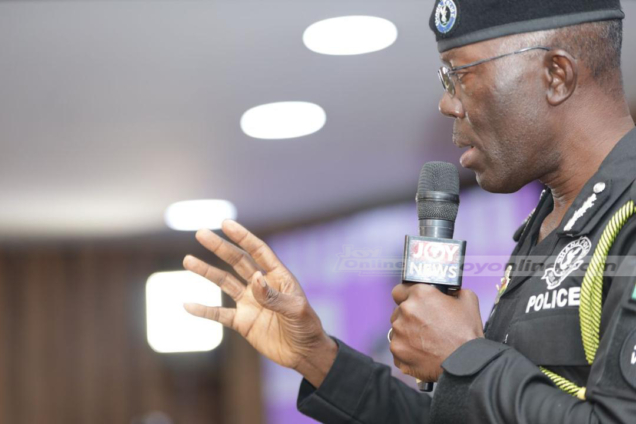
Dr George Akuffo Dampare has been a polarizing figure, he's divided opinions in a way few recent IGPs have. For better or worse, he left no one indifferent.
Even within the police service itself, the calls for his removal started right under Akufo-Addo, the very President who appointed him, it's been impossible to ignore.
Ultimately, his tenure will be judged on two main fronts: how he managed the police service and how he handled policing itself.
On internal management, the verdict from those under his command was damning. Many officers saw him as a terrible leader, calling for his dismissal barely a year into his term. Police officers are publicly calling him names as we speak. Even when he was at post, officers were openly challenging him, including those who took matters up the legal way. And honestly, who are we, as outsiders, to tell them otherwise? I'm a journalist, I work in a newsroom, if my Editor is fired and those of us under his or leadership celebrate the firing, do outsiders get to say, “Oh, but he was a great editor?”
The grievances were many—issues with promotions, claims of vindictiveness. The complaints never stopped, until Thursday, March 13, when he was dismissed.
On policing, his biggest legacy will likely be police visibility. Police officers were everywhere in the nation's capital. It helped in some ways to deal with crime but also fueled an explosion of extortion. More officers on the streets meant more harassment of innocent citizens.
Beyond visibility, though, little truly changed about the Ghana Police Service. It remained an institution stuck in its old ways. Extra-judicial killings? Still rampant. “Kill and cover-up” operations? Business as usual. The habit of framing innocent people? No real shift there either.
And then there was his handling of protests. Perhaps his biggest fault. Under IGP Dampare, not a single demonstration passed without a fight—if the police weren’t beating protestors, they were in court trying to block the protests from starting in the first place. More protests were allowed under Rawlings than under Dampare.
Think of how the Occupy Julorbi House protestors were treated, or how the anti-galamsey protests were shut down. Protestors were literally abducted, their lawyers left in the dark for days.
Just before Dampare was appointed Inspector General of Police, Ghana witnessed its deadliest elections? And yet, after taking office there was little urgency in investigating the violence—until a new president had to step in and direct action. The next election recorded some more deaths but no real accountability. High-profile killings? Barely any meaningful investigations and prosecutions.
So what, exactly, was transformative about Dampare’s tenure? His real genius wasn’t in policing but in PR. He was a master at cultivating the right allies—Academia, CSOs, the media. He faced little criticism because, honestly, who dared? Speaking against him meant inviting backlash. The man became untouchable until recent times.
And even up until his last day in office, his allies were in court attempting to prevent the president from replacing the head of a security service. Do we honestly believe security chiefs should remain in place when different governments with different ideologies take over? How does that even make sense? My view is that presidents must have a free hand to decide who leads which security service or force.
But after a while, the veil began to slip. And when it did, it became clear to everyone what this was all really about. Dr. George Akuffo Dampare truly divided a nation.
The author, Kwaku Asante, is a senior broadcast journalist with JoyNews and Joy 99.7 FM. The views expressed in this article are his personal opinions and do not reflect, in any form or shape, those of the Multimedia Group, where he works.
Latest Stories
-
Total expenditure as of July 2026 amounted to GH¢147.07bn, 16% below target – BoG
35 minutes -
Total revenue & grants stood at GH¢144.5bn in July 2026, slightly below target – BoG
51 minutes -
Ghana Sports Fund urges sports federations to submit credible proposals and measurable targets
55 minutes -
Sally Rooney books withdrawn in UK over Palestine Action support
1 hour -
Musk says US government may be behind slowdown of Ukraine drone speeds
1 hour -
Picking Chief Justices nearing retirement could give Mahama immense power – Bentil
1 hour -
Netflix to shed 1,000 jobs in steepest cuts since 2022
2 hours -
Burnham had two hospitality dinners with Man City chairman, deleted records show
2 hours -
Semenyo ‘froze’ after alleged racist abuse, court told
2 hours -
‘Shameless’ – Mourinho critical of Vinicius Jr ban timing
2 hours -
Loyalty can outweigh competence in Chief Justice selection – Bentil
2 hours -
Man City suffer as PSG masterclass sets up Champions League win
3 hours -
Customer Service Africa CEO urges business leaders to observe staff and customer interactions
3 hours -
On night of mayhem for Liverpool, Barcola arrives in style
3 hours -
Muzic Mensah finds healing and renewed love in new single ‘WayƐ Late’
3 hours