

Audio By Carbonatix
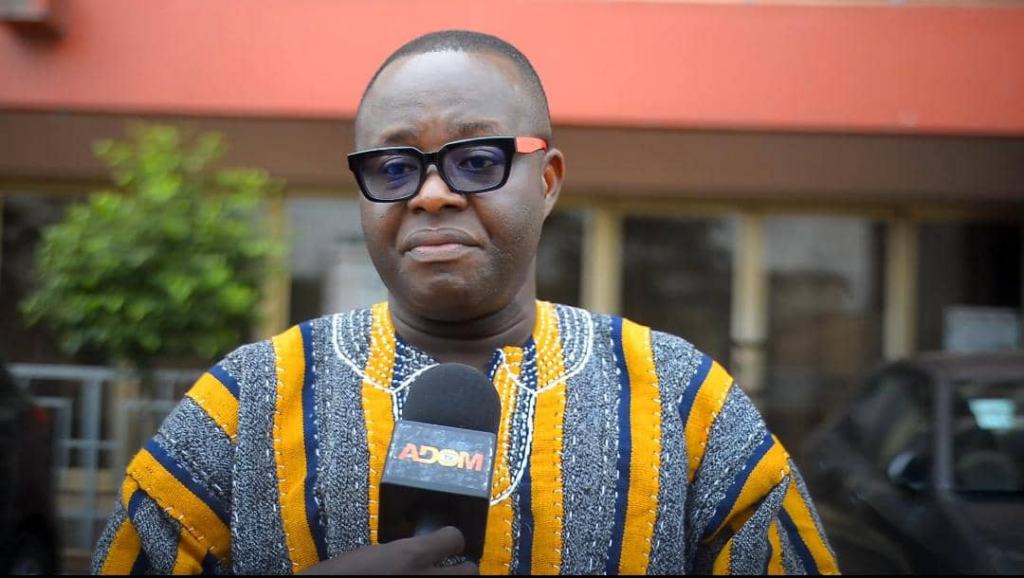
A Political Scientist and Senior Lecturer at Kumasi Technical University, Dr. Samuel Afriyie, has described the Supreme Court’s decision to declare the delegate system unconstitutional as a step in the right direction.
In an interview with JoyNews, Dr. Afriyie noted that while the ruling seeks to curb money politics and widen participation in internal party elections, it is unlikely to completely eliminate monetization in political party primaries.
“The Supreme Court’s decision is a good one, but it will only help reduce, not eradicate, bribery and corruption in the electoral system,” he said.
Dr. Afriyie explained that monetization in party primaries has become deeply entrenched over the years.
He argued that even with a broader voter base, candidates with financial muscle may still find ways to influence outcomes through gifts, logistics, and other forms of inducement.
“The challenge is not just about the size of the delegates. It is about the culture of money politics that has developed within our parties,” he added.
The Supreme Court has, by a 5-2 majority decision, ruled aspects of the delegate system used by political parties to elect presidential and parliamentary candidates as unconstitutional.
The court ordered political parties to replace the system within one year with one that allows all members in good standing to vote.
The ruling has triggered debate on reforms needed to make party primaries more transparent and participatory.
But Dr. Afriyie argued that while the court's interpretation may be well-intentioned, it does not adequately address the practical realities of implementing such a system.
According to him, expanding voting rights to all party members could place enormous financial and logistical burdens on political parties’ members and aspirants.
He also questioned how political parties would determine who qualifies as a member in good standing, noting that the Supreme Court's ruling leaves that responsibility to the parties.
"Now it is up to the political party to determine who its members in good standing are, and that will largely depend on the fulfillment of financial obligations. The parties may also increase dues, nomination, and filing fees for aspirants," he said.
In Kumasi, the ruling has been met with optimism. However, some residents share the political scientist’s view that it will not completely eliminate monetisation in political party primaries.
They believe the ruling addresses long-standing concerns about money influencing internal party elections, as well as the gap between delegates and the wider party membership.
“It will cure a certain mischief,” one resident said. “First, the monetisation of our politics, and second, the situation where the general electorate feel that delegates did not elect the candidate they wanted.”
Other residents added that the decision could help restore confidence in party primaries and deepen democratic participation by granting all members in good standing the right to vote.
They added that while implementation may come with challenges, broadening participation is necessary to make internal elections more credible.
Latest Stories
-
Ghana eyes stronger trade ties as Australia hosts multicultural trade and investment forum
1 minute -
Margaret-Marie Krakue
4 minutes -
Ayariga announces plans for live broadcast of MMDAs’ meetings on local radio stations
7 minutes -
Mrs Anna Tackie
9 minutes -
Ghana links Afghan heroin and Brazilian cocaine to global drug markets – Global Organised Crime Index
16 minutes -
NHIA launches nationwide inter-school quiz to deepen students’ knowledge of NHIS
23 minutes -
Political protection could be masking Ghana’s cocaine trade – Global Organised Crime Index
28 minutes -
AFCON 2027Q: ‘We have to dissolve the GFA’ – Effia MP after Black Stars lose to Gambia
30 minutes -
NPP announces voting schedule and ID requirements for October 3 national elections
32 minutes -
Lupus can mimic HIV symptoms and damage kidneys if untreated – KNUST expert
35 minutes -
Focus on Sickle Cell Foundation seeks to introduce sickle cell education through comics in Ghanaian schools
40 minutes -
NPP rewrites the campaign playbok as opposition reality shapes National Executive contest
42 minutes -
Road safety education will fail without enforcement – NRSA boss
43 minutes -
Daily Insight for CEOs: Finishing Q3 strong and entering Q4 with purpose
44 minutes -
National Ambulance Service begins ‘Operation Restore Fleet’ to restore grounded ambulances
44 minutes