

Audio By Carbonatix
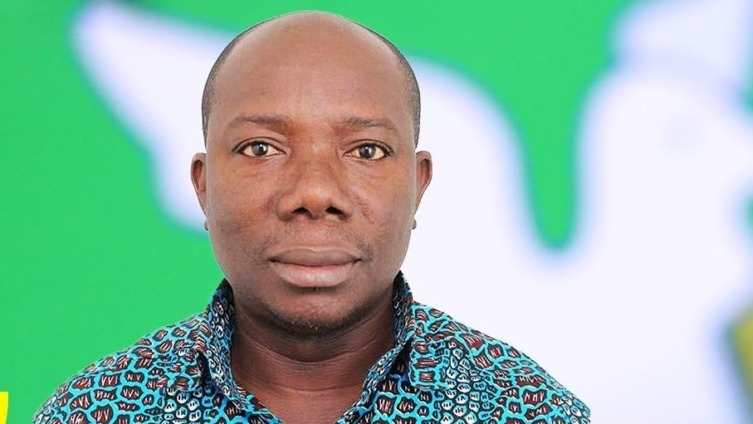
The Director of Elections of the New Patriotic Party (NPP), Evans Nimako, says the Supreme Court’s decision against the use of a delegate system in parliamentary primaries will not necessarily solve the problem of monetisation in Ghana’s politics.
Mr Nimako said that although the full details of the court’s judgment are yet to be studied, the decision appears aimed at reducing the influence of money in political contests. However, he believes opening up party primaries to all eligible members may not be the solution.
“We have not all seen the full judgment, and so we do not know the actual basis. But what the court is saying is that the decision is to kill monetisation. I am saying this is not the cure,” he said.
Speaking on Adom FM’s Dwaso Nsem, the NPP elections chief argued that the ruling could instead shift the financial burden of internal elections from individual aspirants to political parties.
He explained that if every card-bearing member in good standing is allowed to vote in parliamentary primaries, parties would have to organise large-scale elections involving thousands or even millions of members.
“We are saying that every card-bearing member in good standing must be allowed to vote to elect a parliamentary candidate. Let’s assume you have a membership of eight million and you have to conduct an election,” he said.
Mr Nimako questioned the cost implications of organising such elections, comparing them to the expenses incurred by the Electoral Commission (EC) in conducting national elections.
“Let’s ask the EC how much it costs to organise a national election. If this burden is being brought on the political parties, you would expect that they comply with the law, and in doing so, they must get money to conduct their internal election,” he added.
He noted that candidates would still incur expenses while campaigning among party members, even under a broader voting system.
“Who said that in doing so, you will not go round to canvass for votes among the membership? You will do that, so you bear a certain cost,” he said.
However, Mr Nimako stressed that he does not support vote buying or the practice of inducing voters, insisting that existing laws already prohibit such acts.
“I am not in support of aspirants paying for votes, but there is an existing law, the Political Parties Act, Act 574, which is against it. The law prohibits voter inducement and vote buying,” he stated.
He argued that the focus should instead be on enforcing existing laws and improving political party financing systems, rather than relying solely on changes to the internal election structure.
Mr Nimako also raised concerns about how political parties would manage their membership registers under a system where all eligible members participate in primaries.
He explained that unlike national elections, where the EC maintains the official voters’ register, political parties would have to create and manage their own databases.
“Who has the membership list? The EC has the register of eligible voters. Now that responsibility is on the party. If I am asking for enforcement, how are you going to do it? How will the party develop its membership register? Who will have it?” he questioned.
The NPP elections director further argued that delegate systems are not necessarily undemocratic, noting that several political systems around the world use similar methods in selecting candidates.
“I don’t know of any law in the world that is against the delegate system,” he said.
The Supreme Court recently directed political parties to replace the delegate-based system with one that allows all eligible party members to participate directly in parliamentary and presidential primaries within one year.
Latest Stories
-
Ghana eyes stronger trade ties as Australia hosts multicultural trade and investment forum
1 minute -
Margaret-Marie Krakue
4 minutes -
Ayariga announces plans for live broadcast of MMDAs’ meetings on local radio stations
7 minutes -
Mrs Anna Tackie
9 minutes -
Ghana links Afghan heroin and Brazilian cocaine to global drug markets – Global Organised Crime Index
16 minutes -
NHIA launches nationwide inter-school quiz to deepen students’ knowledge of NHIS
23 minutes -
Political protection could be masking Ghana’s cocaine trade – Global Organised Crime Index
28 minutes -
AFCON 2027Q: ‘We have to dissolve the GFA’ – Effia MP after Black Stars lose to Gambia
30 minutes -
NPP announces voting schedule and ID requirements for October 3 national elections
32 minutes -
Lupus can mimic HIV symptoms and damage kidneys if untreated – KNUST expert
35 minutes -
Focus on Sickle Cell Foundation seeks to introduce sickle cell education through comics in Ghanaian schools
41 minutes -
NPP rewrites the campaign playbok as opposition reality shapes National Executive contest
42 minutes -
Road safety education will fail without enforcement – NRSA boss
43 minutes -
Daily Insight for CEOs: Finishing Q3 strong and entering Q4 with purpose
44 minutes -
National Ambulance Service begins ‘Operation Restore Fleet’ to restore grounded ambulances
45 minutes