

Audio By Carbonatix
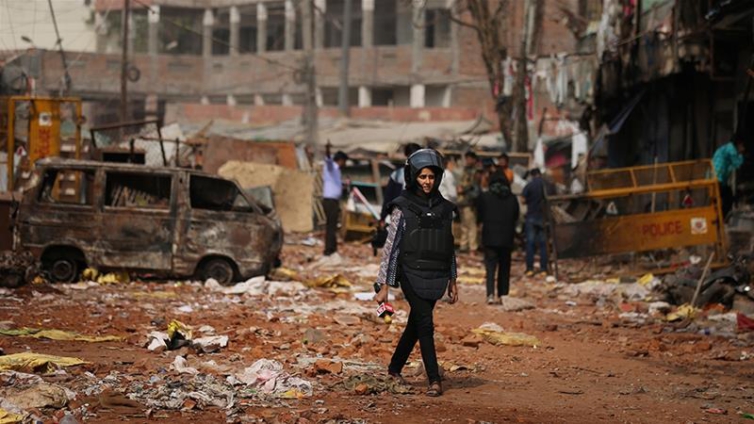
Indian police have filed charges against 15 people over Hindu-Muslim riots in the capital, a spokesman said on Thursday, prompting criticism from rights groups that authorities were targeting the opposition and minority Muslims.
February's violence killed more than 50 people and drove thousands from their homes, most of them members of the Muslim minority, which forms about 15 percent of the country's roughly 1.3 billion population.
The riots followed months of protests against a new citizenship law that critics say discriminates against Muslims. The Citizenship Amendment Act (CAA), passed last December, fast-tracks nationality for minorities from three neighbouring countries but excludes Muslims.
The charges were filed in a court in eastern New Delhi, said police spokesman Anil Mittal, adding that the evidence against the accused runs to more than 17,000 pages.
Mittal did not identify those charged, but domestic media have named former members of two opposition parties and academics at one of the main protest sites, the Muslim-dominated university of Jamia Millia Islamia.
Arbitrary arrests
"By arbitrarily arresting outspoken activists, the government is not only attempting to silence dissent but also sending a message to supporters that they have free rein to commit abuses against minority communities," said Meenakshi Ganguly, South Asia director of New York-based Human Rights Watch.
Why is India’s citizenship law causing so much anger?| Start Here
Prashant Bhushan, a Supreme Court lawyer and vocal government critic, said the charge-sheet was "farcical".
Broadcaster NDTV called the investigation a "whitewash", adding that several members of the ruling Hindu nationalist Bharatiya Janata Party made incendiary speeches hours before February's riots but had escaped censure.
Amnesty International India in its report published last month accused Delhi police of "complicity and bias" in the February violence.
The government and Delhi police have defended their handling of the case, saying those involved in the riots will be punished regardless of political or religious ties.
This latest move follows the arrest of a former student leader who was arrested on Sunday for his alleged role in the February violence, a move denounced by activists as "a witch-hunt exercise".
Umar Khalid, 33, was arrested under the stringent Unlawful Activities (Prevention) Act (UAPA) in connection with the riots.
Legal experts have questioned the police's application of the UAPA on students and activists, as the law reduces the scope for bail, meaning jail terms without trial.
Latest Stories
-
National Peace Council urges investment in youth to sustain Ghana’s peace
20 minutes -
Afenyo-Markin urges youth to speak up against injustice
31 minutes -
CAF annuls Edo Queens victory, orders WAFU B final to resume from extra time
53 minutes -
Interior Minister urges traditional authorities to enforce anti-bushfire bye-laws
55 minutes -
3rd Republic Bank-JoyNews Habitat Fair Clinic ends on a high note after three days of strong patronage
56 minutes -
Ten climbers missing after avalanche hits Himalayan base camp
2 hours -
NPP had more permanent fuel relief measures than current GH¢2 diesel cut – Amin Adam
2 hours -
Photos from the 3rd Republic Bank-JoyNews Habitat Fair Clinic
2 hours -
Ethiopia’s army promises restraint amid fears of new civil war
2 hours -
Amin Adam calls for review of fuel taxes as diesel prices remain above GH¢18
3 hours -
World Vision Ghana, Ahafo districts sign MoU for universal WASH coverage
3 hours -
When the gold engine stutters: What Ghana’s Cedi and reserves are telling us about the new economic architecture
3 hours -
Two reportedly die after being trapped in mining pit at Juaboso
4 hours -
Petrosol cleans up Wa Municipal Hospital, to donate medical equipment
4 hours -
‘If NPP was ‘insensitive’ over fuel prices, NDC must accept same description now’ — Amin Adam
4 hours