

Audio By Carbonatix
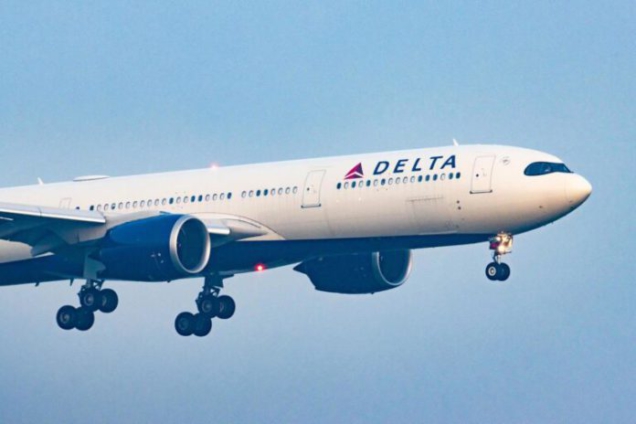
Delta Air Lines and United Airlines were sued on Tuesday by passengers who claimed they paid extra money to sit in "window" seats, only to find themselves placed in seats next to a blank wall.
Proposed class actions were filed against United in the San Francisco federal court and against Delta in Brooklyn, New York federal court, seeking millions of dollars in damages for more than 1 million passengers at each carrier.
The complaints say some Boeing 737, Boeing 757 and Airbus A321 planes contain seats that would normally contain windows, but lack them because of the placement of air conditioning ducts, electrical conduits or other components.
Passengers said Delta and United do not flag these seats during the booking process, unlike rivals such as Alaska Airlines and American Airlines, even when charging tens or occasionally hundreds of dollars for them.
The lawsuits say people buy window seats for several reasons, including to address fear of flying or motion sickness, keep a child occupied, get extra light or watch the world go by.
"Had plaintiffs and the class members known that the seats they were purchasing (were) windowless, they would not have selected them, much less have paid extra," the United complaint said. The Delta complaint contained similar language.
Delta is based in Atlanta, and United is in Chicago. Neither immediately responded to requests for comment.
Ancillary revenue from seat selection, baggage fees, cabin upgrades, airport lounges and other services helps carriers generate more cash when they fly while keeping base fares lower.
The Delta lawsuit is led by Nicholas Meyer of Brooklyn, and the United lawsuit is led by Marc Brenman of San Francisco and Aviva Copaken of Los Angeles. Copaken said United refunded fees for her windowless seats on two flights, but not a third.
Passengers can use websites such as SeatGuru to find pluses and minuses of specific seats, including those lacking windows.
Carter Greenbaum, a lawyer whose firm filed the two lawsuits, said the ability to find information from third-party websites doesn't excuse Delta's and United's conduct.
"A company can't misrepresent the nature of the products it sells and then rely on third-party reviews to say a customer should have known that it was lying," he said in an email.
The cases are Meyer v Delta Air Lines Inc, U.S. District Court, Eastern District of New York, No. 25-04608; and Brenman et al v United Airlines Inc, U.S. District Court, Northern District of San Francisco, No. 25-06995.
Latest Stories
-
Ghana, 3 others face large financing needs, debt servicing costs – World Bank warns
57 minutes -
Eurobond repayment: Ghana faces US$6.4bn repayment burden between 2027 and 2030 – World Bank
1 hour -
Government to add 100 new ambulances to national fleet in 2027
2 hours -
Ex-Spurs player Vega set to run for FIFA president
2 hours -
Arteta signs new contract with champions Arsenal
2 hours -
Former Man City player Silva comes out of retirement
2 hours -
‘I have a screen in my office’ – Akandoh on real-time emergency bed tracking
2 hours -
Government begins pilot of national emergency bed management system
3 hours -
GRA forms 9-member committee to probe alleged missing containers at Tema Port
3 hours -
Foreign Minister inspects VFS Global Visa Centre, highlights commitment to service quality standards
3 hours -
Declan Rice close to agreeing new Arsenal deal
4 hours -
‘Draining’ few days for Gauff after online racist abuse
4 hours -
Media worker, journalist remanded over alleged GH¢800,000 fraud
4 hours -
PAC sends Ghana Water hearing back, demands Minister and MD appear over financial status
4 hours -
Foreign Affairs Minister inspects 20+ visa centres, demands better conditions for Ghanaian applicants
4 hours