

Audio By Carbonatix
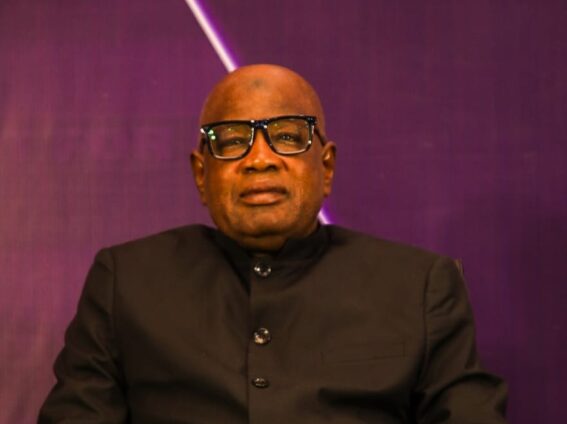
The Dean of the Faculty of Social Sciences at the University for Development Studies (UDS), Professor Eliasu Alhassan, has warned that democracy in Ghana is increasingly being reduced to a commodity, with political power influenced by money rather than the will of the people.
He made the remarks during JoyNews Impact Makers Foundation’s programme dubbed “Democracy is not for sale” held in Tamale on Friday, March 27.
The initiative forms part of efforts to spark national conversations on vote buying and electoral reforms.
Speaking at the event, Prof Alhassan expressed concern about the growing influence of money in Ghana’s political process.
“The monetisation of our politics nowadays is becoming unbearable,” he said, adding that the trend has distorted the core principles of democracy.
He explained that while democracy is founded on participation, the rule of law and equality, the current situation reflects a worrying shift.
“Democracy has to do with the people actively participating in the governance of their country. There must be rule of law… equality before the law… and the protection of fundamental human rights,” he noted.
According to him, although democracy is not meant to be bought, the reality on the ground tells a different story.
“It isn’t for sale in principle, but in reality, monetisation has made democracy for sale,” he said.
Prof Alhassan pointed to vote buying as a key factor, arguing that politicians often take advantage of poverty to influence voters’ choices.
“Politicians have actually hidden under a certain cover, and that is poverty, by forcing people, taking the people’s decisions,” he explained.
He said when voters accept money in exchange for votes, they effectively lose their right to make independent decisions.
“When you give money and the person votes for you, indirectly you have taken the decision that the person should have taken with his conscience,” he added.
The sociology professor further noted that the situation is more pronounced in rural communities, where economic hardship makes voters more vulnerable.
“Because of the poverty situation in Ghana, especially in the rural communities, politicians have actually relied on that,” he said.
He described the trend as a dangerous shift where political power is determined by financial strength rather than merit or policies.
“The whole system has been monetised or commodified where politicians have to buy people’s decisions to become either MPs or the president,” he said.
Prof Alhassan also highlighted the role of inequality and education in shaping voter behaviour. He said people with higher levels of education are less likely to sell their votes.
“There are a lot of people who will never allow themselves to be bought… especially those who have the education,” he said.
However, he said that illiteracy and lack of awareness continue to make some voters easy targets.
“Some people even voluntarily sell their votes simply because they are ignorant about what is happening in their country,” he added.
He warned that such practices undermine the very essence of democracy and weaken public trust in the electoral process.
“If a politician comes with money to buy your vote, don’t forget that the person is buying your decision to make the government,” he said.
Prof Alhassan urged political leaders to focus on policies and engagement rather than inducements, stressing that democracy must be protected.
“Politicians are supposed to tell the people what they can bring on board… not to influence them with money or gifts,” he said.
“Frankly speaking, democracy in Ghana has now become a commodity where politicians sell, and the voters also buy with their decisions,” he added.
Latest Stories
-
‘Carlos Queiroz not the sort of coach Black Stars need’ – Nii Lante Vanderpuye
25 minutes -
AFCON 2027Q: ‘Our Black Stars team is gone’ – Former Sports Minister
44 minutes -
Prof. Prempeh calls for public review of draft constitutional reform bills
57 minutes -
AFCON 2027Q: ‘I have never seen a poor performance from Black Stars like against Gambia’ – Nii Lante Vanderpuye
1 hour -
Nigeria set to launch National Digital Address System 9 years after Ghana showed the way
1 hour -
Policy rate decision takes time to reflect in lower lending rates – BoG
2 hours -
Western Regional Minister applauds Karpowership’s role in Ghana’s power sector
2 hours -
Livestream: Road safety crises: Where are we getting it wrong?
2 hours -
Enterprise Life celebrates 25 years of protecting families and building trust
2 hours -
ICC London rules in favor of Ghana against Tullow over $400m tax charge
2 hours -
We are disappointed in ICC’s ruling over our corporate income tax assessment in Ghana – Tullow Oil
2 hours -
Cost of building inflation for August 2026 increases to 4.6% – GSS
3 hours -
Today’s front pages: Wednesday, September 30, 2026
3 hours -
Bawumia highlights agricultural, compulsory insurance reforms in IBAG engagement
3 hours -
Ghana will secure Tullow tax revenues while protecting Jubilee, TEN investments – Ato Forson
3 hours