

Audio By Carbonatix
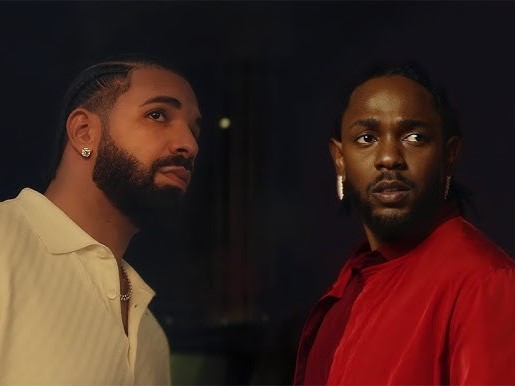
A US federal court has dismissed Drake’s defamation lawsuit against Universal Music Group (UMG), ruling that Kendrick Lamar’s diss track ‘Not Like Us’ constitutes protected opinion rather than actionable defamation.
Judge Jeannette Vargas of the Southern District of New York granted UMG’s motion to dismiss all claims on Thursday (October 9), finding that accusations made about Drake in the song’s lyrics cannot reasonably be interpreted as statements of fact, given the context of the artists’ heated rap battle.
A spokesperson for Universal Music Group told MBW: “From the outset, this suit was an affront to all artists and their creative expression and never should have seen the light of day.
“We’re pleased with the court’s dismissal and look forward to continuing our work successfully promoting Drake’s music and investing in his career.”
‘Not Like Us’, released May 4, 2024, was the penultimate track in what the court called “perhaps the most infamous rap battle in the genre’s history.”
Over 16 days, Drake and Lamar released eight diss tracks with increasingly inflammatory rhetoric.
The song achieved massive commercial success, with over 1.4 billion streams on Spotify, winning Record of the Year at the Grammys, and being performed during the 2025 Super Bowl Halftime Show to 133.5 million viewers.
Drake’s lawsuit, filed in January 2025, alleged that UMG “intentionally published and promoted” the song “while knowing that the song’s insinuations that he has sexual relations with minors were false and defamatory.”
Both Drake and Lamar release their records via UMG and its Republic Records and Interscope, respectively.
In her 38-page opinion, which you can read in full here, Judge Vargas emphasized that the broader context of the rap battle was essential to understanding how a reasonable listener would interpret the lyrics.
The court rejected Drake’s arguments that the song should be assessed in isolation from the other diss tracks, finding that “the songs released during this rap battle are in dialogue with one another” and “must be read together to fully assess how the general audience would perceive the statements.”
Drake also brought claims for harassment and violations of New York General Business Law Section 349, alleging UMG engaged in deceptive practices including using bots and payola to artificially inflate the song’s popularity.
The court dismissed these claims as well, finding no private right of action for harassment and insufficient evidence of consumer harm.

Latest Stories
-
African negotiators seek delivery of climate commitments at COP31
1 minute -
BoG develops AI rules for financial sector
3 minutes -
‘Big Push’: Government assures contractors of prompt payments
7 minutes -
Court fines miner for breaking into gold buying shop
17 minutes -
Tarkwa court jails labourer for three years over GH¢123,000 theft
1 hour -
GAEC must retain nuclear scientists for Ghana’s nuclear ambitions – Minister
2 hours -
Man reportedly mistaken for game and shot by hunter dead in forest
2 hours -
19-year-old mason jailed 15 years for defiling seven-year-old pupil
2 hours -
Ghana’s banking sector assets rise 20.47% to GH¢500.2bn – BoG Governor
2 hours -
22 injured as Sprinter bus overturns at Sege after tyre burst
2 hours -
UN housing expert urges Ghana to strengthen Rent Control Department amid housing affordability concerns
2 hours -
Delta-BCI partnership reaches 166,000 people with breast cancer education
2 hours -
Power restoration fault suspected in Kumasi Central Market fire
7 hours -
The 7-foot giant of Ngleshie Amanfro: Seven-foot Ghanaian Ephraim Saawa dreams of joining the national basketball team
8 hours -
Government promises support for Kumasi Central Market fire victims
8 hours