

Audio By Carbonatix
Edwin Nii Lantey Vanderpuye, National Coordinator of the District Road Improvement Programme (DRIP), has cautioned Metropolitan, Municipal and District Assemblies against the misuse of DRIP equipment, stressing that the machines were procured strictly for public road development projects.
“The DRIP equipment is meant for the development of our districts and must not be diverted for private commercial purposes,” he stated.
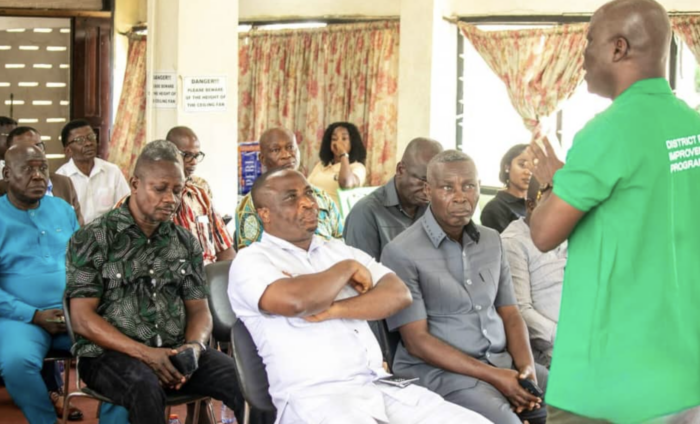
Mr Vanderpuye gave the caution during a stakeholder engagement with Municipal and District Chief Executives (MDCEs), Municipal and District Coordinating Directors and DRIP Coordinators in the Volta Region held on Monday in Ho.
The meeting formed part of efforts by the National Secretariat of DRIP to address operational challenges confronting the programme and strengthen coordination among stakeholders.
Discussions at the meeting focused on accountability, effective management and proper utilisation of DRIP equipment to ensure efficient road maintenance and infrastructure improvement across districts in the region.
Mr Vanderpuye urged coordinators and assembly heads to approach the programme with seriousness and commitment, noting that DRIP remained a key intervention aimed at improving local road networks and supporting community development.
He encouraged stronger collaboration among stakeholders to ensure that the programme achieved its intended objectives of improving access roads and enhancing socio-economic activities in communities.
The National Coordinator also advised assemblies to prioritise regular maintenance and servicing of the machines to ensure their durability and efficiency.
The engagement ended with an interactive session where participants raised concerns and sought clarification on operational and implementation issues relating to the programme.
Mr James Gunu, the Volta Regional Minister, stressed the need for transparency, accountability and stronger collaboration between DRIP Coordinators and the various MDCEs.
He noted that effective cooperation among all stakeholders was essential to sustaining the programme and maximising its impact on local development.
Mr Gunu urged assemblies to safeguard the equipment and ensure that the machines were used responsibly for the benefit of communities across the region.
Latest Stories
-
Final day: 3rd Republic Bank-JoyNews Habitat Fair underway at Junction Mall, Nungua
55 seconds -
Nor’easter brings flooding as New York and New Jersey declare emergency
12 minutes -
Africa’s richest man helps fund $660m fuel pipeline between Ethiopia and Djibouti
45 minutes -
Security lapses at Utah campus where Charlie Kirk was killed, review says
50 minutes -
White House bars CNN from travelling with Trump on Air Force One
55 minutes -
Pope praises young people’s ‘energy and commitment’ at huge open-air Mass in Paris
1 hour -
Nyankamam residents benefit from free medical screening, healthcare outreach
1 hour -
Ghana, Boeing explore setting up regional aircraft maintenance hub
1 hour -
Bangkok roads submerged as flood disaster declared
1 hour -
Four killed in helicopter crash near Montreal
1 hour -
Ghana could have national airline back in skies within 18 months – Boeing to Mahama
1 hour -
NDC suspends vetting exercise in Krowor constituency, reschedules to September 29
2 hours -
Extractive firms urged to strengthen cyber defences as digital risks grow
2 hours -
Photos: Mahama engages Ghanaian diaspora in New York on Ghana’s economic recovery
2 hours -
Man jailed 10 years for defiling 11-year-old girl at Kpandai
3 hours