

Audio By Carbonatix
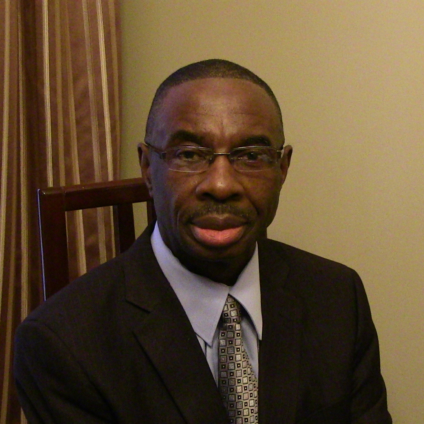
A Financial Expert and a former Technical Adviser at the Ministry of Finance, Dr Sam Mensah, has described the macroeconomy as a hammer from time to time despite it being an enabler.
Speaking at the first IMANI-GIZ Reform Dialogue Series (RDS) on the theme “Ghana’s Macroeconomic Environment: An Enabler or Hammer to Investment?”, he said policies have become time-inconsistent which has created a major problem for the sustainability of the economy.
“The macro economy has been an enabler, but from time to time it turns out to be a hammer.”
He advised the country to relook at institutions of economic governance.
He also pointed out that despite the monetary and fiscal policy measures recently, the investment climate has not been enhanced enough.
This he said is because of the structural weaknesses in the economy and thus, there should be a long-term view of addressing the macroeconomic problems.
Deputy Finance Minister, Dr John Kumah, for his part said, the macroeconomic environment is meant to be an enabler, but the Ghanaian economy is not yet there, though on the path.
According to him, the government is reducing the fiscal deficit, revising expenditure targets by 30% for discretionary expenses, and has placed a moratorium on the importation of vehicles, among others.
He said the Ghana Revenue Authority met its revenue target for 2021 and this is expected to continue into the 2022 fiscal year.
He however said external factors like COVID-19, the Russian-Ukraine crisis, among others have adversely affected the economy.
Dr. Kumah also noted that the Fiscal Responsibility Act is very good in guiding and monitoring the government.
He mentioned that government would do more with regard to the efficiency of its expenditures.
The dialogue sought to engage relevant stakeholders in Ghana’s investment ecosystem to discuss how a conducive macroeconomic environment creates the right investment climate.
The macroeconomic environment are the set of factors that affect investment and growth in an economy. Basic indicators of the macroeconomic environment include inflation rate, exchange rate, the fiscal balance, and the external current account balance, among others.
Latest Stories
-
Ghana’s research fund faces a test of turning funding promises into scientific breakthroughs
3 minutes -
Dîner en Blanc Accra returns on December 28 for second edition
6 minutes -
David Selassie Anthony declares bid for NDC Deputy National Organiser
2 hours -
Amin Adam proposes 13 measures to strengthen Ghana’s debt transparency and market confidence
2 hours -
Mahama announces $2bn annual investment to accelerate industrialisation
2 hours -
Amin Adam urges monthly disclosure of Sinking Fund as Ghana prepares for DDEP repayments
2 hours -
Stronger banks will fuel business growth and jobs – ADB MD
2 hours -
Galamsey: ‘Rivers that fed our grandparents now run the colour of chocolate milk’ – Sam Jonah
2 hours -
We have been scammed by NDC, government is only doing PR – Abanga Fuseini
2 hours -
Republic Bank–JoyNews Habitat Fair opens in Ho today
2 hours -
Dr Boako challenges government over new digital tax
2 hours -
BoG pledges stability to attract investment, urges stronger Africa–Asia partnerships
2 hours -
Amin Adam warns treasury bill dependence could expose Ghana to refinancing risks
2 hours -
Ghana better placed to withstand commodity price shocks – IMF
2 hours -
GAPTE intensifies efforts to increase bus availability for Aayalolo contra-flow
2 hours