

Audio By Carbonatix
Planning effective strategic communications starts well before a crisis and involves a number of steps.
These include creating a communications strategy and framework with all stakeholders, developing and approving core messages for issues likely to arise during a crisis, training communications staff and developing a system for rapid review and approval of messages.
Developed in 2018, the first ECOWAS Risk Communication and Community Strategy played an important role in understanding the risk communication and community engagement (RCCE) principles and strategies through a number of training courses, the implementation of effective RCCE processes and mechanisms, intense intra- and inter-sectoral collaboration and coordination at all levels, resources mobilization.
This 2019-2023 Risk Communication and Community Engagement Strategy expires in one month and it is in line with the West African Health Organisation (WAHO) through the Regional Center for surveillance and Disease Control (RCSDC).
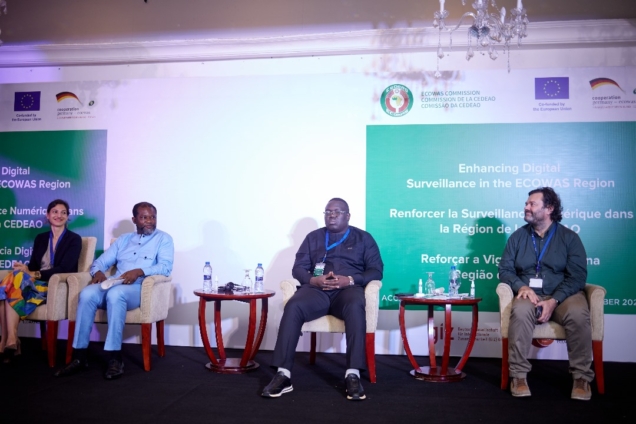
This was with the support of the ECOWAS RCCE network and the Regional Program to support the Pandemic Prevention in the ECOWAS region (RPPP) of Gesellschaft Fur International Zusammenarbeit (GIZ), organised from 20 to 22 November in Accra (Ghana), a regional workshop to validate the new 2024 -2028 ECOWAS regional risk communication and community engagement strategy.
This workshop is part of ongoing efforts towards the sustainability of risk communication and Community Engagement Preparedness and Response systems in the ECOWAS region and aims to ascertain whether the new strategy meets the needs and challenges of ECOWAS member states and all stakeholders in the field.

The event brings together the ECOWAS Regional Network for Risk Communication and Community Engagement (RCCE) composed of experts in the field from the 15 ECOWAS Member States and coming from the 3 sectors of the "One Health" approach and technical and financial partners such as European Union, GIZ, the Regional Health Office of USAID / West Africa.
The workshop is to be also live streamed for extensive reach and participation of stakeholders with interest in this subject.
During the opening ceremony, the Deputy Minister of Health, Honorable Mahama Seini opened the three-day meeting emphasizing that an outbreak starts in the community and ends in the community and therefore the successes of disease outbreak management must at all times put communities in every strategy or plan.
He mentioned the RCCE interventions must be based on data and research to highlight the gains made and identify gaps in RCCE.
Dr Babacar FALL, from the RCSDC, speaking on behalf of the Director General of WAHO said that: "The 2019 – 2023 strategic plan expires in just over a month, and all participants gathered here as RCCE experts are expected to review and make inputs to enrich the proposals made for the new strategic plan”.
He also mentioned the need for the new strategy to consider the needs of all stakeholders and incorporate lessons learnt during the management of the COVID-19 pandemic and implementation of the previous plan.
Dr Da-Costa Aboagye, The ECOWAS RCCE Network President, mentioned that RCCE has become one of the pillars of the region in addressing emergency outbreaks and pandemics.
He provided an overview of the network's key achievements over the period and encouraged members to commit to the workshop's objectives.
Mr. Damien Bishop – Head of Programme GIZ/RPPP2, urged all to participate actively to come out with an effective strategic plan that will reflect the vision and mission of member states and their partners as a working document.
He reaffirmed the GIZ partnership between ECOWAS/WAHO in ensuring an effective RCCE network that will be tailored the needs of the people.
Dr. Thibaut Williams, - Director of Health office, USAID West Africa. expressed his appreciation and mentioned the collaborative relationship USAID has had with WAHO.
He added that the development of the RCCE Strategy is crucial in helping to address myths and misinformation.
This meeting provides us with opportunity to share best practices and tools to improve RCCE challenges in the region.
Latest Stories
-
Gov’t to suspend GH¢1 D-Levy on diesel for October and November
18 minutes -
Fire destroys belongings in Akweteyman apartment
48 minutes -
Baffour Awuah to turn himself in to EOCO today – JoyNews sources
54 minutes -
Government identifies payment discrepancy holding up teachers’ strike resolution
1 hour -
BoG signals no FX intermediation for October as GoldBod plans $1bn support for banks
1 hour -
When share ownership becomes personal: The African mindset of the Dangote IPO
1 hour -
Why MFWA Legal Fund matters to Ghana’s democracy
1 hour -
Fuel prices to rise from October 1; diesel could hit GH¢19.60 – COMAC
1 hour -
Parliament must investigate how 3.9 tonnes of cocaine left Ghana undetected – Samuel Jinapor
1 hour -
Government pledges to pay striking teachers as payment dispute is resolved
2 hours -
Government cannot investigate drug exports under its own watch – Abu Jinapor
2 hours -
Government extends GH¢2 diesel subsidy for two more months
2 hours -
GTEC flags over 100 tertiary institutions as unrecognised
2 hours -
Agric Committee chair commends NAFCO for turnaround from GH¢20m debt to GH¢96m profit
2 hours -
NPP: Judicial office requires judges to surrender some personal freedoms
2 hours