

Audio By Carbonatix
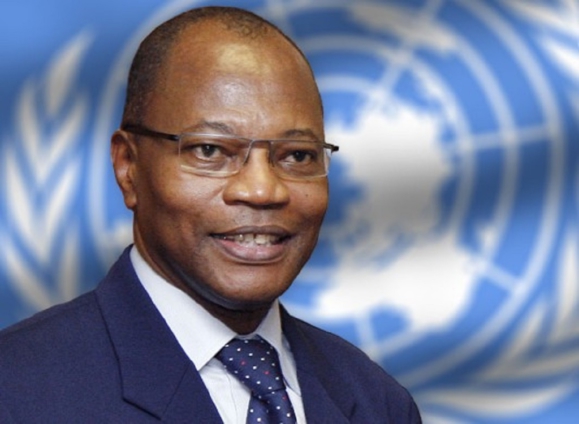
With some general elections in Africa marked by tension and violence, the outbreak of Covid-19 in an election era is likely to increase the risk of confrontation and hostility. This is according to the special representative of the United Nations Secretary-General, Dr. Mohamed Ibn Chambas.
In an address to the Rotary Club of Accra, Airport, Dr. Chambas who is also the Head of the United Nations Office for West Africa and Sahel said these tensions will be directed at both presidential and parliamentary elections.
“The political and security implications of the COVID-19 pandemic are becoming even more glaring with the possibility of worsening over time. There are concerns over significant disruptions in key phases of high stake and contentious electoral processes including, presidential and general elections in West Africa and the Sahel.
"In Ghana, just like in Burkina Faso, Cote d’Ivoire, and Niger, the pandemic has affected the voter registration processes and timelines which may be consequential to the organisation of credible, inclusive, transparent and peaceful elections.
"It is worth highlighting that prior to the pandemic, the build-up to these elections was already been marked by increased tensions and deaths as is the case in Guinea.
"Therefore, the uncertainty, lack of consensus, polarization, and potential politicisation of the response may increase the risk for confrontation and violence. More so, the restrictions imposed by many states will affect the ability of political parties to organise themselves and their supporters, undertake campaigns, and ensure the meaningful participation of the population in the process.
"Likewise, I cannot overemphasize the impact on ongoing political processes such as political dialogues in Burkina Faso, Cote d’Ivoire, Guinea Bissau, Niger, and to a large extent even here in Ghana, as well as key reform processes such as in The Gambia”.
Highlighting more impacts of the Covid-19 on countries in Africa, Dr. Chambas noted that all countries will experience a reduction in GDP growth, weakened trade due to fall in export, a debt crisis due to rising domestic and external debts, increase unemployment and domestic price volatility caused by inflation.
“In fact, UN Economic Commission for Africa (UNECA), estimates that, the GDP of Nigeria, the largest economy in Africa and the region is projected to fall from 2.9% to1.3 %. Due to the fact that Nigeria represents 74% of the GDP of the ECOWAS space, the other countries in the region are expected to follow a similar trend with the possibility of even shaper declines in the weakest economies.
"Ghana’s GDP which was projected at 6.8 percent could fall to 1.5 percent. According to UNECA, even though Ghana and other gold producers may expect a small compensatory benefit from the rise in gold prices, the impact of the pandemic on major cocoa importing countries in the European Union and the US may affect revenues in this sector with implications for the livelihood of more than 800.000 farmers in Ghana. It is estimated that cocoa constitutes 19 percent of Ghanaian exports.
“Other estimates indicate that growth in ECOWAS countries is expected to decline by 5% with a forecast of -1.4% in 2020 against 3.6% in 2019 with inflation growing from 8.3% to 10.1%. The overall budget deficit will increase on average from -4.5% to 6.4% and public debt will increase from 36.8% to 42.1% of GDP from 2019 to 2020.
"It is feared that if sufficient mitigation measures are not taken, the pandemic may reverse fragile socio-economic gains, deepen inequalities and social resentment, increase vulnerabilities particularly of women and children against a backdrop of reduced state capacity to effectively manage the situation.
Lauding countries like Ghana for measures already put in place to cushion its people as the pandemic continues, Dr. Chambas said international organisations like West African Health Organisation (WAHO) and the United Nations (UN) will continue to help Africa combat the virus.
He said the UN General-Secretary is also appealing for a global ceasefire in all war zones across the world so as to facilitate the transportation and delivery of urgent medical supplies as well as provide the enabling environment to address the pandemic.
“In addition, he has launched a US$2 billion Global Humanitarian Response Plan for the most vulnerable populations, including refugees and internally displaced persons with about a billion dollars already pledged by donors.
"Also, the Secretary-General has launched the COVID-19 Response and Recovery Multi-Partner Trust Fund (COVID-19 MPTF). A UN inter-agency finance mechanism to support low- and middle- income programme countries in overcoming the health and development crisis caused by the COVID-19 pandemic. The Fund targets those most vulnerable to economic hardship and social disruption. I expect countries in our region to maximize this opportunity and submit projects accordingly,” he added.
Latest Stories
-
Amazon eyes Ghana for broadband expansion after talks with Mahama
4 minutes -
National Investment Quiz 2026: Six schools qualify for quarter-finals
32 minutes -
‘Do not let Russia pay for its madness with lives of your people’ – Zelensky to Ghana, 46 other countries
38 minutes -
6,079 promotion cases fully processed and paid – CAGD says amid nationwide teachers’ strike
58 minutes -
Teacher unions to meet government Monday over nationwide strike
1 hour -
Photo story: Republic Bank-JoyNews Habitat Fair clinic wraps up after three days of housing solutions, expert engagement
1 hour -
National Peace Council urges investment in youth to sustain Ghana’s peace
2 hours -
Afenyo-Markin urges youth to speak up against injustice
2 hours -
CAF annuls Edo Queens victory, orders WAFU B final to resume from extra time
2 hours -
Interior Minister urges traditional authorities to enforce anti-bushfire bye-laws
2 hours -
3rd Republic Bank-JoyNews Habitat Fair Clinic ends on a high note after three days of strong patronage
2 hours -
Ten climbers missing after avalanche hits Himalayan base camp
3 hours -
NPP had more permanent fuel relief measures than current GH¢2 diesel cut – Amin Adam
3 hours -
Photos from the 3rd Republic Bank-JoyNews Habitat Fair Clinic
3 hours -
Ethiopia’s army promises restraint amid fears of new civil war
3 hours