

Audio By Carbonatix
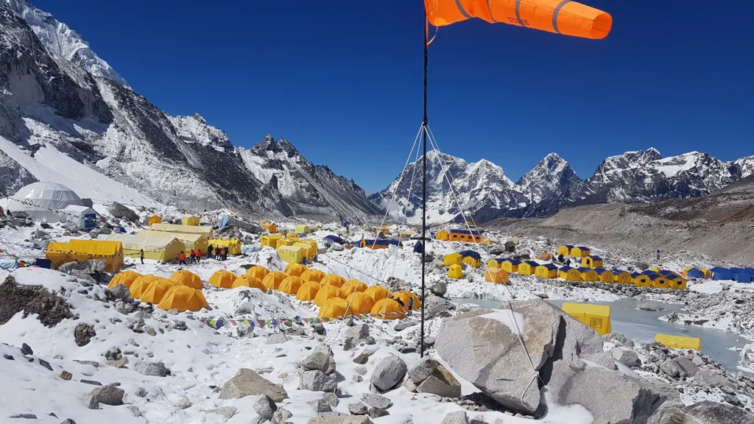
The Nepalese army says it has removed eleven tonnes of rubbish, four corpses and one skeleton from Mount Everest and two other Himalayan peaks this year.
It took troops 55 days to recover the rubbish and bodies from Everest, Nuptse and Lhotse mountains.
It is estimated that more than fifty tonnes of waste and more than 200 bodies cover Everest.
The army began conducting an annual clean-up of the mountain, which is often described as the world’s highest garbage dump, in 2019 during concerns about overcrowding and climbers queueing in dangerous conditions to reach the summit.
The five clean-ups have collected 119 tonnes of rubbish, 14 human corpses and some skeletons, the army says.
This year, authorities aimed to reduce rubbish and improve rescues by making climbers wear tracking devices and bring back their own poo.
In the future, the government plans to create a mountain rangers team to monitor rubbish and put more money toward its collection, Nepal's Department of Tourism director of mountaineering Rakesh Gurung told the BBC.
For the spring climbing season that ended in May, the government issued permits to 421 climbers, down from a record-breaking 478 last year. Those numbers do not include Nepalese guides. In total, an estimated 600 people climbed the mountain this year.
This year, eight climbers died or went missing, compared to 19 last year.
A Brit, Daniel Paterson, and his Nepalese guide, Pastenji Sherpa, are among those missing after being hit by falling ice on 21 May.
Mr Paterson’s family started a fundraiser to hire a search team to find them, but said in an update on 4 June that recovery “is not possible at this time” because of the location and danger of the operation.
Mr Gurung said the number of permits was lower this year because of the global economic situation, China also issuing permits and the national election in India which reduced the number of climbers from that country.
The number of permits will likely drop more after Nepal’s Supreme Court ordered the government in May to limit permits. The preliminary order didn't set a maximum number.
Mr Gurung says he welcomes the order and the government is thinking about reforms such as staggering climbers to reduce traffic jams at the summit.
The government will work with experts to determine a safe number of climbers, Mr Gurung said.
"Without the scientific study, it can’t be said what will be the perfect number for Mount Everest," he said.
Latest Stories
-
Premature to call for Sports Minister’s removal while CID probe is ongoing – Ernest Norgbey
1 minute -
NPP mourns Samuel Arthur Odoi-Sykes
19 minutes -
Stay out of World Cup visa probe to avoid interfering with CID investigations – Ernest Norgbey to politicians
29 minutes -
Bono East Minister inspects ‘Big Push’ roads; contractor on Tankor-Fiema-Busunya road ahead of schedule
32 minutes -
Scrutiny is not disloyalty – Chief of Staff defends serious journalism at 30th GJA Awards launch
33 minutes -
Abuse case: Nana Akua’s husband Harold unable to appear in court after hospital admission – Police
52 minutes -
Mahmud Kabore picks NDC Ashanti Regional Communication Officer nomination forms
59 minutes -
KNUST Career Services pioneer Selina Doe Angmor named among 2026 40 Under 40 honourees
1 hour -
Nana Akua domestic abuse case: Police to arraign husband after hospital discharge
1 hour -
NHIS coverage rises to 70% after government uncaps levy – Health Minister
1 hour -
World Cup visa scandal: I’ll go after anyone who dents Mahama’s gov’t – Ernest Norgbey
1 hour -
GCNM calls for a permanent office complex, more funding for specialist nursing training
1 hour -
Salomey Awiti Baffoe reunites with family after GH¢100k bail
2 hours -
We’ll modernise Accra without losing its heritage – Roads Minister assures Ga Mantse
2 hours -
Rent Control urges Parliament to expedite amendment of outdated rent laws
2 hours