

Audio By Carbonatix
Ciudad de la Paz officially became the new capital of Equatorial Guinea following the publication of a presidential decree on Saturday, January 3. The RFI, a state-owned international radio news network of France, reported
According to the authorities, the abandonment of the historic capital, located on an island, should enable Malabo to be relieved through a rebalancing of national territory development and a more equitable distribution of public services.
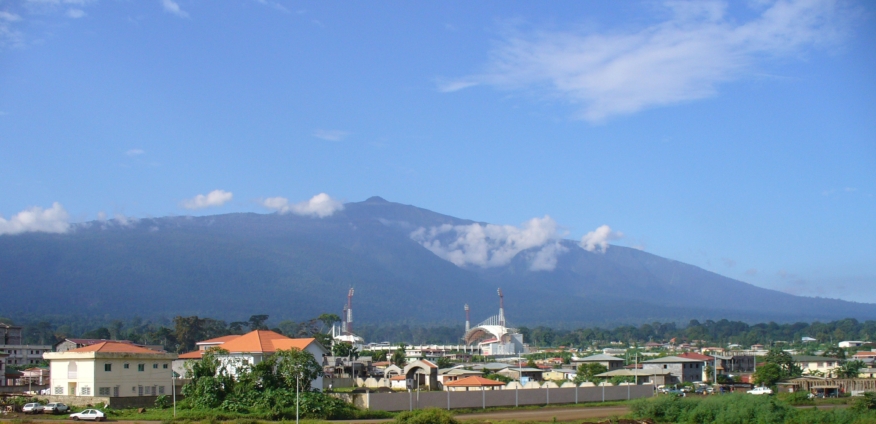
Two modern towers in the middle of the equatorial forest, a presidential palace and buildings coming out of the ground: welcome to Ciudad de la Paz, the new capital of Equatorial Guinea since Saturday, January 3.
Launched in 2008, under the leadership of President Teodoro Obiang, who has been in power for forty-seven years, the initiative aims to respond to a strategic choice: according to the authorities, it is a question of turning the page on a historic capital considered too isolated and bringing the state closer to the citizens.
Landlocked on the island of Bioko, Malabo is only accessible by plane or boat, while the Equatorial Guinean population is increasing and the country's activity is also focused on the continent, especially in Bata, its economic capital.
A new capital built on oil revenues
Located in the middle of the forest, in the eastern province of Djibloho, near the airport of Mengomeyén, the new capital was long called Oyala before being renamed Ciudad de la Paz (“City of Peace” in French).
The ambition for it is considerable since it is, after all, to build a modern metropolis that can accommodate 200 000 inhabitants and house all government institutions, while for the moment, infrastructure remains limited.
While the city already benefits from several must-have buildings in a capital - a university and a hospital in particular - its population and dynamism remain insufficient.
Nevertheless, the presidential decree which adopts its new statute provides for the transfer of public services within a period of one year, a calendar that raises many questions...
The financing of the construction of Ciudad de la Paz is mainly based on the oil revenues of Equatorial Guinea. In 2016, the project swallowed almost half of the national budget.
Latest Stories
-
Dorimon Traditional Council endorses policy to formalise female chieftaincy
3 minutes -
DVLA expands from 33 to 63 offices after opening 30 new service centres across Ghana
4 minutes -
State Housing Company offers 195 homes with a 5% discount; prices start at GH¢950,000
7 minutes -
Learn Deutsch opens German language examination centre in Accra
8 minutes -
Decline in external buffers complicates foreign exchange outlook – IC Insights
8 minutes -
Ghanaian filmmakers urged to tell local stories and take them to the world
13 minutes -
Educated but unable to communicate? The missing link in Ghana’s University education
16 minutes -
Informant demanded $20 million from NACOC for information on major drug consignment – Muntaka
22 minutes -
Gov’t introduces mental health and drug tests for security recruits amid suicide concerns – Interior Minister
22 minutes -
DVLA generates GH¢27.14m from dealer plates between January and September 2026
26 minutes -
DVLA registers over 7,700 excavators in Ghana under new tracking initiative
30 minutes -
DVLA introduces six Ghanaian languages for driving theory tests
31 minutes -
DVLA prints 440,000 licences to clear backlog dating to 2023
32 minutes -
Yagaba chief calls for sanitation officers as Mamprugu Moagduri prepares to enforce bylaws
33 minutes -
One Million Coders programme shifts focus to third- and final-year university students
38 minutes