

Audio By Carbonatix
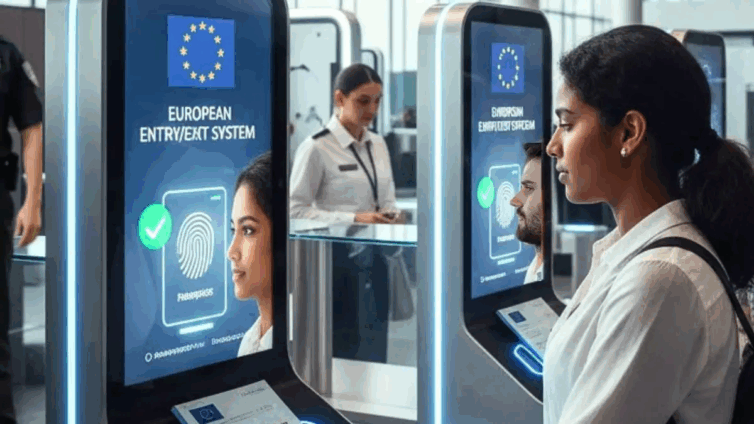
European Union member countries began rolling out a new entry and exit system on Sunday at the bloc’s external borders, electronically registering non-EU nationals' data.
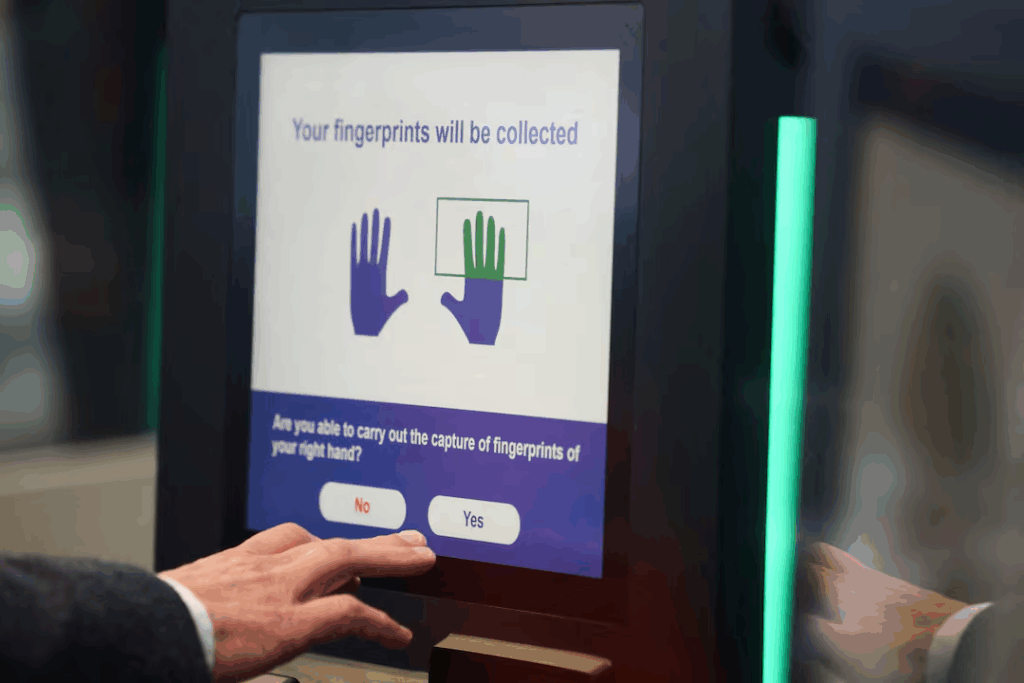
The Entry/Exit System (EES), an automated system that requires travellers to register at the border by scanning their passport and having their fingerprints and photograph taken, will be introduced over six months.
The move is aimed at detecting overstayers, tackling identity fraud and preventing illegal migration amid political pressure in some EU countries to take a tougher stance.
"The Entry/Exit System is the digital backbone of our new common European migration and asylum framework,” European Internal Affairs and Migration Commissioner Magnus Brunner said in a statement.
SIX MONTHS TO ADJUST
Non-EU citizens will have to register their personal details when they first enter the Schengen area - all EU member countries apart from Ireland and Cyprus, but including Iceland, Norway, Switzerland and Liechtenstein. Subsequent journeys will only require facial biometric verification.
The system should be fully operational, with passport stamping replaced with electronic records, on April 10, 2026.
"Every third country national who arrives at an external border will undergo identity verification, security screening, and registration in the EU databases," Brunner said.
At the Bajakovo border crossing between Serbia and neighbouring Croatia, a EU member state, hundreds of people, many of them Serbians, queued in their cars on Sunday for around 20 minutes before entering booths for fingerprinting and face scanning.
"There are five lanes open, so it took us about 20 minutes in line and about two minutes (in the booth) for each of the five of us from the car," said Dalibor Vranic, from Serbia.
For British travellers using the Port of Dover, the Eurotunnel terminal at Folkestone or Eurostar terminal at London's St Pancras International, the process takes place at the border before they leave the UK.
At Dover and the Eurotunnel terminal, only freight and coach traffic was subject to EES checks from Sunday.
Passenger vehicle checks will follow in November at Dover and by the end of the year at Eurotunnel, while the Eurostar at St Pancras was gradually introducing the new process, starting with some business travellers from Sunday.
"The UK and EU have a shared objective of securing our borders and these modernisation measures will help us protect our citizens and prevent illegal migration," British Minister for Border Security and Asylum Alex Norris said.
Latest Stories
-
World Cup visa scandal: Sports Ministry not shielding anyone – Sports Minister’s special aide
13 minutes -
World Cup visa scandal: Over 30 people misrepresented as GTA board members to US Embassy – Vincent Assafuah alleges
15 minutes -
Fire destroys wooden structure near Yesu Mo Villa at Bush Road
16 minutes -
NDC threatens sanctions over oversized campaign posters, gives aspirants 5 days to comply
1 hour -
Star Oil paid GH¢2.7bn in taxes, levies in nine months of 2026
1 hour -
Samson’s Take: The rule of law is cheaper before the bulldozer
1 hour -
GRA blames system failure for delay in issuing receipt over passenger’s customs duty
2 hours -
Livestream: Newsfile discusses World Cup visa scandal, beach demolitions, education strikes, BRICS bid
2 hours -
NC-PTAs welcomes end of teachers’ strike, urges parents to prepare children for Monday
2 hours -
Government procures over 2,000 transformers as Ghana’s electricity access hits 89.13% – Energy Minister
2 hours -
UTAG-UG threatens strike on October 19 over unpaid allowance
3 hours -
Let The Constitution direct Chieftaincy to deliver “All Development Is Local”
4 hours -
John Jinapor outlines renewable energy, nuclear power priorities for 2027
4 hours -
Ghana explores centre of excellence for hearing, communication and cochlear implant care
5 hours -
Schizophrenia-related disorders lead mental health cases recorded in Ghana
5 hours