

Audio By Carbonatix
The European Union has released €80,000 in humanitarian funds for flood preparedness in the northern regions of Ghana.
This follows warnings from the National Disaster Management Organization (NADMO) and the Meteorological Agency of heavy rainfall and flooding in Ghana's northern regions.
The funding will be used to support the identification of early warning methods, the updating of risk assessments and monitoring mechanisms, the activation of anticipatory procedures to limit and prevent flood impacts, and the determination of priority actions and response readiness.
This was contained in a statement issued by the European Union in Ghana and copied to the Ghana News Agency.
According to the statement, the EU funding was aimed at mitigating the impact of floods for potentially 50,000 people in Northern Ghana during the peak of the rainy season.
“It will enable the Ghanaian Red Cross Society to implement both anticipatory and early actions and will prop up preparedness actions."
“Preparedness actions such as training of volunteers, prepositioning of response stocks that should enable quicker deployment of a response, early evacuation of people in identified sites, simulation exercises, awareness sessions for water-related diseases prior the floods season,” the statement added.
The statement noted that the targeted areas were the Northern, Upper East, and Upper West, where around 2,144,677 people are at risk.
It added that the assistance was targeted at vulnerable areas where floods will significantly impact agriculture and economic resilience.
According to the statement, the financing was part of the EU's overall support of the International Federation of Red Cross and Red Crescent Societies (IFRC) and the Disaster Relief Emergency Fund (DREF).
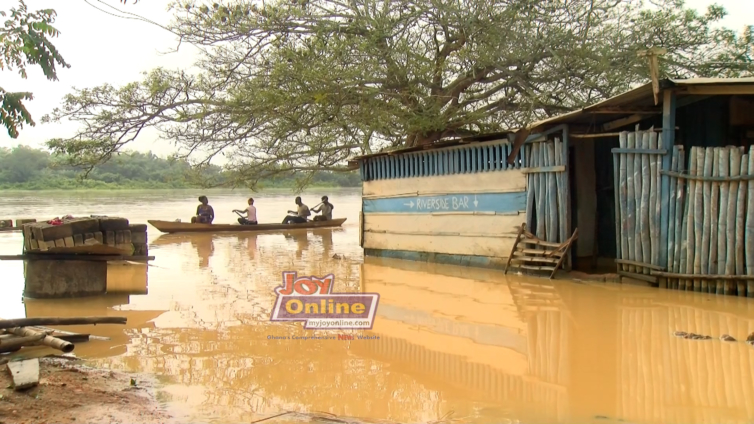
Floods caused by heavy rainfall and the Bagre dam spillage in Burkina Faso occur on a regular basis in Ghana.
The annual spilling of water from Burkina Faso's Bagre Dam causes an overflow of Ghana's river system, affecting areas near rivers, beaches, and dams in the Northern, Upper East, Savannah, Northeast, and Upper West regions.
Bagre Dam is spilt annually when it reaches its maximum operating level of 235 metres.
Flooding has already occurred in four of the seven high-risk regions, leading to the loss of lives, property, and livelihoods.
Latest Stories
-
“US Embassy introduced TRIBE Culture Fest to NSA, GTA” – Kofi Adams
31 minutes -
“NSA did not tell us of any embassy arrangement” – Kofi Adams
55 minutes -
Glasner suffers loss on Selhurst return as Palace beat Forest
3 hours -
WAFU B U17: ‘We won but I expected more from my boys’ – Kassim Ocansey
3 hours -
Man City cruise to statement win over 10-man Liverpool
3 hours -
Be careful with cross-border lending, foreign currency exposures – BoG to financial institutions
5 hours -
GPL 2026/27: Medeama go three clear as Hearts of Oak recover and Bechem stage stunning comeback
5 hours -
Ntiamoah Foundation launches “BEYOND 20” anniversary campaign
6 hours -
Credit Risk Management Directive: BoG to begin implementation for banks, others from July 1, 2027
6 hours -
Ghana Brands Awards 2026: Leading brands, business trailblazers to shine on November 20
6 hours -
T-bills auction: Demand improves as government exceeds target by about 76%; interest rates soften
6 hours -
Ziope undertakes initiative to build a technologically inclined community, commissions self-help ICT lab
7 hours -
ECG announces power outage in parts of Tema, Central Region due to network fault, maintenance
7 hours -
When the Gospel Becomes a Weapon: The church, blackmail and the abuse of faith
7 hours -
JoyNews’ Jacqueline Ansomah Yeboah selected for UK Media Excellence for Emerging Technologies Fellowship
8 hours