

Audio By Carbonatix
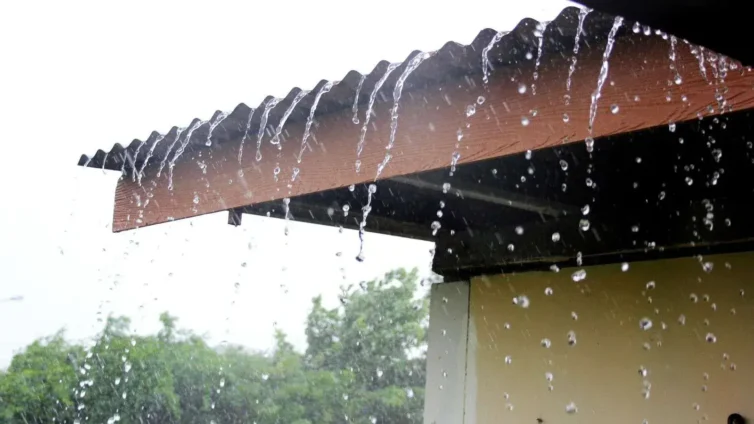
The Chairman of the Civil Technical Division of the Ghana Institution of Engineering (GHIE), Ing. Michael Obeng Konadu, has called for a national rainwater harvesting policy that would require homes and buildings to store part of the rainwater that falls on their roofs, saying the measure could help reduce flooding in Accra and other urban areas.
Speaking on Joy FM’s Super Morning Show on Thursday, July 2, during a discussion on the recurring flooding problem, Ing. Konadu said developed land now sheds water too quickly, worsening pressure on drains and increasing the risk of floods whenever it rains.
He said that one practical way to reduce the volume of water rushing into drains at once is to ensure that every building captures and stores some of the rainwater falling on its roof.
“Every square inch of developed land actually sheds water very fast. Now, what we’re saying is that we can use the roof to collect the water,” he said.
According to him, many homes already have gutters, but the water collected is often discharged directly onto paved compounds and then into roadside drains, adding to the flood problem instead of easing it.
“These days, you see people do rain gutters and things, but what happens is that all that water they collect in the rain, they discharge onto their pavement, and it goes into the drain,” he said.
Ing. Konadu said Ghana should move towards a system where households and property owners are required to keep some of that water on-site for a period, rather than allowing all of it to flow immediately into the drainage system.
“What we’re saying is that, where possible, we should have some kind of tanking system, so that the water that comes on the roof, a certain quantity of it is held inside that household,” he explained.
He said such a policy would form part of a broader flood control strategy aimed at reducing the speed and volume of stormwater entering drains during heavy rainfall.
“Basically, every roof must catch some of the rainwater and hold it, and we will come out with standards of how much water every kind of development must hold after rain,” he said.
Ing. Konadu explained that the amount of water to be stored could be determined by the size of a building, the roof area, and the nature of the development, with standards introduced for both new buildings and retrofitting of existing ones.
“That’s where the retrofitting comes into play,” he said.
He said if homes and commercial buildings are made to hold part of the rainwater that falls on them, even for a short time, it would help reduce peak runoff and make floodwaters easier to manage.
“So, if everybody is holding a certain quantity of water for some time, it kicks off the flood peak, and then we can actually manage a smaller amount that must be immediately removed,” he said.
Latest Stories
-
Dad’s Army/African Polistas crowned champions of 2026 Accra Polo Club Trustees’ Cup
3 minutes -
Mahama approves Integrated Basic Education Model, with funding expected in 2027 under GETFund formula
6 minutes -
Money-driven elections fuelling corruption – Haruna Iddrisu
11 minutes -
Excessive borrowing ‘cracked’ Ghana’s economy under Akufo-Addo – Haruna Iddrisu
19 minutes -
NPP’s silence on economic indicators suggests Mahama is doing better – Haruna Iddrisu
33 minutes -
GoldBod must be more accountable to Ghanaians – Haruna Iddrisu
48 minutes -
Affi Agbenyo’s EC appointment is constitutionally appropriate, but politically, people have the right to remind us – Haruna Iddrisu
59 minutes -
Accra Mall brings Soulful Weekend Vibes to October with Live R&B and Jazz
1 hour -
Education is critical to Ghana’s future and development – Haruna Iddrisu
1 hour -
Who’s Emelia Affi Agbenyo, the 43-year-old newly sworn-in Deputy EC Chair?
2 hours -
Haruna Iddrisu calls for limits on annual university accommodation fee increases
2 hours -
Today’s front pages: Tuesday, October 13, 2026
3 hours -
Wealth Over Water: How Galamsey Is Threatening Ghana’s Water Security
4 hours -
LA 2028: Black Queens pumped up for second leg of Mauritius tie
4 hours -
LA 2028: Black Queens hold final training session ahead of second leg against Mauritius
5 hours