

Audio By Carbonatix
Fidelity Bank in partnership with the International Finance Corporation (IFC) has initiated a four-part webinar series to offer financial and business strategies for SMEs to navigate the economic downturn caused by the COVID-19 pandemic.
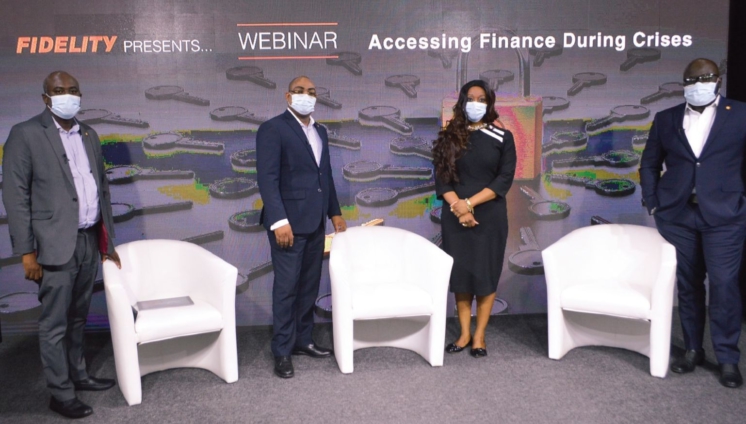
The webinar series was organised under the Bank’s new thought leadership series Fidelity Presents…
The webinars were presented by leading IFC Consultant, Master Trainer, and Instructional Designer, Margaret Jackson, who is also the Managing Partner of Rainbow Consult.
Moderated by Jimmy Karima Chakacha, an IFC SME Banking Analyst based in Kenya, the webinar series provided SMEs with valuableinsights on the following topics: Surviving Today to Thrive Tomorrow; Accessing Finance During Crises; Communicatingwith Stakeholders During Crises, and Adjusting your Business Plan During Crises.
Explaining the rationale behind the SME webinar series, Julian Opuni, Managing Director of Fidelity Bank Ghana, said, “SMEs are a critical segment of the bank and our economy and the COVID-19 pandemic has significantly impacted that sector, among others.
"Therefore, it was important to present them with practical tools to help them to sustain their businesses through this challenging time.”
“In addition to this training webinar, we supported our SME clients with interest rate reductions across various sectors,provided short and medium-term measures such as loan moratoriums and restructuring of loans to cushion repayments, digital banking, and other capacity-building programmes to help overcome COVID-19 related challenges.”
He added, “in the coming months we will launch innovative programmes aimed at expanding our support to young entrepreneurs in the country.”
Mr Opuni also explained that “This informative webinar series, was designed to help SMEs to remain afloat by instilling in them the importance of being innovative to better serve clients, reducing wastage, improving customer service, and establishing digital protocols to ensure productivity.”
Webinar Takeaways
The first webinar, titled An SME Perspective: Surviving Today to Thrive Tomorrow, saw participants learning about controlling costs, avoiding wastage, increasing sales, identifying the difference between making a profit and being profitable as a business, understanding how to adjust pricing to respond to market changes and determining how to make business changes during a crisis.
The second webinar focused on the topic of SMEs AccessingFinance During Crises. This webinar addressed the subject ofhow to access loans, funds and grants to grow your businessduring and after the COVID-19 crisis.
On the possible reasons for pandemic borrowing, SMEs were advised to invest borrowed money into technology and not to use it to pay debt to prevent the business from entering into a cycle of debt.
Participants took part in creating a plan to keep their businesses profitable bymanaging cash flow and adapting for the future.
Communicating with Stakeholders During Crises was the topic of the third Fidelity IFC webinar session.
The objective of this session was to help participants to fully appreciate the importance of communication and to highlight how being open with stakeholders’ curbs speculation, anxiety and uncertainty about the future of business relationships, especially in the COVID-19 era.
SMEs were trained to conduct stakeholder analysis to know their constituents or target groups as every group has different needs, and information is important to them at different times.
In times of crisis, SMEs were encouraged to communicate the good things that they are doing, whether it is helping a community or partaking in other social impact activities.
Furthermore, there is the need to review and adjust your long-term plans, hence the final webinar was dedicated to the topic of Adjusting your Business Plan During Crises.
The COVID-19 pandemic has caused a huge shift across many aspects of the business world; therefore, SMEs now need to pivot to adapt tothe new normal.
They must review and adjust their long-term plans, protect clients and staff, cut costs and manage cash, monitor and adjust commercial levers quickly and invest for the long term, as recommended during the webinar.
Margaret Jackson, lead facilitator of the webinar series, trainedparticipants to conduct a SWOT analysis of their business to determine how deeply they have been impacted by the crisis.
In adjusting their business plans, SMEs were advised during the webinar to critically assess and analyze their customers, workforce, old and new markets, procurement and supply chains, pricing and products.
SMEs drawn from various sectors of the economy took part in the webinar and the majority expressed satisfaction and appreciation for the insightful lessons learnt.
The webinar series forms part of Fidelity Bank’s “TogetherWe’re More” brand promise that views success as a collaborative effort between itself, customers and the general public.
Latest Stories
-
Landfilling waste management creates no value, it’s an economic waste
21 minutes -
Photos: Speaker Bagbin Commissions MPs constituency office under parliamentary decentralisation programme
37 minutes -
Black Stars technical advisor Winfried Schäfer sacked as GFA shakes up backroom staff
42 minutes -
Wenchi water project almost complete, critical to gov’t agenda – GWL MD
58 minutes -
Anti-LGBTQ+ bill not part of government’s legislative agenda – Inusah Fuseini
60 minutes -
Anti-LGBTQ Bill: Forget the rumour mongers, I’m a man of action, and will pass the bill – Speaker
2 hours -
Women and children among those killed in Sudanese army shelling of wedding celebration
2 hours -
President Mahama is not sincere with Ghanaians on LGBTQ bill matter – Hassan Tampuli
2 hours -
Gov’t to establish Prison Industrial Hub to equip inmates with income-generating skills – Prison Service boss
2 hours -
Alhassan Tampuli donates cement, roofing sheets to support storm victims in Gushegu
2 hours -
Alhassan Tampuli appeals for urgent support for storm victims in Gushegu
2 hours -
The hypocrisy must stop; pass Anti-LGBTQ+ Bill now – Alhassan Tampuli to Mahama
3 hours -
Imprisonment should be rehabilitative, not punitive – Ghana Prisons boss at UNGA
3 hours -
Ga Adangbe traditional priests petition Mahama over McDan aviation licence revocation
3 hours -
Anti-LGBTQ Bill: NDC’s arrogance is worrying – Hassan Tampuli
3 hours