


Audio By Carbonatix
Five countries in West Africa have decided to stop importing "dirty fuels" from Europe, the UN Environment Programme says.
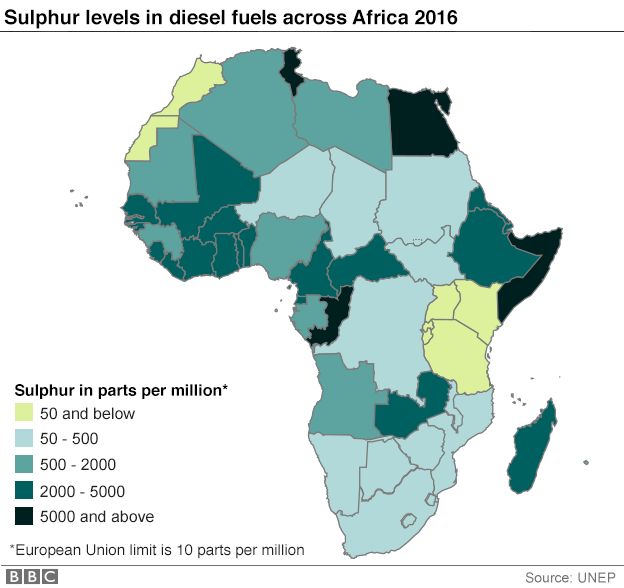
A recent report revealed that European companies were exploiting weak regulations in West Africa to export fuels with high levels of sulphur.
Nigeria, Benin, Togo, Ghana, and Cote d'Ivoire agreed on the import ban.
The UN says the move will help more than 250 million people breathe safer and cleaner air.
The sulphur particles emitted by a diesel engine are considered to be a major contributor to air pollution and are ranked by the World Health Organization (WHO) as one of the top global health risks.
It is associated with heart disease, lung cancer and respiratory problems.
In a statement, the UN environment programme says the West African group, in addition to banning the import of dirty fuels, has also agreed to upgrade the operations of their national refineries.
The upgrade, which will concern both public and privately owned refineries, is meant to boost standards in the oil produced in the five countries.
The report into Europe oil exports released in September particularly criticised the Swiss for their links to the African trade in diesel that has toxin levels illegal in Europe.
The study was by the campaign group, Public Eye, which said retailers were exploiting weak regulatory standards.
Erik Solheim, the head of UN Environment Programme, hailed the import ban.
"West Africa is sending a strong message that it is no longer accepting dirty fuels from Europe," Mr Solheim said.
"Their decision to set strict new standards for cleaner, safer fuels and advanced vehicle emission standards shows they are placing the health of their people first," he added
For a long time African countries relied on colonial-era standards, which have only been revised in recent years.
Nigeria's Environment Minister Amina Mohamed said: "For 20 years, Nigeria has not been able to address the vehicle pollution crisis due to the poor fuels we have been importing.
"Today we are taking a huge leap forward - limiting sulphur in fuels from 3,000 parts per million to 50 parts per million."
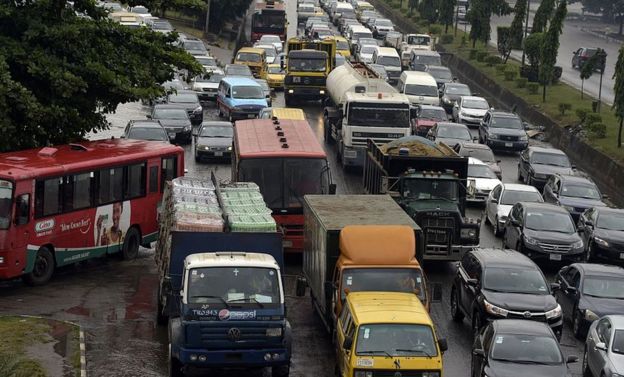
Nigeria's environment minister said the move would result in major air quality benefits
She said the move would result in major air quality benefits in Nigerian cities and would allow the country to set modern vehicle standards.
The WHO says that pollution is particularly bad in low and middle-income countries.
Latest Stories
-
NCA announces major voice and data disruption across Northern Ghana due to fibre cuts
9 minutes -
Photos: Housing solutions take centre stage at Day 2 of the 3rd Republic Bank-JoyNews Habitat Fair
41 minutes -
Video: Immunity should be exercised without creating classism – Inusah Fuseini on cocaine bust
1 hour -
Ghana Air Force passes out 293 recruits after six months of intensive training
1 hour -
EOCO vrs Baffour Awuah: EOCO should have secured warrant before arrest attempt at court – Inusah Fuseini
1 hour -
Triple fibre cuts disrupt telecom services across Northern, Oti regions – Sam George
1 hour -
Politicisation could undermine parliamentary probe into cocaine seizures – Dr Osae-Kwapong
2 hours -
EOCO chases MP: Can Section 41 cure lacuna in EOCO Act? – Inusah Fuseini asks
2 hours -
GNFS, GWL inspect fire hydrants in Ministries enclave; 23 found faulty
2 hours -
Gov’t directs release of 50,000 bags of grain to ECOWAS
2 hours -
Ghana, Germany deepen cooperation on railways, labour mobility
2 hours -
Huge crowds greet Pope in Paris for open-air Mass
2 hours -
Ghana’s Charles Amofah Elected Vice President of African Bowling Federation
2 hours -
‘I never said I’ll declare a state of emergency’ – President Mahama on galamsey
3 hours -
Bobby Banson condemns EOCO’s attempted arrest of Nana Agyei Baffour Awuah
3 hours