

Audio By Carbonatix
Mal Shehu Ladan took a boat across what was, until this month, a growing rice paddy. Now, like thousands of hectares of rice in Nigeria's Kebbi state, it is under water.
"Almost all my farm has been flooded. I didn't harvest any rice," Ladan told Reuters News Agency. "It's going to be devastating."
Floods early this month across northwest Nigeria destroyed 90 percent of the two million tonnes that Kebbi state officials expected to harvest this autumn, the head of the state branch of the Rice Farmers Association of Nigeria told Reuters.
The loss amounts to some 20 percent of the rice Nigeria grew last year, and the waters are still rising.
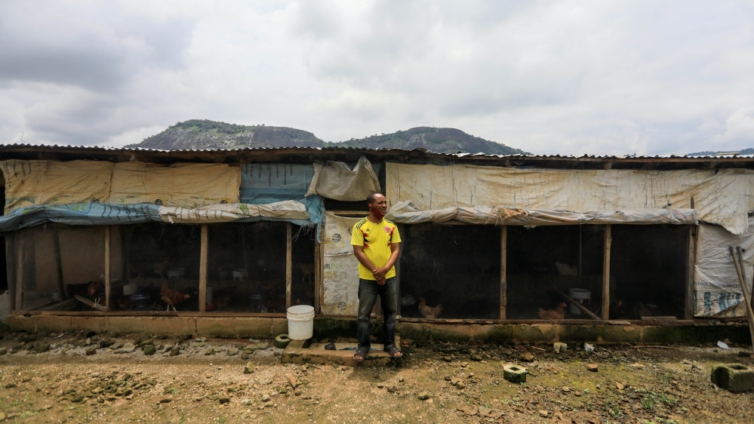
Further south, outside Nigeria's capital, Abuja, chicken farmer Hippolite Adigwe is also worried.
A shortage of maize forced him to sell most of his flock of more than 1,000 birds, and the 300 he has left are hungry. Chicken feed prices have more than doubled, and he is not sure how long he can cope.
Twin crises, floods and maize shortages, come just after movement restrictions and financing difficulties caused by Covid-19 containment measures complicated spring planting.
Some farmers and economists said it could push Nigeria, Africa's most populous nation, into a food crisis. Rice is the country's staple grain, and chicken is a core protein.
"There is a real fear of having food shortages," Arc Kabir Ibrahim, president of the All Farmers Association of Nigeria told Reuters. "The effect on the food system is going to be colossal."
Nigeria took roughly 4,000 tonnes of millet and sorghum from the regional economic bloc's (ECOWAS) strategic stocks last month and released 30,000 tonnes of its own maize. It also gave four companies special permission to import maize.
The prominent Nigerian Economic Summit Group has called for "a complete overhaul" of agriculture policy.
Problems accessing foreign exchange to import food are adding to shortages. In July, the central bank added maize to a list of items for which importers are banned from using its dollars.
Rice and fertiliser were already on the list, along with other items that Nigeria wants to be made locally.
Last week, even as food prices spiked, President Muhammadu Buhari promised that not one cent of central bank dollars would go to food or fertiliser imports, as Nigeria would continue encouraging local farmers over imports.
Importers can use dollars from pricier parallel markets. But these are tough to find due to an oil price crash that has cut Nigeria's core source of foreign exchange.
Switching grains
Rice prices had already risen substantially due to a land border closure last year that aimed to stamp out smuggling and boost local production.
Peter Clubb of the International Grains Council said the spike drove consumers to eat maize instead.
This, along with a disappointing crop late last year and the foreign exchange issues, boosted maize prices to 180,000 naira ($470) per tonne from approximately 70,000 naira ($183) in March.
Farmers sid that consumers grappling with inflation, as well as the first rise in fuel prices since 2016 and a power price spike, can only pay so much more for food.
Ayodeji Balogun, chief executive at commodities exchange Afex, said the central bank's lending scheme for farmers has significantly expanded output, and can work long term.
But the coming months will be tough. Fertiliser prices hit a record after a COVID-19 outbreak shut down country's sole urea plant for two weeks, meaning more farmers will skip fertilisers, limiting crop yields.
"The worst is yet to happen," Balogun said. "It is a problem across grains."
Buhari has pledged more support, and Agriculture Minister Muhammed Sabo Nanono visited the northwest area this weekend and promised to provide farmers with high-quality seeds and to set up a special committee to ensure they have all they need to plant new crops as soon as possible.
Adigwe, the chicken farmer, said he thinks barring foreign food in order to help farmers is not a bad idea, but "there are some factors that were not considered."
"Can local production sustain the population of Nigeria?"
Latest Stories
-
Iran war lands ‘triple blow’ to flood-ravaged Sri Lankans
8 minutes -
Gunmen kill at least 11 people at Afghanistan picnic spot
22 minutes -
Woman, 25, in court for stealing baby at Bogoso
23 minutes -
Trump unveils giant gold-accented victory arch design for US capital
26 minutes -
We spoke to the man making viral Lego-style AI videos for Iran. Experts say it’s powerful propaganda
31 minutes -
Hungarians vote in big numbers on whether to end Orbán rule and elect rival
32 minutes -
At least 30 feared dead in crush at Haitian tourist site
32 minutes -
Boxing: Abdul Ahmed wins WBA Africa Cruiserwight title after dispatching Nigeria’s Eradeye
45 minutes -
Nearly 2,000 displaced, schools damaged as windstorm wreaks havoc in Gushegu
1 hour -
Ghana’s Derrick Kohn to work under Marie-Louise Eta as she becomes first woman to coach men’s Bundesliga team
1 hour -
Accra Open Championships conclude with strong performances ahead of African Championships
1 hour -
Ghana to begin camping with 12 athletes after Accra Open Championships – Bawa Fuseni
2 hours -
Anthony Joshua declines showdown with Tyson Fury but admits they ‘probably’ clash next
2 hours -
Tyson Fury dominates Makhmudov, calls out Joshua next
2 hours -
I have supported highway authority financially to fix roads in my constituency – A Plus
3 hours