

Audio By Carbonatix
Ghana has long been celebrated as a beacon of peace and stability in West Africa; a nation that welcomes all, values diplomacy, and takes pride in its hospitality. Yet in recent years, troubling developments have forced us to ask difficult questions about the activities of foreign nationals within our borders.
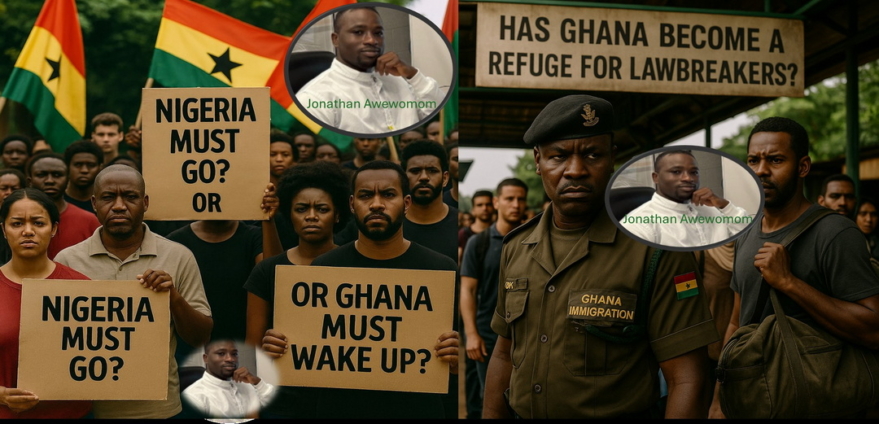
In recent weeks, demonstrations have broken out across parts of Ghana, with chants of “Nigeria must go” ringing through markets, radio programmes, and social media platforms. The phrase carries a powerful emotional charge, stirs strong reactions, and, for many, serves as an outlet for long-standing frustrations. Yet, it compels us to confront deeper questions: What has led us to this point? Who neglected to take timely action to address these concerns before they escalated toward potential xenophobia? And how do we distinguish between valid national security issues and the unfair targeting of an entire community?
The Concerns Are Real
Let’s be clear: ordinary Ghanaians have valid reasons for concern. In recent years, several high-profile arrests have tied foreign nationals, many of them Nigerians, to many crimes within Ghana. From illegal mining operations to organised crime, the evidence is no longer anecdotal. The devastating reality of illegal mining reached a shocking peak in 2024 with the discovery of an entire clandestine settlement; over 10,000 people within the Western Region’s Forest reserve. This village, known as Abrewa Ne Nkran, was dominated by foreign nationals from neighboring countries and was linked to a complex web of child exploitation, sex trafficking, and drug operations.
Incidents of kidnapping, internet fraud, prostitution networks, and armed robbery have been reported in cities such as Kumasi, Takoradi, and Accra, with police confirming that a notable portion of those arrested were foreigners. In addition, reports of vehicle smuggling, with stolen cars reportedly entering the country at alarming rates is an indication that these are not isolated incidents but signs of a deeper systemic failure.
Of course, Ghanaians are not entirely innocent, as some of our own citizens have been implicated in these same offences. However, when news reports repeatedly highlight one nationality, it is almost certain to spark public outrage.
Leadership and Policy Failures
The uncomfortable question is this: are our leaders looking the other way under the guise of diplomacy? Are Ghana’s immigration systems robust enough to track who enters, where they live, and what they do? Are landlords trained or even aware of the legal implications of renting to individuals with unclear status? Do we have a system that regulates the business activities of foreigners beyond mere paperwork?
When the laws are not enforced, when immigration documentation is porous, when rumors spread that passports and permits can be easily manipulated, it sends a signal that Ghana is a soft target. Some even allege that certain political actors quietly encouraged an influx of foreign nationals to tilt voter numbers in closely contested elections. If that is true, then what we are seeing is partly the harvest of political short-termism. This is not just a foreigner problem; it is a governance problem that emboldens criminal networks.
Is Ghana Becoming a Safe Haven?
Another uncomfortable question: has Ghana unintentionally become a haven for those fleeing law enforcement scrutiny in their own countries? If people with questionable backgrounds can cross our borders, establish illegal operations, and thrive for years with little oversight, the issue goes beyond foreigners, it becomes a test of governance. Our systems must be strong enough to track who enters, what they do, and ensure they are held accountable under the law.
Nigeria’s Reflection Point
Nigeria must also undertake serious self-reflection. Simply condemning anti-Nigerian sentiment abroad is not sufficient; Abuja needs to question why so many of its citizens are being linked to crimes beyond its borders. Are economic hardships forcing young people into criminal activities overseas? Is the country unintentionally fostering conditions that push more of its citizens toward crime? Are the policing and justice systems too weak to prevent repeat offences? The Nigerian government must acknowledge its share of responsibility and work with Ghanaian authorities to address the issue, rather than limiting its response to diplomatic protests.
A Call for Responsible Leadership & the Way Forward
Ghana cannot afford to wear a diplomatic lens and pretend everything is fine. The country’s reputation as a peaceful haven is at stake. Our leaders must act decisively to prevent Ghana from becoming a fertile ground for transnational crime. One thing is clear: peace is not automatic. It is the product of vigilance, good governance, and responsible enforcement. If we fail to act now, we risk losing the very stability that makes Ghana the envy of the region.
Ghana must do more than strengthen diplomatic ties; it must strengthen enforcement. Our leaders must balance diplomacy with national security. The peace we enjoy cannot be taken for granted, it must be defended. That means:
- Cracking down on illegal mining networks that use foreign labour to exploit our resources.
- Enforcing strict immigration controls and conducting regular audits of residency permits.
- Training and empowering local authorities and landlords to know who they are renting to and report suspicious activity.
- Collaborating with neighboring countries to monitor cross-border criminal networks and share intelligence.
Latest Stories
-
Power restoration fault suspected in Kumasi Central Market fire
5 hours -
The 7-foot giant of Ngleshie Amanfro: Seven-foot Ghanaian Ephraim Saawa dreams of joining the national basketball team
6 hours -
Government promises support for Kumasi Central Market fire victims
6 hours -
Vibes The Movie: Big Ghun’s Ghanaian film earns five nominations at 2026 REFFA
6 hours -
‘I’m a fulfilled man’—Justice Korbieh on missing out on Supreme Court despite two nominations
6 hours -
MamaCare CEO warns unresolved conflicts among health workers could undermine maternal and neonatal care
7 hours -
Health professionals urged to translate medical knowledge into practice to save mothers
7 hours -
Retired judge Justice Francis Korbieh charges 1,568 new lawyers to uphold integrity
8 hours -
Conflicts among care providers linked to maternal, neonatal deaths – Expert
8 hours -
GIS marks 10th TIME conference, champions improved teaching practices
8 hours -
BRICS Or Balance? What Ghana’s bid really means
9 hours -
GPRTU wants full TRAFFITECH-GH implementation to start in 2027
9 hours -
How 10-mile walks for basic education birthed a 50-year legal career for Justice Korbieh
9 hours -
Mahama announces plans to import electric wheelchairs for PWDs
9 hours -
KGL U17 Colts 2026: Western beat Prempeh Elite Academy to set up final final with Greater Accra Region
10 hours