

Audio By Carbonatix
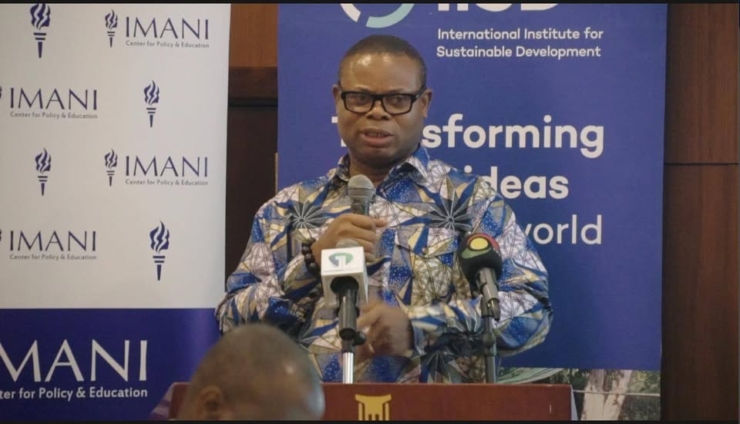
Franklin Cudjoe, the President of policy think-tank IMANI Africa, has launched a passionate plea for the radical overhaul of neurodegenerative care in Ghana, describing the current lack of medical specialists as a national crisis.
In a move that has personalised the policy debate, Mr Cudjoe revealed that he has been diagnosed with Parkinson’s disease.
Following a high-profile one-on-one meeting with President John Dramani Mahama earlier this year, the IMANI leader is now championing the inclusion of Parkinson’s and similar conditions under the government’s flagship Mahama Cares Programme.
Central to Mr Cudjoe’s advocacy is the alarming scarcity of neurological expertise within the Ghana Health Service.
With the national population now approaching 35 million, the number of specialists available to treat brain and nerve disorders remains stagnant at about 15.
“Fifteen neurologists for a population of almost 35 million is unconscionable,” Mr Cudjoe said, noting that the paucity of trained specialists hinders proper diagnosis and treatment.
This shortage has dire consequences for patient outcomes.
Mr Cudjoe highlighted a disturbing trend where general practitioners frequently misread the hallmark symptoms of Parkinson’s.
He noted that involuntary tremors—a primary indicator of the disease—are often wrongly attributed to intoxication or drunkenness by uninformed medical staff.
This medical illiteracy, he argues, does more than just delay treatment; it destroys lives. The resulting social stigma frequently forces patients into isolation, with Mr Cudjoe revealing that some sufferers, feeling abandoned by the system, have even contemplated suicide.
The IMANI President expressed a cautious optimism that the leadership at the Ministry of Health, specifically Minister Kwabena Mintah Akandoh and Deputy Minister Grace Ayensu-Danquah, will respond to the call. The goal is two-fold:
- Mahama Cares Integration: To provide specialised support and social safety nets for those with neurodegenerative conditions.
- NHIS Expansion: To ensure that the National Health Insurance Scheme covers the high cost of life-altering medications.
Mr Cudjoe emphasised that bringing Parkinson’s "out of the shadows" is the first step toward a more humane healthcare system. By institutionalising support, the state can remove the burden from individual families who currently struggle to source rare medications through informal international supply chains.
“Creating awareness of Parkinson’s is half the battle won. Once included, patients will gain access to treatment and support without relying on personal networks or international supply chains,” Cudjoe added.
As the government evaluates its 2026 health budget, the inclusion of Parkinson’s in the 'Mahama Cares' framework remains a critical litmus test for the administration's commitment to inclusive healthcare.
What is Parkinson’s disease?
Parkinson's disease (PD) is a progressive neurological disorder caused by the death of dopamine-producing brain cells, leading to impaired movement control and symptoms like tremors, stiffness (rigidity), slow movement (bradykinesia), and balance issues, though it also causes non-motor problems like depression, constipation, and sleep issues.
It's a lifelong condition where symptoms worsen slowly over time, affecting millions globally, with no current cure, but treatments help manage the symptoms.
Key Characteristics:
- Cause: Loss of brain cells that produce dopamine, a chemical crucial for smooth movement.
- Main Symptoms (Motor):
- Tremor: Shaking, often starting in a hand or foot at rest, sometimes appearing as "pill-rolling".
- Rigidity: Muscle stiffness and aches.
- Bradykinesia: Slowness of movement, making simple tasks difficult.
- Postural Instability: Balance problems, increasing fall risk.
- Other Symptoms (Non-Motor): Depression, anxiety, sleep disorders, loss of smell, constipation, and cognitive changes can also occur.
- Progression: Symptoms typically start subtly on one side and worsen over years, affecting both sides eventually.
- Diagnosis: Clinical, based on symptoms and neurological exam, though brain scans can support diagnosis.
- Treatment: No cure exists, but medications, exercise, and lifestyle changes help manage symptoms.
Latest Stories
-
Power restoration fault suspected in Kumasi Central Market fire
1 hour -
The 7-foot giant of Ngleshie Amanfro: Seven-foot Ghanaian Ephraim Saawa dreams of joining the national basketball team
2 hours -
Government promises support for Kumasi Central Market fire victims
2 hours -
Vibes The Movie: Big Ghun’s Ghanaian film earns five nominations at 2026 REFFA
3 hours -
MamaCare CEO warns unresolved conflicts among health workers could undermine maternal and neonatal care
3 hours -
Health professionals urged to translate medical knowledge into practice to save mothers
3 hours -
Conflicts among care providers linked to maternal, neonatal deaths – Expert
5 hours -
GIS marks 10th TIME conference, champions improved teaching practices
5 hours -
BRICS Or Balance? What Ghana’s bid really means
5 hours -
GPRTU wants full TRAFFITECH-GH implementation to start in 2027
6 hours -
Mahama announces plans to import electric wheelchairs for PWDs
6 hours -
KGL U17 Colts 2026: Western beat Prempeh Elite Academy to set up final final with Greater Accra Region
6 hours -
Late Solanke strike salvages 10-man Spurs draw at Man United
6 hours -
Gender Ministry to monitor welfare of Nana Akua Addo’s children amid domestic violence case
6 hours -
Benedict Okyere Yeboah: Ghana’s football problem goes beyond sacking a coach
6 hours