

Audio By Carbonatix
The Minister for Health, Kwabena Mintah Akandoh, says the government’s free primary healthcare policy is aimed at shifting Ghana’s health system from a reactive, emergency-driven model to a preventive one that reduces pressure on hospitals and tackles challenges such as bed shortages.
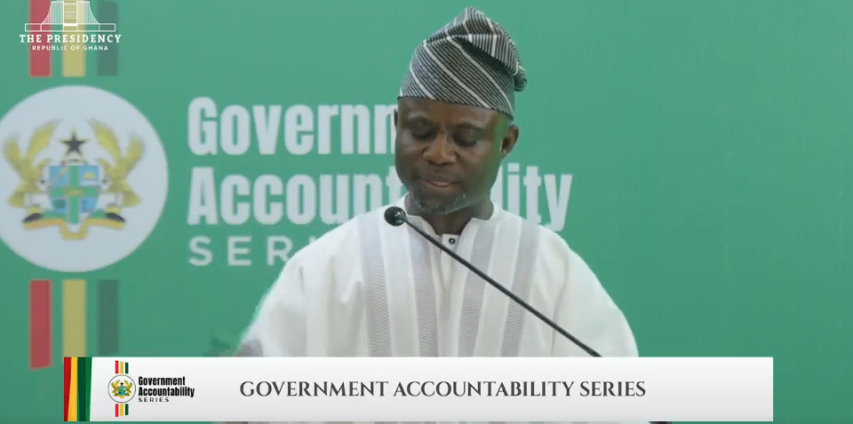
Speaking at the Government Accountability Series held in Accra on Monday, Mr Akandoh said routine health checks should become a normal part of life, stressing that early detection is key to preventing conditions from escalating into emergencies.
“At least, every human being must visit health facilities at one point or another. At least, you must be doing a routine check-up,” he said.
He explained that the policy is designed to ensure that illnesses are detected early enough to prevent patients from ending up in overcrowded emergency wards where issues such as bed shortages often arise.
Tackling ‘no bed syndrome’
Mr Akandoh said the initiative is directly linked to efforts to address the country’s recurring “no bed syndrome” in major hospitals, noting that prevention remains the most effective solution.
“By the time you get to emergency, they tell you there is no bed,” he said. “So this is an attempt to detect conditions early and prevent them before they become emergencies.”
He argued that no matter how many hospital beds are added, the problem will persist if preventive healthcare is not strengthened.
The Minister revealed that government is also investing in digital systems to improve visibility of hospital bed availability across the country.
He said a command centre is being developed to provide real-time data on available beds in regional and teaching hospitals, including Korle Bu Teaching Hospital and University of Ghana Medical Centre.
“When I’m in my office, I should know the empty beds in Ridge, I should know the empty beds in Korle Bu,” he explained, adding that regional hospitals will feed data into a central system.
He further disclosed plans to establish an additional emergency coordination centre to strengthen response capacity.
Mr Akandoh stressed that the reforms form part of a broader effort to build a comprehensive and integrated healthcare system rather than isolated interventions.
He added that government has completed costing for the programme, estimating that at least GH¢1.2 billion annually will be required to sustain the initiative.
“This is not an ad hoc programme. We have thought through it, we have done our projections, and we know what we are doing,” he said.
The Minister reiterated that the long-term goal is to reduce pressure on emergency services by prioritising preventive care and early diagnosis.
He maintained that strengthening primary healthcare delivery will ultimately reduce avoidable hospital admissions and improve overall system efficiency.
Latest Stories
-
UTAG-UG threatens strike on October 19 over unpaid allowance
2 minutes -
Let The Constitution direct Chieftaincy to deliver “All Development Is Local”
1 hour -
John Jinapor outlines renewable energy, nuclear power priorities for 2027
2 hours -
Ghana explores centre of excellence for hearing, communication and cochlear implant care
3 hours -
Schizophrenia-related disorders lead mental health cases recorded in Ghana
3 hours -
Dutch authorities enlist Ghana in hunt for fugitive drug lord Bolle Jos
3 hours -
Ghana housing finance conference adopts communiqué to improve affordable housing access
8 hours -
Special Initiatives Minister urges Wa Technical Institute to enrol more girls as EU-backed solar training lab opens
8 hours -
In the matter of my first year at the Bar
8 hours -
ActionAid Ghana calls for an end to child marriage, greater investment in girls’ rights
9 hours -
Newsfile to tackle World Cup visa scandal, beach demolitions, education strikes, BRICS bid
9 hours -
UK-Ghana Trade & Investment Summit: Trade Resource Centre to help businesses maximise UK-Ghana trade opportunities
9 hours -
Embassy of Denmark celebrates World Maritime Day
9 hours -
Linking LEAP to productive inclusion could cut extreme poverty by 2030 – UNICEF
10 hours -
Trade Ministry backs use of creative arts to rehabilitate prison inmates
10 hours