

Audio By Carbonatix
Professor Peter Quartey, Director, Institute of Statistical, Social and Economic Research, University of Ghana has called for the review of government's Free Senior High (SHS) policy.
He contended that the initiative is not sustainable.
“From time to time, I have supported the review of the policy and I don’t subscribe to the Government paying for tuition and boarding fees for everybody.
I think parents should be allowed to pay for boarding, there should be a cost-sharing mechanism for the state and the parents,” he said.
Prof Quartey in an interview with the Ghana News Agency in Accra said the policy is faced with challenges of funding and shortages of foodstuffs, stressing that allowing review of the policy would address these bottlenecks.
“Educating the people is one of the priorities of the government that I strongly support. I am an advocate for free SHS, but not in its current form because it is not sustainable for the country’s revenue strength, “he said.
He stated that where the country has reached, there is the need for some revision to be undertaken to sustain the policy and ensure quality education and as well run the schools better. Prof. Quartey said looking at the country’s finances, the it cannot continue subsidising everybody.
“There are day schools around, many of us attended day school which did not prevent us from achieving our future aim, there are a lot of day schools around for students who cannot afford the boarding fees. Where it is practically impossible then the scholarship Secretariat can offer scholarships to selected students who deserve it,” he said.
The government, he said, could use part of the free SHS money to support productive areas where the country needs it most.
The Professor said the free SHS had in a way affects the quality of education because authorities of the schools are not getting enough funding, stressing that the country needs to streamline the whole process from the contact hours to the double track system.
Prof Quartey called on authorities to ensure strict supervision in the public schools because even though they have trained teachers, the students perform poorly compared to the private schools.
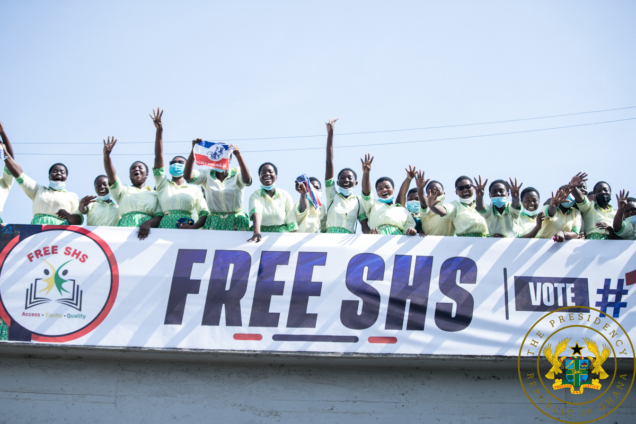
The Free SHS education policy in Ghana is an initiative introduced in the 2017 the administration of President Akufo-Addo.
The policy's core themes of access, equity and equality fulfil the United Nations modified Sustainable Development Goals, where member countries amalgamate those themes in their educational systems to certify adequate learning experiences for students.
A study on the introduction of the Free Senior High School policy found it as a relief to the financial burden of parents, especially guardians from rural and peri-rural settlements.
Currently, the Free SHS programme is being funded by the Annual Budget Funding Amount which are proceeds from the country's oil resources.
Latest Stories
-
Power restoration fault suspected in Kumasi Central Market fire
1 hour -
The 7-foot giant of Ngleshie Amanfro: Seven-foot Ghanaian Ephraim Saawa dreams of joining the national basketball team
2 hours -
Government promises support for Kumasi Central Market fire victims
2 hours -
Vibes The Movie: Big Ghun’s Ghanaian film earns five nominations at 2026 REFFA
3 hours -
MamaCare CEO warns unresolved conflicts among health workers could undermine maternal and neonatal care
3 hours -
Health professionals urged to translate medical knowledge into practice to save mothers
3 hours -
Conflicts among care providers linked to maternal, neonatal deaths – Expert
5 hours -
GIS marks 10th TIME conference, champions improved teaching practices
5 hours -
BRICS Or Balance? What Ghana’s bid really means
5 hours -
GPRTU wants full TRAFFITECH-GH implementation to start in 2027
6 hours -
Mahama announces plans to import electric wheelchairs for PWDs
6 hours -
KGL U17 Colts 2026: Western beat Prempeh Elite Academy to set up final final with Greater Accra Region
6 hours -
Late Solanke strike salvages 10-man Spurs draw at Man United
6 hours -
Gender Ministry to monitor welfare of Nana Akua Addo’s children amid domestic violence case
6 hours -
Benedict Okyere Yeboah: Ghana’s football problem goes beyond sacking a coach
6 hours