

Audio By Carbonatix
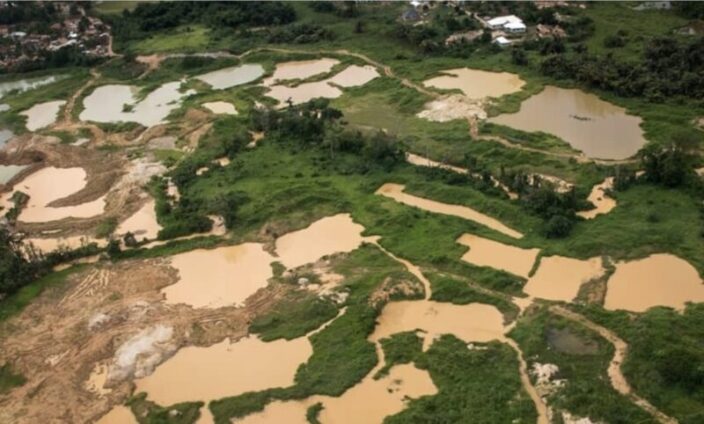
The Frimpong-Manso Institute (FMI) has joined forces with various organizations, institutions, and concerned Ghanaians to demand immediate action against the environmental devastation caused by illegal and irresponsible mining, commonly known as galamsey.
In a statement issued on October 15, 2024, FMI highlighted the severe impacts of galamsey on the nation’s water, land, agriculture, and biodiversity.
FMI described the situation as ecocide, stating that galamsey operators and legal mining companies “have committed and continue to commit wanton acts, knowing full well that there is a substantial likelihood of severe, widespread, or long-term damage to the Ghanaian environment.”
The Institute warned that these illegal activities could soon push the ecological systems beyond a critical threshold, after which the damage may be irreversible.
“Their actions have gravely endangered not only human health but also the natural ecosystems on which the lives and livelihoods of Ghanaians depend,” the statement emphasised, calling for “decisive, sustained, and comprehensive policies” to prevent further degradation.
FMI underscored the need for strong leadership, urging both the government and traditional authorities to take bold steps.
“Strong, courageous, and decisive leadership must be exercised by the government and ably supported by our local chiefs to stop permanently the uninformed and inappropriate mining and gold recovery activities.”
The Institute also expressed concern over the political handling of the issue, cautioning that “the consequences of galamsey are so dire that Ghanaians should not allow this issue to degenerate into ‘political footballing’ where opposing parties seize upon our national woes to gain political advantage.”
They urged a non-partisan consensus, stressing that “the soul and integrity of Ghana’s environmental resources should not be sacrificed on the altar of partisan interests.”
FMI further echoed the call from the Catholic Bishop Conference, emphasizing that the galamsey menace is “not a political issue, but one which has environmental, social, health, community, and industrial ramifications.”
They called on all Ghanaians, regardless of political affiliation, to join forces in tackling what they described as a national “cancer.”
The Institute concluded with a reminder that “Ghana doesn’t need us, we need Ghana because it is our only home on this lovely planet called Earth.”
Latest Stories
-
Sammy Gyamfi never BoG has not ceded forex role to us – GoldBod
22 minutes -
High Court sets November 4 for ruling on Wontumi’s bail application
36 minutes -
Tetteh Kwetey files nomination for NDC Greater Accra Regional Chairmanship
45 minutes -
Korle Bu appeals for more doctors, nurses as A&E Centre struggles under pressure
57 minutes -
AFCON 2027Q: ‘I’m optimistic Black Stars can turn things around’ – Agyemang-Badu
59 minutes -
Digital innovation could widen Africa’s inequalities if people are left out – Sam Jonah
1 hour -
Galamsey is an economic, health and moral problem – Sam Jonah
1 hour -
Africa must create AI technology instead of paying to use it – Sam Jonah
1 hour -
2026 U-17 WWC: Black Maidens to face Norway, Brazil and Canada in Group C
1 hour -
Agbodza, Sam George move to curb fibre optic cable cuts during road works
1 hour -
2026 U-17 WWC: Black Maidens unveil 21-player squad for competition in Morocco
1 hour -
South Africa evacuation and the minority’s half-truth
1 hour -
‘You never know tomorrow’ – Anthony Baffoe on contesting for GFA Presidency
1 hour -
Obuasi SHTS head accused of sexually abusing students is NDC Juaben secretary seeking chairmanship
2 hours -
Cedi depreciates by 7.11% against dollar in August 2026 – BoG report
2 hours